Air Versus Mixed Gas Below 50 Metres, Explained
Below 50 metres, ordinary air becomes a liability for divers. Here is the physics behind nitrogen narcosis, rising gas density, and why trimix exists as the technical diving standard.
Monday, June 8, 2026/3 min read
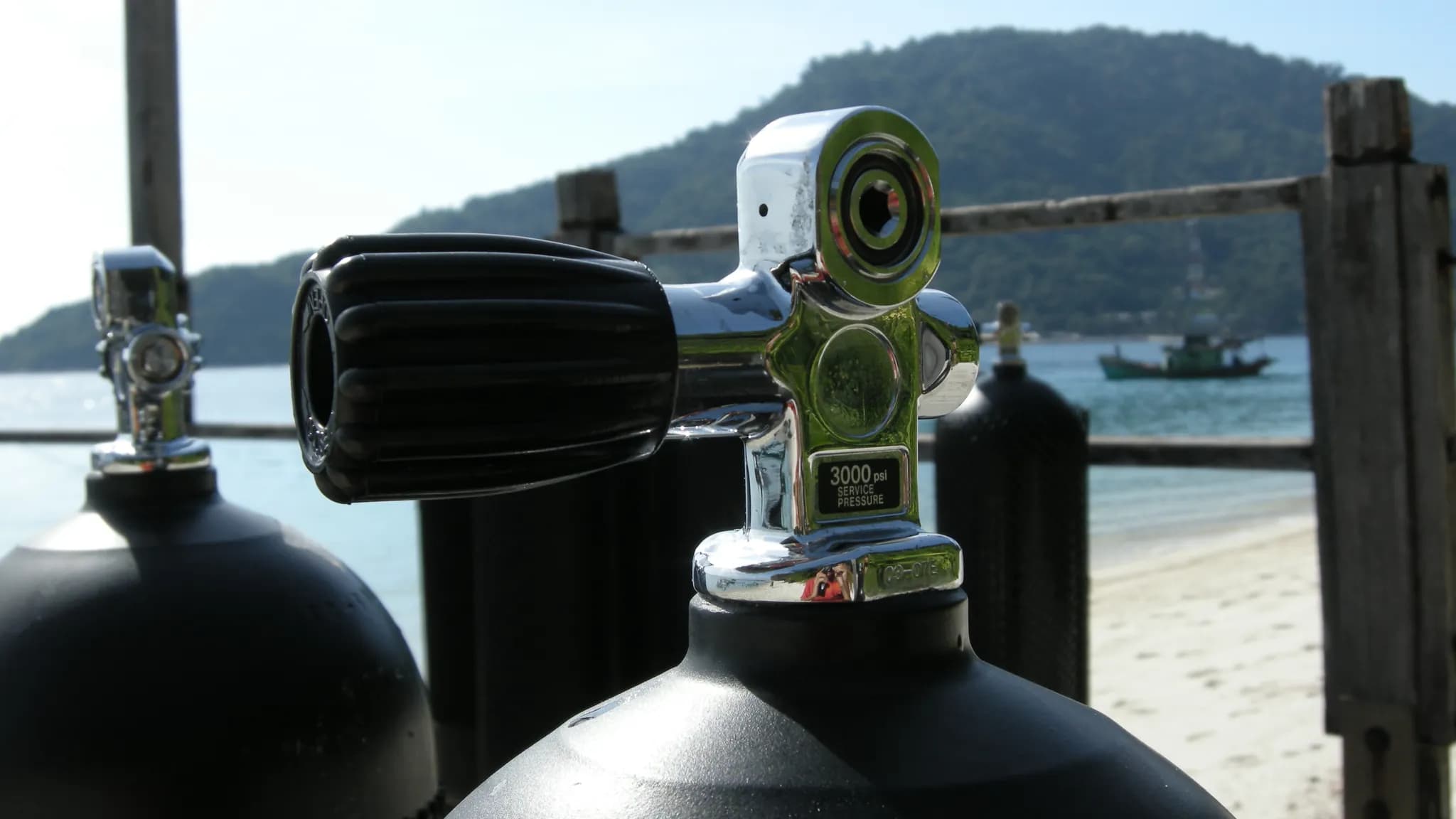
Air is mostly nitrogen, and nitrogen is not dangerous at the surface. It becomes something else entirely once pressure starts compressing it into the bloodstream at depth. Beyond roughly 30 metres, the same gas that fills every breath a diver takes on land starts to behave like a mild anaesthetic, and the deeper a diver goes on ordinary compressed air, the harder that gas is to think clearly through.
This is not a controversial or fringe area of diving science. It is well documented physiology, and it is the entire reason technical diving exists as a discipline separate from recreational scuba. Understanding it does not require judging anyone. It requires understanding two physical effects: narcosis and gas density.
What nitrogen narcosis actually does
Nitrogen narcosis is a reversible alteration in consciousness caused by the anaesthetic effect of certain gases at high partial pressure, and it worsens with depth in a fairly predictable way, according to a summary in Wikipedia's overview of the condition, which draws on established diving medicine literature. It has been informally nicknamed rapture of the deep, but the experience is closer to being mildly intoxicated than euphoric: judgment slows, task focus narrows, minor problems can start to feel manageable when they are not, and a diver's sense of time and risk both distort. It reverses on ascent, which is part of why it has historically been underestimated. A diver can feel entirely normal again within minutes of shallowing up, which does nothing to undo a bad decision made at depth.
Some divers have historically claimed a tolerance for narcosis at depths approaching 60 metres on air. Diving medicine sources note plainly that people have died attempting deep record dives on air specifically because they lost consciousness from nitrogen's anaesthetic effect under pressure. Tolerance is not the same as immunity, and narcosis has no reliable warning stage that a diver can train themselves to always notice while it is happening.
Gas density: the less famous but arguably more dangerous problem
Narcosis gets most of the attention, but gas density is, by many technical diving educators' accounts, the more physically limiting problem at extreme depth. As explained in Divers Alert Network's explainer on breathing gases, gas density increases with depth, and denser gas is simply harder to move in and out of the lungs. Past a certain density threshold, breathing becomes laboured enough to cause carbon dioxide retention, known as hypercapnia, which brings its own risks: confusion, rapid breathing, and in severe cases loss of consciousness, compounding whatever narcosis is already doing to judgment.
Why helium is the fix for both problems
Helium solves both problems at once, which is why it is the defining ingredient in technical deep diving gas mixes. It is not narcotic in the way nitrogen is, so replacing a portion of a gas mix's nitrogen with helium directly reduces narcosis at a given depth. It is also a much lighter gas than nitrogen, so it reduces the density of the overall mix, easing the physical work of breathing and lowering the risk of carbon dioxide retention, a mechanism detailed in an overview of diving gases from SMP.
What trimix is and how it is chosen
A blend of oxygen, nitrogen and helium is called trimix, as explained by Wikipedia's entry on the gas and a technical overview from La Galigo. Each specific trimix blend is engineered around the target depth of a planned dive, the acceptable partial pressure of oxygen for that depth, and a target called the equivalent narcotic depth, essentially how narcotic the mix will feel compared to diving on air at a shallower depth. General industry practice treats roughly 40 to 50 metres as the zone where many technical divers begin introducing helium into their mix, with the helium fraction increasing as planned depth increases, since deeper dives generally call for both lower narcosis and lower gas density than a nitrogen-heavy mix can provide.
Why this is not a do-it-yourself calculation
None of the ratios above are a formula a reader should use to plan an actual dive. Gas blending, partial pressure limits and equivalent narcotic depth targets are calculated precisely, verified independently, and taught through certified technical diving courses for a reason: getting any of it wrong carries the same risks just described, compounded by the fact that a diver who has made an error in their own gas plan often has no way to detect it until they are already at depth. This article explains why the physics matters. Anyone who wants to dive on mixed gas should learn the actual planning from a certified instructor through an established technical diving agency, not from a magazine.
Published in The Outspoken Digest
Editorial desk
Outspoken Digest Diving DeskCovers freediving, recreational and technical diving, dive medicine and the incidents the sport learns from.
Newsletter
The Digest, in your inbox
One edition, sent when it is ready. No noise, and your address is never passed on.
Read Next
More Diving →
Playing Recordings of a Healthy Reef Drew More Coral and Fish Larvae to Artificial Structures Off Hawaii
Oct 9, 2026/3 min read

Blacktip Sharks Can Hear a Sound From Nearly 250 Feet Away and Swim Straight Toward or Away From It
Oct 1, 2026/2 min read

A Sea Turtle Species Never Recorded Nesting in the United States Laid Eggs on a Southern California Beach
Oct 1, 2026/2 min read
Marine Surveyors Confirmed Living Coral Off Benin, More Than Sixty Years After the Reef Was Presumed Dead
Sep 29, 2026/2 min read