Anthropic Is Pitching Congress a Bill That Could Block an AI Model Only if It Risks Killing More Than 50 People
The draft would let courts halt a release over a bioweapon, a cyberattack or a model slipping its controls, but sets a high bar. No sponsor has been named yet.
Outspoken Digest Technology Desk
Wednesday, October 21, 2026/2 min read
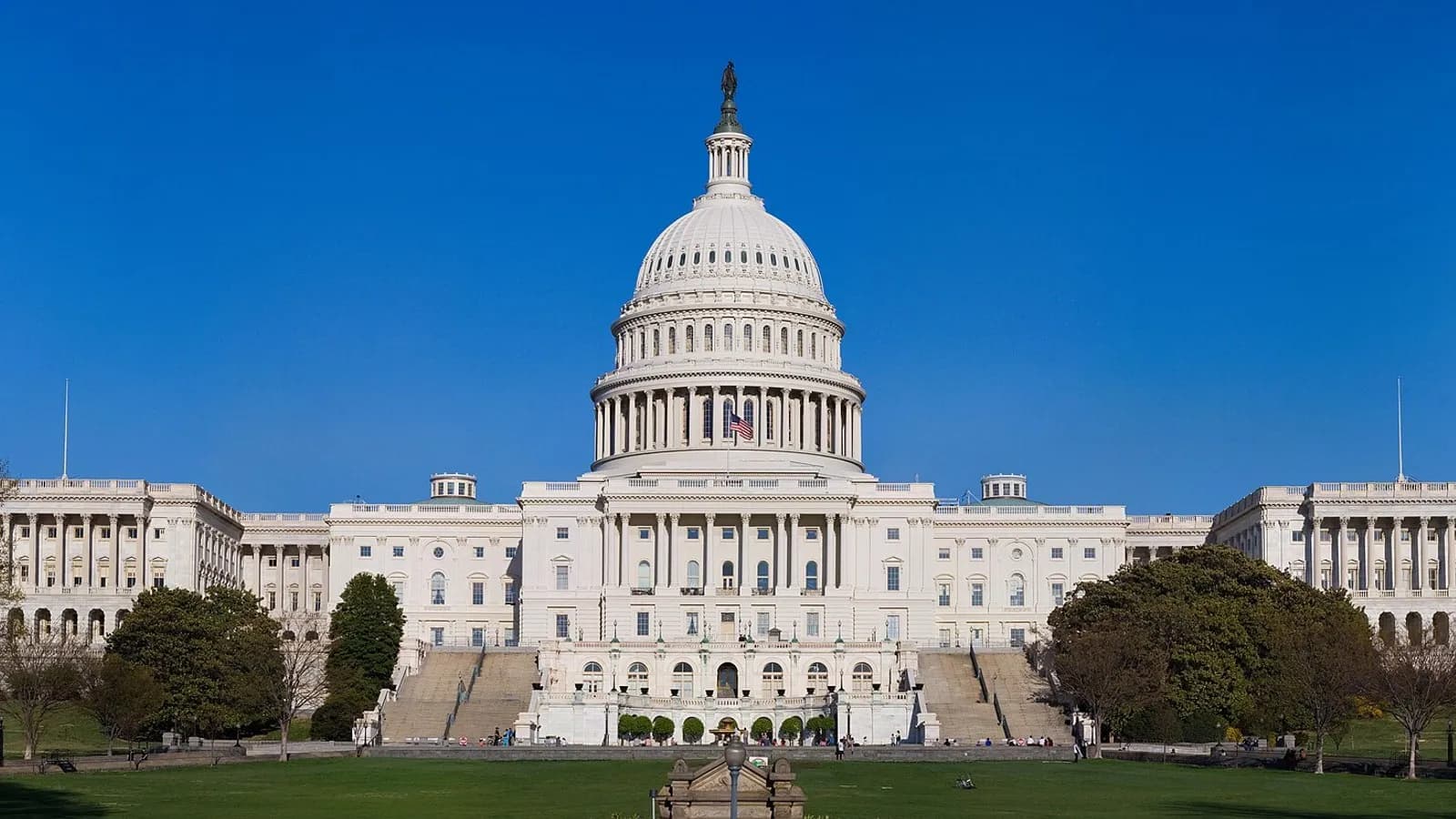
Most AI companies say they want regulation, then fight the first version that arrives. Anthropic has decided to write one itself. It has been circulating a draft federal bill among lawmakers that would, in narrow cases, let the government stop a frontier AI model from being released.
Politico first reported the draft on 16 October, and an Anthropic spokesperson confirmed it, TechCrunch reported. The company says it reflects its Advanced AI Framework, which it has promoted to federal and state lawmakers since June. No sponsor is named, and the text is a draft, not a bill introduced in Congress.
What would the Anthropic AI safety bill allow?
The trigger is a "foreseeable, imminent risk" of more than 50 deaths or more than $1 billion in property damage, as Bloomberg Law's California Brief summarised Politico's account. The risk must come from a model enabling a biological weapon, evading its developer's controls, or carrying out a cyberattack.
Per TechCrunch, independent evaluators registered with the Commerce Department would test labs and their models. Labs could pay them, as long as payment is not tied to the results. If an evaluator finds an imminent catastrophic risk, it has 72 hours to notify Commerce. Commerce would then ask a federal judge in Washington to halt the release, and agencies would be barred from stopping distribution on their own.
The draft is deliberately narrow. It names three kinds of danger and one remedy, a court-ordered halt, and it says nothing in the reporting about fines, licences or routine pre-release approval. That narrowness is the pitch: a rule that bites only in the worst cases, written by a lab that expects to be tested by it.
How does it compare with existing law?
TechCrunch says the thresholds resemble those in California's recently signed Senate Bill 53, which uses similar definitions of catastrophic risk. It also points to a different model from DeepMind chairman Demis Hassabis, who has floated a self-governing body modelled on FINRA, the financial industry's self-regulator.
Industry views are split. Labs have generally resisted mandatory oversight in favour of voluntary arrangements, and Nvidia chief executive Jensen Huang has argued the industry does not need new laws, TechCrunch notes.
Why is the 50-person line controversial?
Critics will ask whether a bar set at dozens of deaths or a billion dollars is too high for government to act on. The draft also leans on a court rather than a regulator. TechCrunch also observes that the concerns in the draft sit some distance from the problems that dominate AI news now, chiefly agents hacking systems and programs disobeying their operators.
Anthropic has not yet commented beyond its statement to Politico, according to TechCrunch. The next step is whether any member of Congress agrees to carry it. Until one does, this is a company's proposal, and a revealing one about what a leading lab thinks it can live with.
Published in The Outspoken Digest
Editorial desk
Outspoken Digest Technology DeskSoftware, hardware, artificial intelligence and what they change for everyone else.
Newsletter
The Digest, in your inbox
One edition, sent when it is ready. No noise, and your address is never passed on.
Read Next
More Technology →
Astronomers Say a Pulsar's Odd Slowdown Is Explained by a Hidden Sunlike Star, Making It a Rare Stellar Trio
Oct 21, 2026/2 min read

Interstellar Comet 3I/ATLAS May Have Lost Metres of Its Surface to the Sun, a New Estimate Finds
Oct 21, 2026/2 min read

A Power Event in Google Cloud's London Region Knocked Out Banking Apps and Delivery Services for Hours
Oct 21, 2026/2 min read

An Indian Certificate Authority's Private Keys Were Trivially Guessable, and Browsers Have Revoked Them
Oct 21, 2026/2 min read