Fish Mansaf: How Aqaba Rewrote Jordan's National Dish
Jordan's coastline is 26 kilometres long, and it produced its own version of the country's lamb dish. The jameed stays. The animal changes entirely.
Friday, July 31, 2026/3 min read
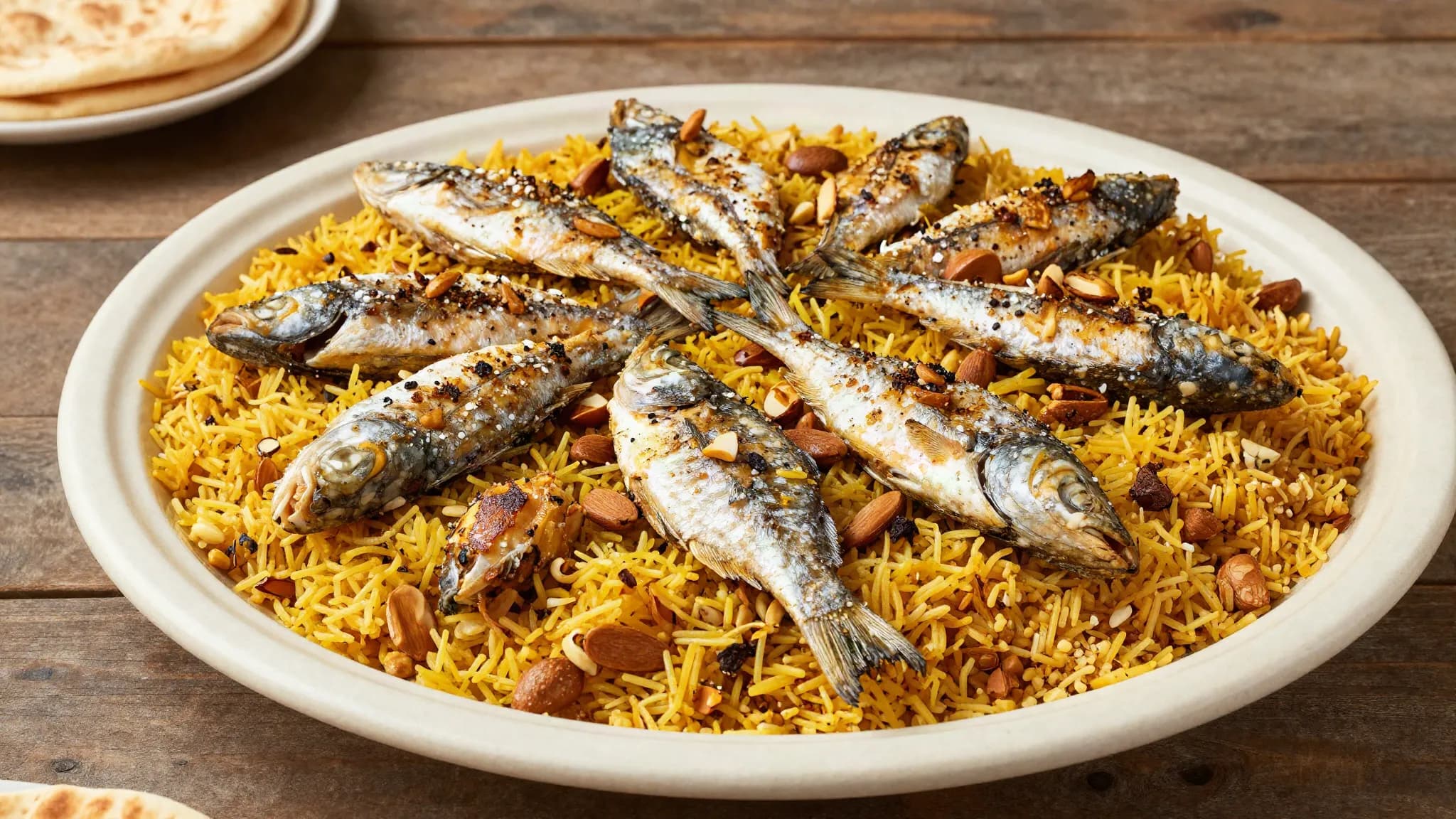
Jordan is a country with a very short coast and a national dish built on lamb and dried yoghurt. Aqaba, sitting on that short coast, did the obvious thing and made it with fish.
Fish mansaf is a genuine regional variation rather than a restaurant invention. The record on mansaf lists it among the dish's documented variants, found in the south around the port city of Aqaba, alongside versions using wheat or bulgur instead of rice and versions using fresh yoghurt instead of jameed.
That variation tells you something about how the dish actually works. Mansaf is not defined by lamb. It is defined by the jameed sauce, the shrak bread underneath and the way it is served to a table of people eating from one platter. Change the protein and the structure survives intact. Regional lifestyle and climate have always shaped which version a household makes, a pattern set out in this account of Jordanian and Palestinian mansaf, and the coast simply cooked what the coast had.
Ingredients
Serves 4 to 5. Total time: 1 hour 10 minutes, plus 4 hours or overnight soaking for the jameed.
- 200 g jameed, broken into pieces, or 500 g thick goat yoghurt as a substitute
- 1 kg firm white fish, such as grouper, sea bream or hammour, in thick steaks or large fillets
- 1.5 tsp ground turmeric
- 1 tsp ground cumin
- 1 tsp salt, plus more to taste
- 3 tbsp olive oil
- 1 large onion, finely sliced
- 4 garlic cloves, sliced
- 1 tbsp cornflour, if using yoghurt rather than jameed
- 350 g long grain rice
- 0.5 tsp ground cardamom
- 2 tbsp ghee
- 2 large shrak or markook flatbreads, or 4 thin pitta
- 60 g flaked almonds and pine nuts, toasted
- A handful of flat leaf parsley, chopped
- 1 lemon, in wedges
Method
- Soak the jameed in warm water for at least 4 hours or overnight, changing the water once. Then blend it with about 700 ml fresh water until completely smooth and pass it through a sieve. Lumps that survive this stage will not dissolve later.
- Season the fish with the turmeric, cumin and salt and leave 20 minutes. Turmeric here is doing colour as much as flavour, standing in for the golden tone the lamb version gets from its broth.
- Warm 2 tbsp olive oil in a wide pan and cook the onion gently 10 minutes until soft and just golden. Add the garlic for the last minute.
- Pour in the jameed liquid. If using yoghurt instead, whisk in the cornflour first to stabilise it. Bring to a bare simmer, stirring in one direction, and hold it there 15 minutes. Never let it boil hard, which splits it.
- Slide the fish into the simmering sauce in a single layer. Poach gently 8 to 12 minutes depending on thickness, until the flesh just flakes. Fish overcooks in the time it takes to answer the door, so start checking early.
- Meanwhile cook the rice: toast it briefly in the ghee with the cardamom, add 700 ml water and a teaspoon of salt, cover and cook 12 minutes, then rest 10 minutes off the heat.
- Lay the flatbread across a large platter and ladle over a little sauce so it softens. Spoon the rice on top, then arrange the fish over the rice.
- Pour the remaining hot sauce generously over everything, scatter the toasted nuts and parsley, and bring it to the table with lemon wedges. Serve the extra sauce in a bowl alongside.
Notes, swaps and keeping
Jameed is worth seeking out from a Middle Eastern grocer, sold as hard pale balls. It has a fermented sharpness that yoghurt does not reproduce. If you substitute yoghurt, add the juice of half a lemon at the end to push it closer.
Choose a firm fish that holds together in liquid. Delicate fillets disintegrate into the sauce and turn the dish into a soup. Grouper and hammour are the traditional choices on that coast; sea bream, cod loin and monkfish all behave well.
The whole dish should be assembled at the last minute. Bread laid down too early turns to paste, and the pleasure of it is the contrast between crisp edges and the parts that have gone soft with sauce.
Leftovers keep a day. Store the components separately if you can, because reheated assembled mansaf loses the texture that makes it worth making.
Published in The Outspoken Digest
Editorial desk
Outspoken Digest Food DeskCooking, ingredients, restaurants and the economics of what ends up on the table.
Newsletter
The Digest, in your inbox
One edition, sent when it is ready. No noise, and your address is never passed on.
Read Next
More Recipes →
Cheesy Ramen on the Stove: Instant Noodles in a Real Cheese Sauce in Ten Minutes
Oct 18, 2026/3 min read
Beer-Battered Jalapeno Cheese Curds: The Wisconsin Bar Snack, Fried Properly at Home
Oct 18, 2026/3 min read

A Thanksgiving Turkey Sub With Hot Stuffing, Cranberry and Gravy to Dip
Oct 17, 2026/3 min read

Pecan Pie Bars With a Shortbread Base and a Caramel Filling That Slices Cleanly
Oct 17, 2026/3 min read