Fashion's Autumn Answer to a Decade of Beige Is Everything at Once
Tartan, tuxedos, trains, brocade and thigh high boots all landed in the same season. After years of quiet luxury, the autumn runways went loud on purpose.
Tuesday, August 4, 2026/4 min read
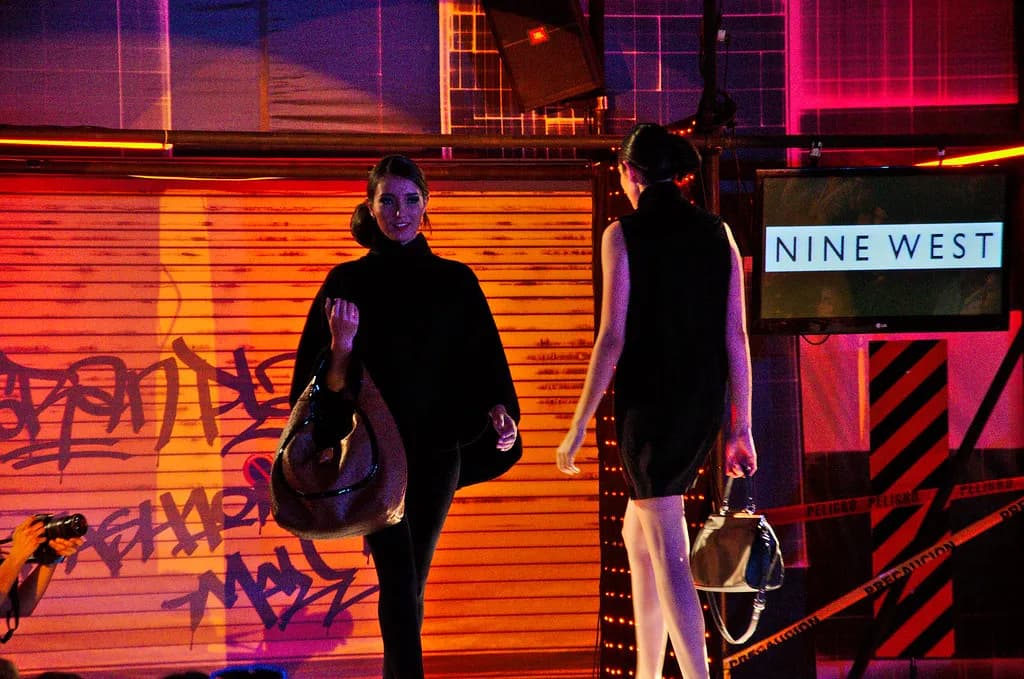
Quiet luxury had a long run. Beige cashmere, invisible logos, clothes designed to signal wealth to people who already knew. The autumn and winter 2026 runways have decided that era is finished, and they have not been subtle about it.
What replaced it is not one trend but a pile up of them, which is itself the message.
The patterns doing the heavy lifting
Plaid, tartan and checkerboard were arguably the single biggest story of the season, showing up in prints and weaves and given a full workout at Chloe.
Tartan is a useful barometer because it is never neutral. It carries heritage, subculture and a certain amount of argument, and designers reach for it when they want clothes that say something rather than clothes that recede.
Alongside it came brocade, jacquard, embroidery and beading, the vocabulary of craft. As Coveteur's season report notes, the effect is deliberately handmade rather than machine minimal.
Le Smoking, again
Tuxedo dressing is back in full: satin lapels, cummerbunds, bow ties, the entire tailored menswear proposition.
It returns roughly every decade and it always means the same thing. When fashion wants to look serious and powerful without looking corporate, it borrows from evening menswear. Fifty years after Saint Laurent made it a women's garment, it remains the most reliable shortcut to authority in a wardrobe.
The colour palette matches the mood. Jewel tones dominate, burgundy and mulberry and plum and mandarin orange, with grey doing the work of a neutral. Analysis at Who What Wear tracks the same trends across the fashion month schedule.
The drama, and its practical problem
This was a season of trains. Saint Laurent showed black lace pannier gowns, McQueen ran regency silhouettes through a subversive filter, and ruffles, peplums and velvet draping turned up across the schedule.
Accessories went the same direction: extremely high thigh high boots, faux fur stoles, shearling gloves, oversized collars.
The honest caveat is that a train is a runway argument, not a wearable one. What survives contact with real life will be the boots, the tartan and the tailoring, because those are the pieces that work on a Tuesday.
Why the swing is happening now
Minimalism sells consistently and photographs badly. In an economy where people buy fewer clothes, the garment that gets bought has to justify itself, and a plain beige coat justifies itself only on quality, which is invisible online.
An embroidered brocade jacket makes its case in a thumbnail. That is a commercial fact as much as a creative one, and it explains why the swing to personality driven dressing arrived across so many houses at once.
What a trend cycle this fast is really telling you
Quiet luxury lasted roughly four years, which is short for an aesthetic that presented itself as timeless. Its selling proposition was that it opted out of trends altogether, and it was replaced on schedule like any other trend.
The speed is a function of how clothes are now discovered. An aesthetic that saturates a feed in months exhausts its novelty in months, and the industry's response has been to move faster rather than to slow down.
The countervailing force is cost. Fewer, more expensive garments are bought less often, which pushes against rapid turnover. The autumn collections resolve that tension by making individual pieces more distinctive, so a single purchase carries more visual weight.
The gap between the runway and the rail
Reading a runway as a forecast requires a translation step that most coverage skips. A collection is partly a commercial proposition and partly an argument about the house, and the two are not equally likely to reach a shop.
Tailoring, outerwear and accessories translate reliably, because they can be reproduced at lower price points without losing the idea. Elaborate construction does not: a lace pannier gown loses everything in a cheaper fabric, and so it stays a photograph.
The practical forecast from this season is therefore narrower than the coverage suggests. Expect tartan, expect a lot of tailoring, expect boots. Do not expect trains.
Jewel tones are a retail decision too
The palette shift toward burgundy, plum and mandarin is usually explained in terms of mood. There is a commercial reason underneath it.
Saturated colours photograph with far more contrast than neutrals, which matters when most garments are first seen as a small image on a phone. A beige coat and a slightly different beige coat are indistinguishable at that size. A mulberry one is not.
Grey surviving as the season neutral is the compromise. It gives buyers something to build around while the colour pieces do the work of getting noticed.
What to watch next
Watch the high street in September, because that is where a runway trend either becomes a real one or quietly disappears. Tartan and tuxedo tailoring translate cheaply and well. Trains do not.
Published in The Outspoken Digest
Newsletter
The Digest, in your inbox
One edition, sent when it is ready. No noise, and your address is never passed on.
Read Next
More Fashion →
Victoria's Secret Fashion Show Heads to Los Angeles on Sunday With an All-Women Lineup and Three Angel Hopefuls
Oct 15, 2026/2 min read
Anthony Vaccarello Is Leaving Saint Laurent After a Decade, and Kering Has Not Yet Named His Successor
Oct 9, 2026/2 min read
Louis Vuitton Closes Paris Fashion Week With Hovering Cars, Paper-Light Dresses and a Louvre Courtyard Cityscape
Oct 7, 2026/2 min read
Celine Dion Made a Surprise Return to the Catwalk to Close L'Oreal's Paris Fashion Week Opening Show
Sep 29, 2026/2 min read