Bag Charms Survived the Backlash and Multiplied
Everyone predicted the keyring pile-up would end with 2025. Instead it consolidated into a couple of dominant styles and became a permanent accessories category.
Thursday, August 6, 2026/4 min read
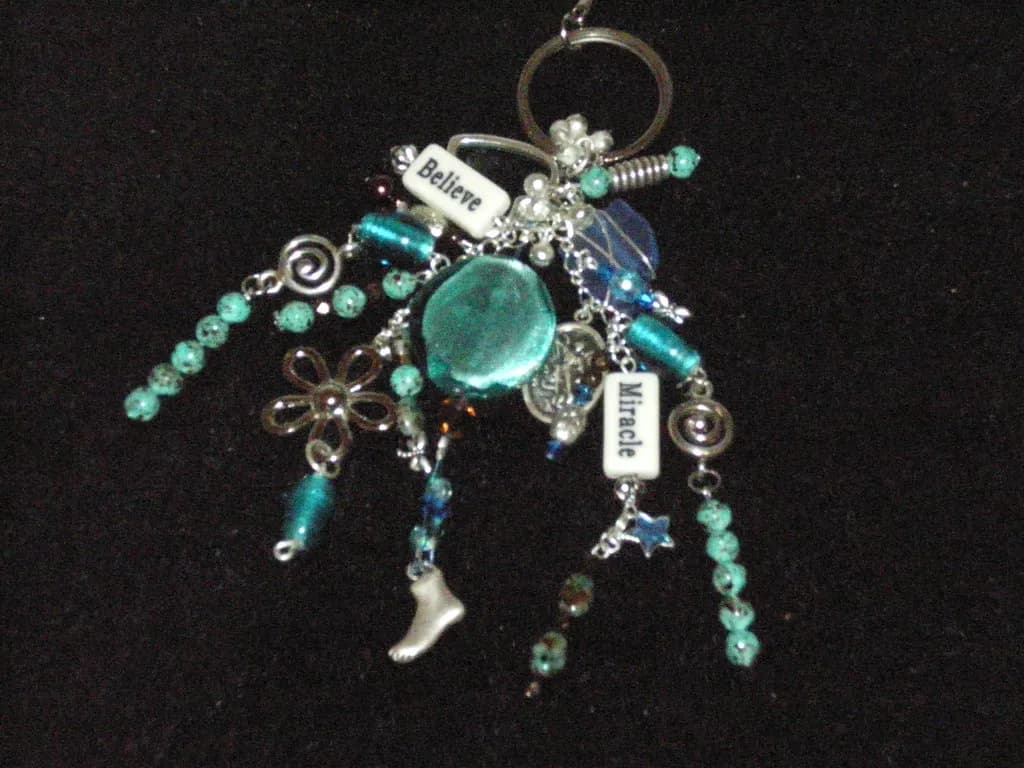
The bag charm was supposed to be a short trend. A handbag hung with keyrings, plush toys, ribbons and scarves read as a passing joke, and the fashion press spent much of last year predicting its end.
It did not end. Coverage from Who What Wear reports the trend as far from over in 2026, having narrowed into a smaller number of dominant styles rather than disappearing.
Why it lasted
Because it solves a real problem cheaply, and trends that do that tend to stay.
The problem is that a handbag is the least changeable item most people own. It is expensive, it is carried daily, and it is the single most recognisable thing in an outfit. A charm is a way to change it without replacing it.
That is also why it survived a downturn in discretionary spending. A charm costs a fraction of a bag and produces a visible difference, which is precisely the kind of purchase that does well when people are buying less.
What consolidation looks like
The early version of this trend was accumulation. The more recent version is selection, which is the usual second stage of any accessory trend.
Two styles have pulled ahead rather than the free for all of the first wave. The pattern matters more than the specific objects: when a trend narrows from anything goes to a couple of recognisable formats, it has stopped being a joke and become a category.
Luxury houses noticing was the other confirmation. Once a maison sells an official charm at a serious price, the accessory has been formally admitted to the product line rather than tolerated as customer behaviour.
The uncomfortable bit
Charms are a category built almost entirely on small plastic and metal objects with short attention spans attached to them.
That sits awkwardly beside an industry making sustainability commitments, and it is worth naming rather than skipping. A charm bought impulsively, worn for a season and discarded is fast fashion in miniature, with the same problems and a smaller footprint per unit.
The counter argument has some force. A charm that extends the life of an expensive bag by keeping it feeling current is a net gain, since the bag is by far the larger object. Whether that is what actually happens depends on how many charms are bought per bag, which nobody is measuring.
How to do it without it looking like a keyring drawer
The current approach is restraint, which was not the case a year ago.
One considered charm, or two that relate to each other in material or colour, reads as styling. Six unrelated objects reads as a collection that happened to a bag. Scale matters too: a charm should be proportionate to the bag, and a large plush on a small structured bag overwhelms the thing it is meant to decorate.
The most durable version is a charm with some personal meaning rather than a purchased trend object, which is what the whole thing started as before it became a market.
The precedent everyone forgot
Bag charms are not new and the current wave is not unprecedented. Luxury houses have sold bag decorations for decades, and the practice of hanging objects from a bag is considerably older than any of them.
What is new is the volume and the price range. A category that was previously a small number of expensive official products has become a large number of cheap unofficial ones, plus a smaller number of expensive official ones responding to it.
That sequence, customer behaviour first and manufacturer response second, is the more interesting part. It is the same pattern that produced sneaker customisation and phone case culture, and in both cases the behaviour outlasted the specific objects.
What this says about how people buy now
The charm trend is a symptom of a wider shift, which is that personalisation has become the main way people distinguish mass produced goods.
When a bag, a phone or a pair of trainers is owned by millions of people, the object itself carries very little individual signal. What carries signal is the modification: what has been added, arranged or worn in.
That is why the trend has proved more durable than its critics expected, and why coverage of the season's broader accessory direction, including reporting on tassels and loud luxury, keeps finding the same instinct in different forms.
What to watch next
Watch whether the charm moves off the bag. Accessory trends that survive usually migrate, and there are already signs of the same instinct appearing on belt loops, on shoes and on luggage.
If it does move, this stops being a handbag trend and becomes something broader: a general appetite for personalising mass produced objects, which is a considerably more durable idea than any particular keyring.
Published in The Outspoken Digest
Newsletter
The Digest, in your inbox
One edition, sent when it is ready. No noise, and your address is never passed on.
Read Next
More Fashion →
Victoria's Secret Fashion Show Heads to Los Angeles on Sunday With an All-Women Lineup and Three Angel Hopefuls
Oct 15, 2026/2 min read

Anthony Vaccarello Is Leaving Saint Laurent After a Decade, and Kering Has Not Yet Named His Successor
Oct 9, 2026/2 min read

Louis Vuitton Closes Paris Fashion Week With Hovering Cars, Paper-Light Dresses and a Louvre Courtyard Cityscape
Oct 7, 2026/2 min read
Celine Dion Made a Surprise Return to the Catwalk to Close L'Oreal's Paris Fashion Week Opening Show
Sep 29, 2026/2 min read