Balaleet: The Emirati Breakfast That Is Sweet and Savoury at Once
Vermicelli sweetened with cardamom, saffron and rose water, served under a plain omelette. It should not work on paper, and it has been the standard morning plate in the UAE for generations.
Saturday, August 1, 2026/4 min read
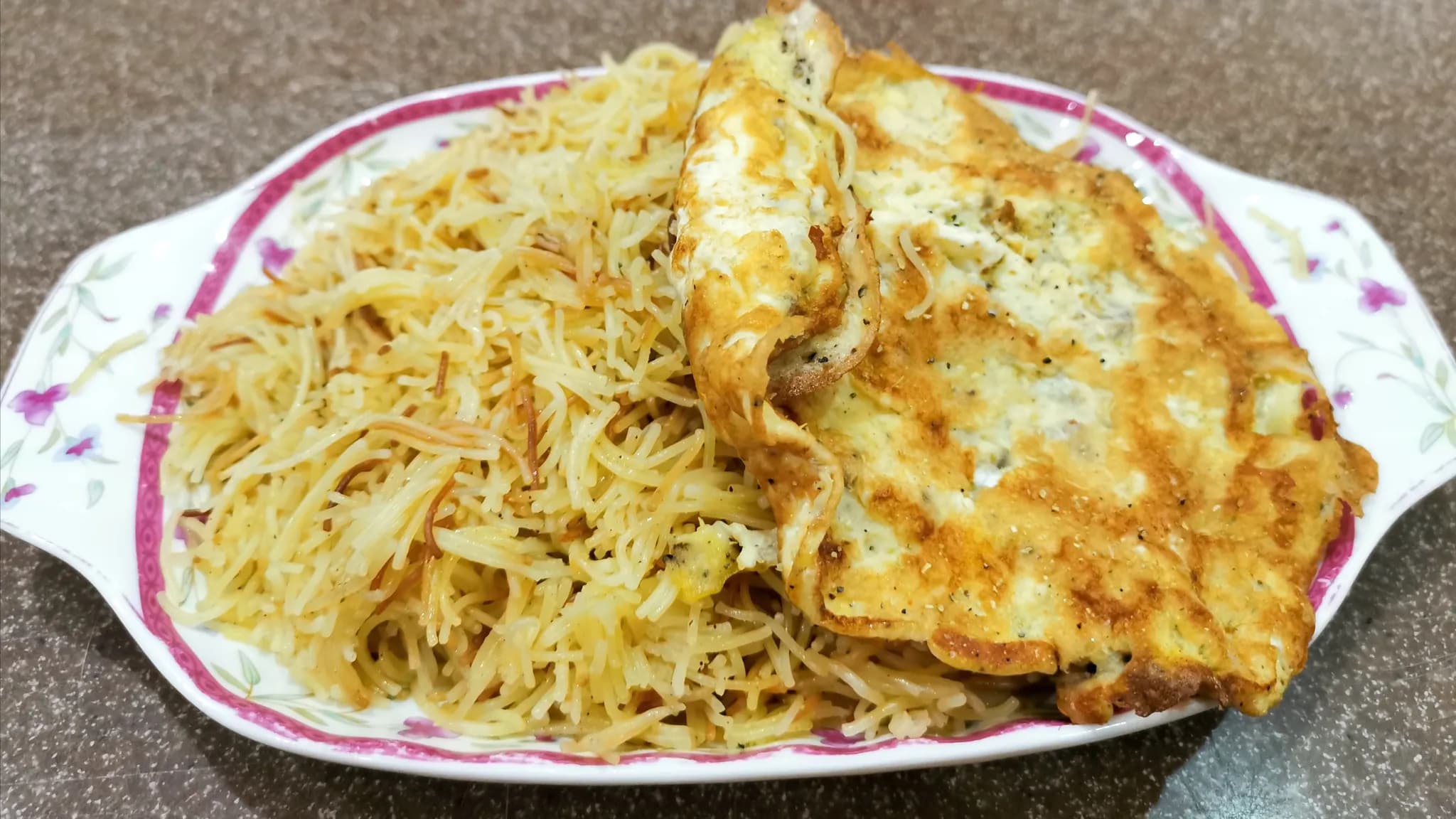
Describe balaleet to someone who has not eaten it and watch their face. Sweet noodles. Under an omelette. For breakfast.
Then feed it to them, and watch the face change. The combination is one of those things a cuisine works out over a long time and outsiders take a single mouthful to accept: the saffron and cardamom in the vermicelli need something plain and savoury pressed against them, and a thin unseasoned omelette turns out to be exactly right.
Balaleet is the traditional breakfast of the United Arab Emirates and the wider eastern Arabian coast, eaten hot or cold, and effectively guaranteed on an Eid table or at iftar. The pairing has a plausible history: eggs cooked with sweet things are an old Bedouin habit, and the vermicelli itself arrived later through trade routes that brought pasta into the region. Two food traditions met on one plate and stayed there, and the standard preparation has barely moved since.
Ingredients
Serves 4. About 30 minutes, start to finish, which is the other reason it endures as a breakfast.
- 250 g fine vermicelli (the thin coiled kind sold for Middle Eastern and South Asian cooking)
- 60 g unsalted butter, or 4 tbsp ghee
- 80 g caster sugar, or to taste
- 1/2 tsp ground cardamom
- A generous pinch of saffron threads, crushed and soaked in 2 tbsp warm water
- 1/4 tsp ground turmeric, for colour
- 1 tbsp rose water
- 1/4 tsp fine salt
- 200 ml hot water
- 4 eggs
- 1 tbsp milk
- A pinch of salt for the eggs
- 1 tbsp neutral oil, for the omelette
- 2 tbsp pistachios or flaked almonds, toasted, to finish
Method
- Break the vermicelli into pieces roughly 4 cm long. Do this in a bowl unless you enjoy sweeping.
- Melt the butter in a wide pan over a medium heat. Add the vermicelli and toast it, stirring constantly, for 4 to 5 minutes until it turns an even golden brown. This is the step that gives balaleet its nutty backbone, and it moves from golden to burnt quickly, so keep it moving.
- Pour in the 200 ml hot water and the salt. It will hiss. Stir once, cover, reduce the heat to low and cook for 6 to 8 minutes, until the vermicelli is tender and the water has been absorbed.
- Uncover and add the sugar, cardamom, turmeric and the saffron with its soaking water. Stir gently to coat, cooking for another 2 minutes so the sugar dissolves and the strands take on colour.
- Take the pan off the heat and stir in the rose water. Adding it off the heat keeps the perfume, which boils away if you add it earlier. Taste and adjust the sugar. It should be clearly sweet but not dessert-sweet.
- Cover the pan and leave it while you make the eggs.
- Beat the eggs with the milk and a pinch of salt. Do not add sugar or spice to them. The contrast is the entire point of the dish.
- Heat the oil in a non-stick frying pan over a medium-low heat. Pour in the eggs and cook them flat and slow, 3 to 4 minutes, without stirring, until just set on top. You want a thin, pale, barely coloured omelette, not a browned one.
- Slide the omelette out and cut it into 4 wedges, or leave it whole to cover the platter.
- Pile the vermicelli onto a serving dish, lay the omelette over the top, scatter with toasted nuts and serve.
The two mistakes worth avoiding
The first is browning the omelette. A well-coloured omelette brings its own toasted flavour, which competes with the vermicelli instead of balancing it. Low heat, no colour, take it off while it still looks slightly underdone on top.
The second is over-sweetening. Balaleet is a breakfast, not a pudding, and the sugar is there to carry the cardamom and saffron rather than to dominate. Start at 80 g for 250 g of vermicelli and adjust upward only if you want it noticeably sweeter. Many Emirati households go lighter than that.
Saffron is doing real work here, so use threads rather than powder and soak them properly. The turmeric is only for colour and can be left out if you would rather see the saffron's own tint.
Variations and serving
Some cooks fold sauteed onions into the eggs, and some serve balaleet with fried potatoes alongside, which pushes it further toward a full breakfast.
Cold balaleet is not a failure state, it is an accepted way to eat it, and the vermicelli firms up into something closer to a set noodle cake. Make it the night before and take it out of the fridge an hour ahead if you want that version.
For a dairy-free version, use a neutral oil in place of butter, at some cost to richness. The dish is naturally free of anything else contentious.
The vermicelli keeps in the fridge for 2 days. Cook the eggs fresh each time, since a reheated omelette is a sad object.
Serve it with strong Arabic coffee or a pot of karak, and give it to somebody who thinks they know what breakfast is.
Published in The Outspoken Digest
Editorial desk
Outspoken Digest Food DeskCooking, ingredients, restaurants and the economics of what ends up on the table.
Newsletter
The Digest, in your inbox
One edition, sent when it is ready. No noise, and your address is never passed on.
Read Next
More Recipes →
Chicken Cheesesteak at Home: Seared Thigh, Sweet Onions and Melted White American on a Sesame Roll
Oct 26, 2026/3 min read

Marry Me Chicken Pasta: Creamy Sun-Dried Tomato Chicken, Ready in 40 Minutes
Oct 23, 2026/4 min read

Cheesy Ramen on the Stove: Instant Noodles in a Real Cheese Sauce in Ten Minutes
Oct 18, 2026/3 min read

Beer-Battered Jalapeno Cheese Curds: The Wisconsin Bar Snack, Fried Properly at Home
Oct 18, 2026/3 min read