Birria Went From Tijuana Side Streets to Every Menu in America
The rich, red stewed meat that started as a Tijuana taco filling now shows up in ramen, quesadillas, and fast food chains coast to coast nationwide.
Monday, September 30, 2024/4 min read
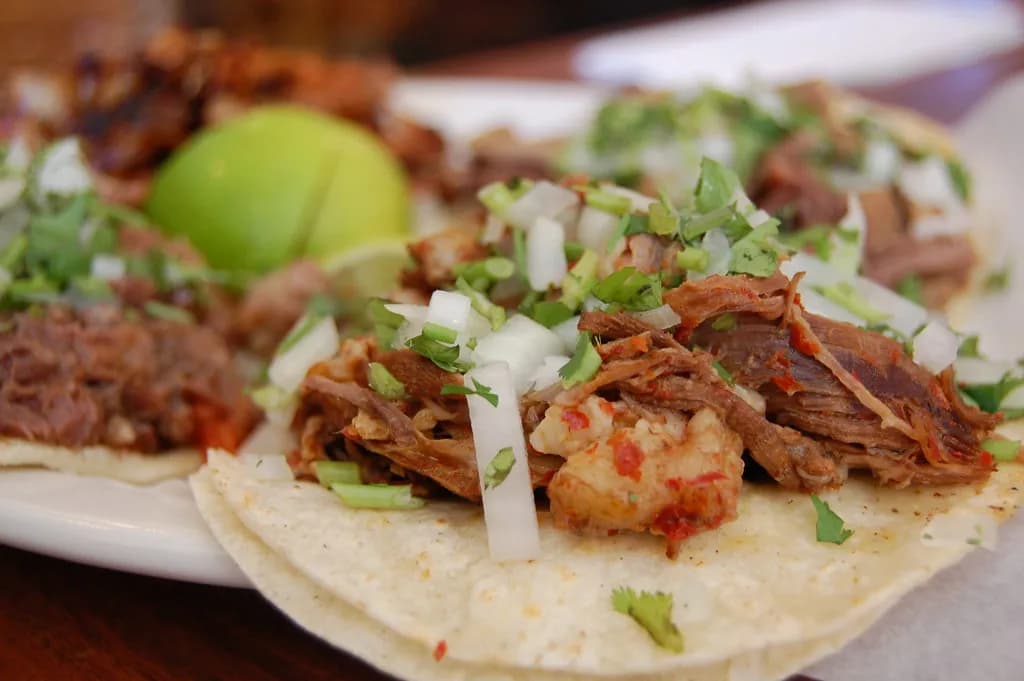
A taco dipped in its own broth, dragged through a puddle of melted cheese, sounds like a gimmick invented for a video. It wasn't. Birria has been simmering in Mexican kitchens for generations, and its current global takeover started, fittingly, in a barbershop parking lot.
Birria itself traces back to Jalisco, where it was traditionally made with goat meat stewed in a deeply spiced chile broth. The version that broke internationally, though, comes from Tijuana, where cooks swapped in beef for a higher yield and built the dish around a border city's appetite, a shift that has been evolving since at least the 1980s, according to Texas Monthly.
Who started the birria tacos trend?
Ruben Ramirez and Oscar Gonzalez discovered quesabirria on a trip to Tijuana and decided to bring beef birria back with them. In 2015 they opened Birrieria Gonzalez out of a barbershop's parking lot, marketing almost entirely through Instagram to a young Latinx audience, according to LAist. The strategy worked. Word spread fast enough that other birria trailers began following the same playbook across Los Angeles.
By 2018, viral Instagram posts had turned birria de res into what several outlets have called the must-have taco across the United States. The format that caught on hardest was quesabirria: corn tortillas dipped in the reddened fat skimmed off the braising liquid, griddled with melted cheese and shredded meat folded inside, then served alongside a cup of consomme for dipping.
Why did birria explode beyond tacos?
Once the base stew proved it could travel, kitchens started plugging it into other formats. Taco Cabana ran a birria quesadilla on its menu from December 2021 through January 2022. Birria ramen, which first appeared in Tijuana, made its way north and eventually landed on chains including Del Taco, according to reporting on the dish's spread. Consumer research firm Datassential tracked birria's menu appearances growing 144 percent over four years, according to CNBC, a pace few single ingredients or preparations manage to sustain.
Part of the appeal is structural. Birria is a braise, which means it's forgiving, scalable, and, once made, endlessly adaptable. A pot of birria can become tacos one night, ramen the next, a quesadilla after that, without much additional labor. That flexibility made it an easy sell for restaurant groups looking to stretch one prep across multiple menu items.
Is birria's popularity deserved?
Culinarily, yes, when it's done with the respect the dish demands. A proper birria broth takes hours of slow braising with dried chiles, and the payoff, meat that shreds effortlessly, a broth rich enough to dip bread in, a crust that forms when the fat hits a hot griddle, is genuinely one of the more technically satisfying things happening in casual dining right now.
The risk is dilution. As birria has spread onto fast food menus and generic Mexican fusion spots, some versions cut corners on the broth, relying on shortcuts that miss what made the dish special in the first place: depth built slowly, not bottled. Nation's Restaurant News has tracked its rise across chain menus, a sign the format has staying power even as quality varies wildly from kitchen to kitchen.
Where does birria go from here?
Texas Monthly posed a sharper question worth sitting with: whether birria's ubiquity threatens the broader taco culture it emerged from, flattening a specific regional dish into a generic trendy Mexican food category, or whether its popularity is actually saving smaller taco culture by keeping attention and money flowing toward it. Both things can be true at once.
What's certain is that birria isn't retreating back to Tijuana anytime soon. It has become a base ingredient as much as a dish in its own right, one that restaurant menus keep finding new ways to use.
What makes a birria broth authentic?
A proper birria starts with a paste of dried chiles, guajillo and ancho most commonly, toasted and rehydrated before being blended with garlic, cumin, oregano, and sometimes cinnamon or clove for warmth. That paste gets worked into the braising liquid alongside the meat, traditionally goat in Jalisco, more often beef in the Tijuana style that dominates the US trend, and left to cook low and slow for several hours until the meat falls apart easily and the broth deepens into a rich, reddish brown.
The fat that rises to the top of that broth during cooking is what makes quesabirria possible. Dipping a tortilla in that rendered, chile-stained fat before griddling it gives the shell its color and a flavor base that plain oil can't replicate, one reason why shortcuts that skip the braising step entirely tend to fall flat next to the real thing.
How do you tell a good birria spot from a mediocre one?
The consomme is usually the giveaway. A kitchen that's actually braising its own birria will have a broth with real depth and visible richness from rendered fat, meant to be sipped or used for dipping alongside the tacos. Versions built from bouillon or a thin, watery base are a sign the kitchen is cutting the hours-long process short, and the tacos built from that shortcut broth rarely have the same intensity, no matter how much cheese gets piled on top.
Published in The Outspoken Digest
Editorial desk
Outspoken Digest Food DeskCooking, ingredients, restaurants and the economics of what ends up on the table.
Newsletter
The Digest, in your inbox
One edition, sent when it is ready. No noise, and your address is never passed on.
Read Next
More Latest Trends →
Navi Pillay, the South African Jurist Who Led the UN Gaza Inquiry, Wins the 2026 Nobel Peace Prize
Oct 9, 2026/3 min read

Trump Says the US Will Not Attack Iran Before the Midterms, While Tanker Attacks Cut Hormuz Traffic to a Two-Month Low
Oct 9, 2026/3 min read

Russian Strikes Killed 22 in Pryluky and at Least 30 on Two Buses in Kramatorsk Within Two Days
Oct 9, 2026/2 min read

A Year After the Gaza Ceasefire, More Than 100 Aid and Rights Groups Say It Exists in Name Only
Oct 9, 2026/2 min read