CERN Has Begun Dismantling the Large Hadron Collider to Build Its More Powerful Successor
Crews have been cutting into the tunnel since 7 September, removing 28 superconducting magnets on either side of the ATLAS and CMS detectors, the first physical step in a four-year rebuild meant to triple the collider's collision rate.
Saturday, September 26, 2026/2 min read
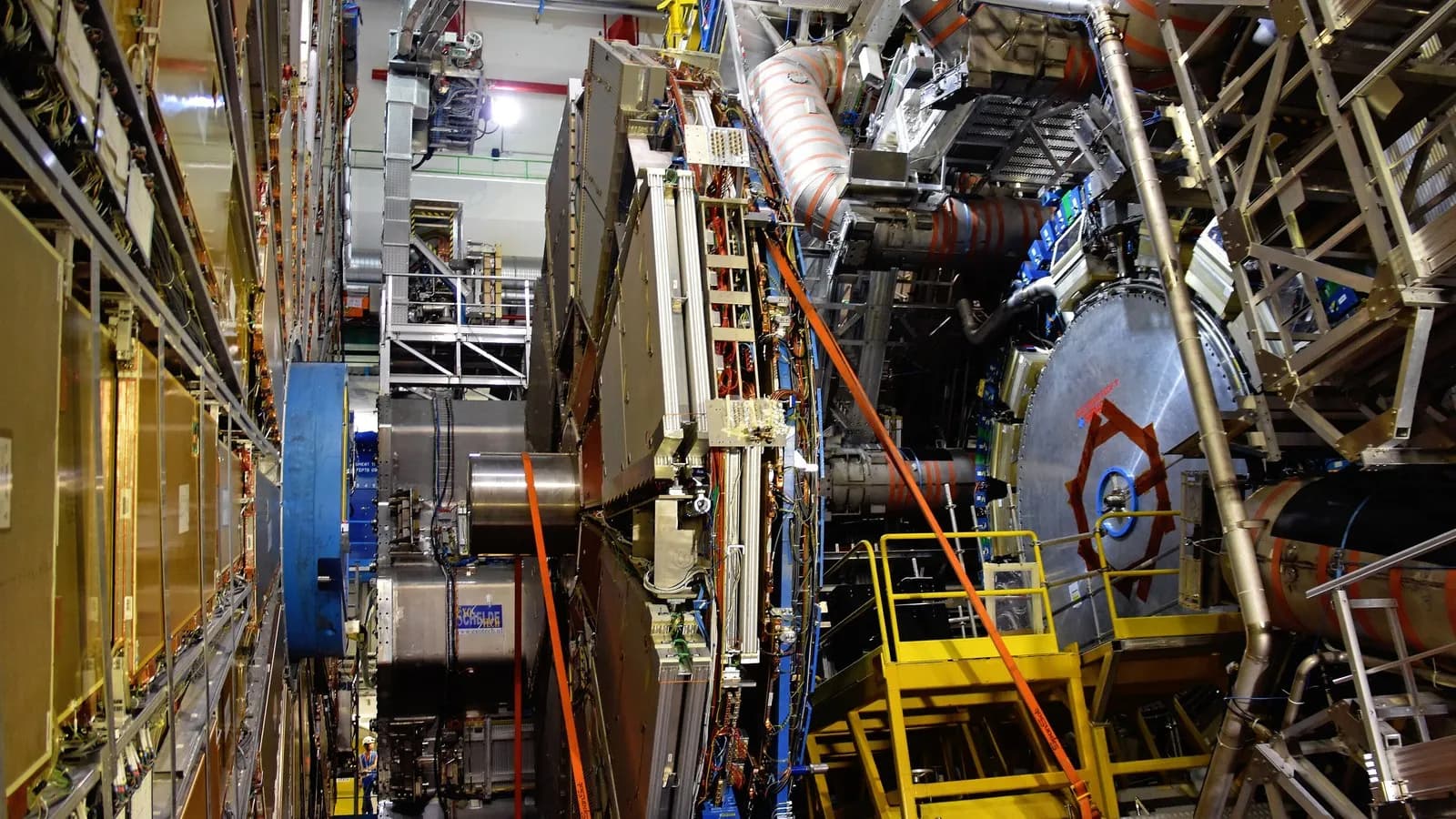
After eighteen years of smashing protons together beneath the border of France and Switzerland, the Large Hadron Collider has gone quiet, and CERN engineering teams have begun taking it apart. ScienceDaily reports that crews have been dismantling sections of the 27-kilometre tunnel on either side of the ATLAS and CMS detectors since 7 September, cutting the first magnet interconnection in the days since to formally begin removing 28 superconducting magnets, including the inner triplets that focus the proton beams into collision at the two experiments' hearts.
Why the world's largest machine is being switched off
The shutdown, which CERN calls Long Shutdown 3, follows the collider's final physics run of its current configuration and is expected to last up to four years, according to CERN's own account of the programme. The goal is not to end the LHC's working life but to rebuild its guts for the High-Luminosity LHC, a upgrade that will let the accelerator produce far more proton collisions per second than the current machine can manage, giving physicists a much larger dataset to hunt for rare processes that today's collision rate simply does not produce often enough to study with confidence.
What is actually being swapped out
The removed niobium-titanium magnets are being replaced with a new generation built from niobium-tin superconducting coils, a material that can sustain stronger magnetic fields and therefore squeeze the proton beams into a tighter, more collision-prone path at the interaction points. CERN's farewell statement on entering Long Shutdown 3 describes a parallel programme of work beyond the magnets themselves, including new superconducting radiofrequency crab cavities, which tilt the proton bunches as they cross so that more of each bunch actually collides rather than passing by its counterpart, and reinforced radiation protection systems around the upgraded hardware.
A four-year wait with a specific purpose
Thousands of engineers and physicists across CERN's sites are involved in the rebuild, and the timeline reflects the sheer physical scale of the job: removing and replacing magnets that weigh many tonnes each, buried in a tunnel a hundred metres underground, without damaging the delicate detector instrumentation on either side. The High-Luminosity LHC is not a new collider in a new tunnel; it is the same ring, rebuilt to run harder, and CERN's own planning documents treat the extra data it will eventually produce as the clearest remaining path to detecting physics beyond the Standard Model that the current LHC has not had the statistical power to confirm or rule out.
What happens while the tunnel is empty
With the beams off for years rather than months, CERN's other experiments and its accelerator complex outside the main ring continue their own work independently, and the laboratory has published a revised operating schedule for the years ahead as the upgrade proceeds in stages. For a machine that has already delivered the discovery of the Higgs boson and over a decade of subsequent measurement, the current silence in the tunnel is not retirement. It is preparation for a machine built to run at a pace the original LHC was never designed to sustain.
Published in The Outspoken Digest
Editorial desk
Outspoken Digest Science DeskReports for The Outspoken Digest across Technology, Latest Trends, Health.
Newsletter
The Digest, in your inbox
One edition, sent when it is ready. No noise, and your address is never passed on.
Read Next
More Technology →
Some White Dwarfs Would Look Green, Pink or Purple, Warwick Astronomers Calculate
Oct 15, 2026/2 min read
Oxford Physicists Reproduce the Aharonov-Bohm Effect on a Hybrid Quantum Computer
Oct 15, 2026/2 min read
Japan Will Fund Up to $21 Billion for Two GlobalFoundries Chip Plants in New York
Oct 15, 2026/2 min read

Apple's $299 HomeView Smart Display Takes Preorders, but Not in the European Union
Oct 15, 2026/2 min read