CoreWeave Shares Fall 25 Percent in a Week as Its Bonds Flash Warning Signs for AI's Borrowers
A roughly $50 billion debt load, a bond yield that briefly topped 16 percent and a record price for insuring its debt have turned a data-centre darling into a test of the AI funding model.
Sunday, October 18, 2026/2 min read
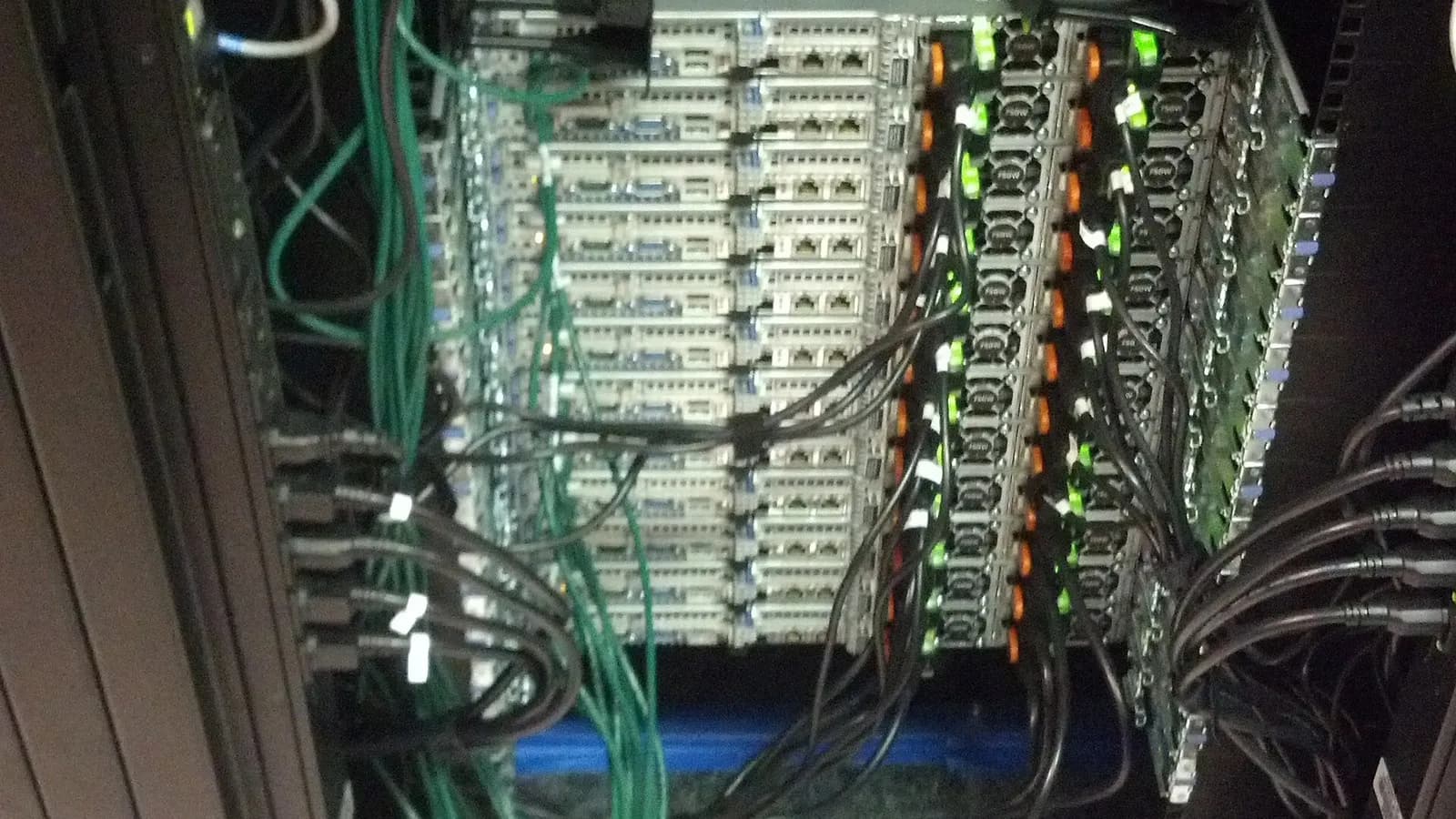
The stock of CoreWeave, the cloud company that rents Nvidia chips to AI developers, had its worst week in more than 11 months. Shares fell more than 11 percent on Friday, taking the weekly loss to about 25 percent, Reuters reported in a story carried by AOL.
The company's problem is not that demand has vanished. It is the cost of the money it borrowed to meet that demand, and this week the bond market started charging more for it.
How big is CoreWeave's debt problem?
CoreWeave carries about $50 billion of debt. The yield on its October 2031 dollar bond briefly rose above 16 percent on Thursday, and the bond is on track to fall for a fifth straight week. The cost of insuring the company's debt through credit default swaps passed 1,000 basis points, a record, per S&P Global Market Intelligence data cited by Reuters.
The trigger was the same hot inflation data that rattled stocks all week, which lifted bets on interest-rate hikes. Higher rates are punishing for firms that finance data centres with borrowed money. The shares dropped 15.5 percent on Wednesday, the week's worst day, and short sellers made about $806 million that day, according to ORTEX data in the Reuters report.
Who else is hit?
The damage spread to similar companies. Nebius Group fell 10 percent on the week, its steepest in two months, while Applied Digital and IREN each dropped 9 percent. A fund manager quoted by Reuters said the problem extends beyond CoreWeave to several companies in the same category.
The Wall Street read-across was broad. The Nasdaq had its worst week since June, and an analyst at Index & Cie told Reuters that CoreWeave should not be taken as the poster child for AI.
Is there a case for buying the dip?
Some analysts think so. TheStreet reported that Cantor Fitzgerald's Brett Knoblauch kept an overweight rating and a $176 price target, arguing that almost all of CoreWeave's 2027 capacity is sold and that Nvidia backstops unsold capacity. Revenue in the second quarter was $2.58 billion, up 112 percent from a year earlier, and the company reports a backlog above $100 billion that it has not yet earned.
Nvidia is the second-largest investor. Chief executive Jensen Huang said CoreWeave's strength is improving every day, and that its cost of capital is falling. The endorsement did not lift the shares. Evercore also kept its outperform rating, arguing the market now reads higher bond yields as proof the business model has stopped working.
Insiders have been sellers too. Reuters said chief executive Michael Intrator and linked entities have sold nearly $1 billion of stock since the March 2025 listing, mostly under pre-arranged plans, while retail investors bought a net $66 million this week.
What happens next?
The test is whether credit markets keep lending to AI builders at tolerable prices. If the bond yield stays above 15 percent, CoreWeave's growth gets expensive. If rates ease or Nvidia steps in harder, the sell-off may look like a buying chance. Until then, the company is the stock to watch for how much strain AI's debt-funded boom can take.
Published in The Outspoken Digest
Editorial desk
Outspoken Digest Markets DeskReports for The Outspoken Digest across Business, Crypto.
Newsletter
The Digest, in your inbox
One edition, sent when it is ready. No noise, and your address is never passed on.
Read Next
More Business →
Nasdaq Ends Its Worst Week Since June as Chip Stocks Slide and Oil Climbs Toward $110
Oct 18, 2026/2 min read

ECB Clears UniCredit to Go Past 30 Percent of Commerzbank, Opening the Way to Control by Year-End
Oct 17, 2026/2 min read

Indonesian Stocks Plunge Nearly 12 Percent, the Worst Day Since 1998, After MSCI Floats a Downgrade to Standalone Status
Oct 16, 2026/2 min read

Kospi Plunges Almost 8 Percent and the Nikkei Falls 5 Percent as the Tech Sell-Off Spreads to Asia
Oct 15, 2026/2 min read