Inside the DAN Europe Mission That Brought the Maldives Divers Home
Finnish cave specialists, Maldivian coast guard divers and DAN Europe medics carried out a coordinated recovery after the Vaavu Atoll cave tragedy.
Friday, May 22, 2026/4 min read
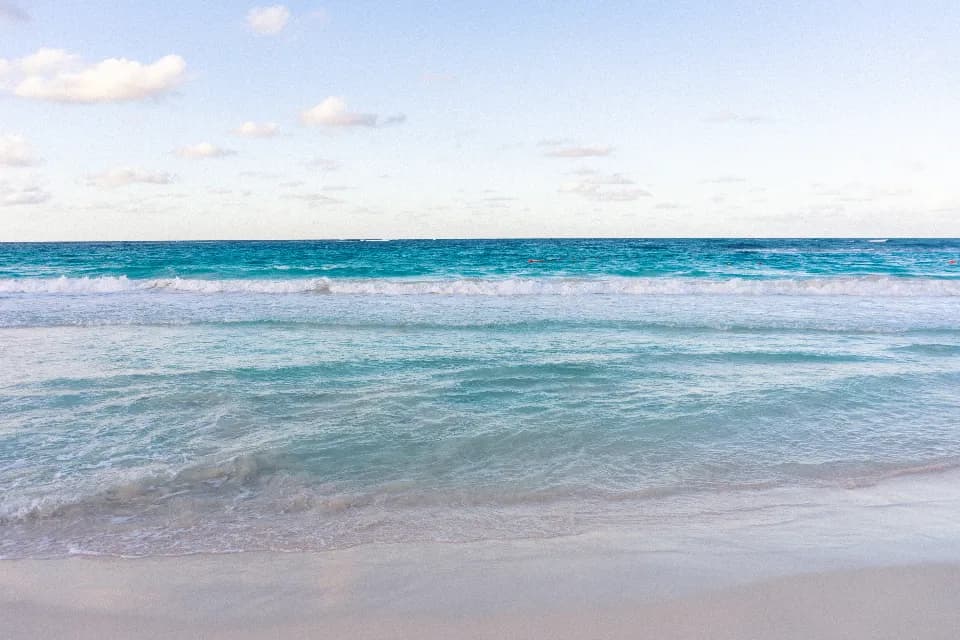
By the time the last body was brought to the surface off Alimathaa Island, the operation to recover the victims of the Dhekunu Kandu cave tragedy had run for the better part of a week, drawn in three countries' worth of expertise, and cost one more life among the rescuers themselves.
Five Italian divers died in the cave on 14 May 2026. What followed was not a single dramatic rescue but a careful, staged logistical effort, the kind of work that rarely makes headlines because it is deliberately unspectacular. That is the point. Recovering bodies from 55 metres inside an overhead cave environment is one of the most demanding tasks in diving, and doing it without losing anyone else requires discipline that looks, from the outside, almost like patience.
Who led the recovery operation
DAN Europe, the diving safety and medical organisation, confirmed it had mobilised an international task force to support Maldivian and Italian authorities, working alongside the Maldives National Defence Force and the Maldives Police Service. According to DAN Europe's own statement on the operation, the search and recovery mission ran from roughly 16 to 21 May, with the most technical diving work concentrated in its final days, 18 to 21 May.
DAN Europe's leadership was directly involved in coordinating the response. Laura Marroni, the organisation's CEO, was quoted saying: "Before being doctors, researchers, or emergency specialists, we are divers helping other divers." Alessandro Marroni, DAN Europe's president and founder, Dr Chiara Ferri, its medical director, and Guy Thomas, its safety director, were also involved in overseeing the mission's medical and safety framework.
The Finnish divers who did the in-cave work
The technical recovery itself was carried out by three Finnish cave diving specialists: Sami Paakkarinen, Jenni Westerlund and Patrik Grönqvist. Coverage from Divernet and a detailed account from Scuba Diving Industry Magazine note that Paakkarinen and Westerlund had both taken part in the 2014 Plura Cave recovery mission in Norway, the operation later documented in the film Diving Into The Unknown, as well as a cave recovery in Mexico the same year. Grönqvist was also part of the Plura mission. These were not divers brought in cold. They were among a very small pool of people in the world qualified to do this specific, grim work safely.
The team dived into the waters off Alimathaa in Vaavu Atoll to reach the Italian divers, who had not surfaced after entering the cave, whose entrance sits at roughly 47 metres, on the afternoon of Thursday 14 May. According to Il Sole 24 Ore's reporting, the Finnish divers were trained and equipped for depths well beyond what the recovery required, a deliberate margin of capability built into the plan.
The handover chain from cave to surface
Once inside the cave, the Finnish divers brought each victim out and up to roughly 30 metres, a depth chosen so that Maldivian coast guard divers could take over the ascent from there to the surface. On reaching the boats, the victims were transferred onto stretchers and brought aboard coast guard vessels. This staged handover, deep specialist to shallower support diver to surface crew, is standard practice in technical recovery work: it limits the time any one diver spends at extreme depth and keeps the most demanding portion of the dive in the hands of those most rehearsed for it.
A mission suspended, then resumed
The operation was not continuous. It was suspended for a period after MNDF Staff Sergeant Major Mohamed Mahudhee, one of the Maldivian forces' most experienced divers, died of decompression sickness while taking part in the search, a loss covered in full in a separate article in this series. The mission resumed once the immediate response to that loss had been managed, and DAN Europe maintained continuous medical supervision of the rescue divers throughout, monitoring them for the physiological toll of repeated deep technical dives across several consecutive days.
What the mission represents
By its conclusion, the operation had recovered all six victims: the five Italian divers and Sergeant Major Mahudhee. It stands as one of the more complex multinational dive recovery efforts undertaken in the Maldives, coordinating a European medical and safety organisation, Nordic cave specialists, and Maldivian military and police divers under a single operational structure, all built around a single goal that had nothing to do with drama: bringing six people home to their families.
Investigations into the original incident continue in both the Maldives and Italy. The recovery mission itself, however, is complete, and its record now sits alongside the growing conversation in the Maldives about how technical diving should be regulated going forward.
Why recovery missions of this size are rare
Multinational technical recovery operations at this scale are uncommon precisely because the pool of divers qualified to do the work safely is small. Cave recovery diving demands a combination of extreme depth capability, overhead environment training, and the psychological composure to work methodically around human remains, all while managing the same physiological risks, narcosis, gas density and decompression obligation, that made the original dive fatal in the first place. Bringing in Paakkarinen, Westerlund and Grönqvist specifically, rather than assembling a team locally, reflected how narrow that pool actually is.
Coordination as the hidden achievement
What distinguishes this operation from a single rescue dive is the coordination layered on top of it. DAN Europe's role was not confined to supplying divers. It functioned as the connective structure between a Nordic technical team, Maldivian military and police divers, and Italian authorities representing the victims' home country, each with different institutional procedures, different equipment standards and, in the Finnish divers' case, no prior operational relationship with the Maldivian forces they would be working alongside. Assembling that structure inside days, while a search was still active and a rescuer had just died, is arguably as significant an achievement as the underwater work itself, even though it is the part of the story least likely to appear in a headline.
Published in The Outspoken Digest
Editorial desk
Outspoken Digest Diving DeskCovers freediving, recreational and technical diving, dive medicine and the incidents the sport learns from.
Newsletter
The Digest, in your inbox
One edition, sent when it is ready. No noise, and your address is never passed on.
Read Next
More Diving →
Playing Recordings of a Healthy Reef Drew More Coral and Fish Larvae to Artificial Structures Off Hawaii
Oct 9, 2026/3 min read
Blacktip Sharks Can Hear a Sound From Nearly 250 Feet Away and Swim Straight Toward or Away From It
Oct 1, 2026/2 min read
A Sea Turtle Species Never Recorded Nesting in the United States Laid Eggs on a Southern California Beach
Oct 1, 2026/2 min read
Marine Surveyors Confirmed Living Coral Off Benin, More Than Sixty Years After the Reef Was Presumed Dead
Sep 29, 2026/2 min read