Dive Computers and Algorithms: What They Cannot Know About You
A dive computer tracks pressure and time with precision, but the model behind it cannot see the diver wearing it. Here is what that gap actually means.
Thursday, March 19, 2026/5 min read
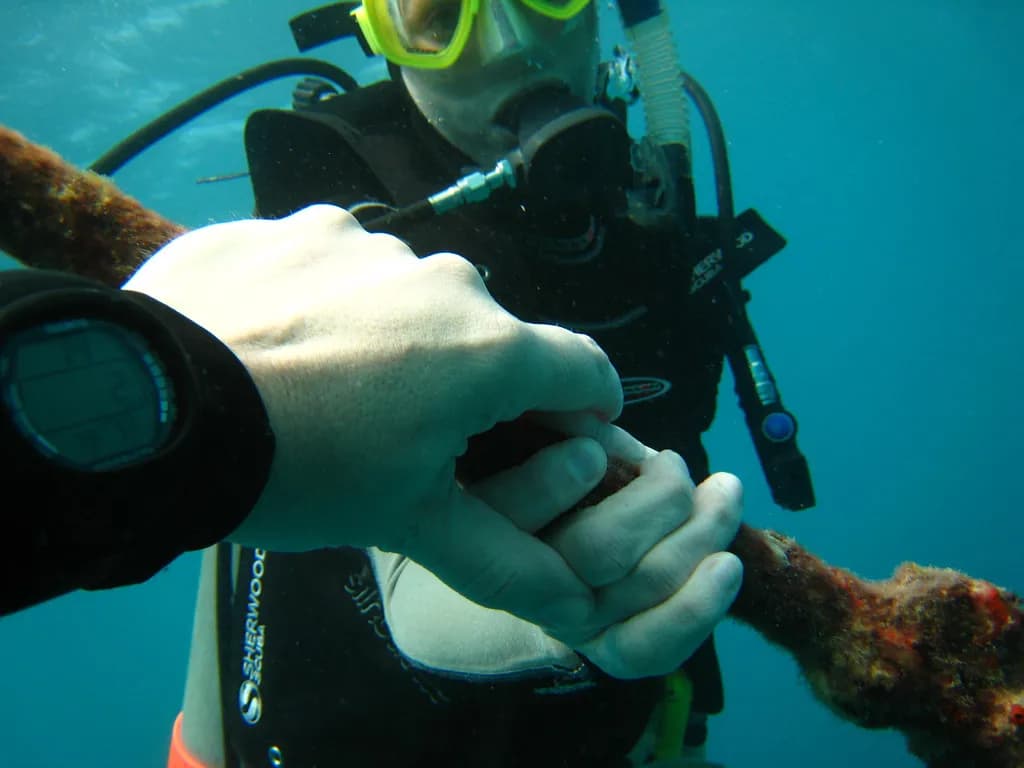
Strap a dive computer on a wrist and it looks like certainty, a number ticking down, a clean readout of exactly how much time is left before a stop is required. Divers trust it the way they trust a car's fuel gauge. The comparison is flattering to the fuel gauge, which measures something physical and present. A dive computer, underneath the display, is measuring nothing about the diver at all. It is running a mathematical guess.
That is not a criticism of the technology. It is the plain, useful truth about what these devices actually do, and understanding it is the difference between using a dive computer well and trusting it more than it has ever claimed to deserve.
What the algorithm actually models
Most modern dive computers run some version of the Bühlmann decompression algorithm or a related descendant of it. According to Wikipedia's technical overview of the Bühlmann decompression algorithm, it is a mathematical model describing how inert gas moves into and out of the body as ambient pressure changes, built on the assumption of perfusion limited gas exchange across multiple theoretical tissue compartments, each modelled with its own exponential rate of absorbing and releasing gas, entirely in the dissolved phase.
In plain terms, the algorithm does not track a diver's actual blood, joints, or nervous system. It tracks a set of imaginary tissue compartments, mathematical stand ins with different absorption rates, calibrated against decades of dive and chamber test data to produce no-decompression limits and decompression schedules that have proven statistically safe across large numbers of real dives. As Scuba Tech Philippines' guide to dive computer algorithms puts it, the models exist to create tables and, in modern dive computers, to compute those limits and schedules in real time as a dive progresses.
The gap between the model and the diver
Here is the limitation that matters most: the model has no way to see the individual physiology of the person wearing it. InDEPTH's essay on dive computer algorithms makes the point bluntly, current dive computer algorithms, without exception, are mathematical models, and there is no dive computer that can actually see into a diver's body and gauge the physiological and metabolic processes that are relevant to decompression sickness in that specific individual, on that specific day.
Age, fitness, hydration, previous injury, body composition, how much a diver slept the night before, whether they are cold or dehydrated during the dive, all of these plausibly affect how a real body absorbs and releases gas, and none of them are inputs the algorithm can measure. It works from depth, time, and gas mix, the variables it can actually sense, and applies a model tuned to be conservative enough to work for most people most of the time, which is a different claim than working for every person every time.
A known blind spot: repetitive and multi-day diving
The gap is not evenly distributed across dive styles. As the Wikipedia overview of the underlying model notes, an obvious limitation shared by the Bühlmann approach and its predecessors is that they make no attempt to directly predict the formation of free nitrogen gas, the bubbles that actually cause decompression sickness, instead modelling nitrogen storage as dissolved gas in tissue. Bühlmann-based models are also, according to the same overview, less responsive than some alternative bubble models in adding conservatism specifically for repetitive dives across multiple days, a pattern of diving liveaboards and dive holidays make extremely common.
What divers actually do with that gap
The accepted response among experienced divers and instructors is not to distrust dive computers, but to use their conservative settings deliberately, add personal safety margins beyond the computer's bare minimum no-decompression limit, ascend slower than the computer strictly requires, and take the computer's number as a floor for caution rather than a target to dive right up to. Divers who are older, less fit, dehydrated, cold, or diving repetitively across several days are generally advised to build in extra margin precisely because those are the factors the algorithm cannot see.
This article explains what the technology can and cannot do as journalism, not as a substitute for training. Learning to use a dive computer's settings, conservatism factors, and limits properly is training that belongs with a certified instructor and a recognised diving agency, not something to be concluded from an article.
Why different computers can disagree with each other
Two dive computers on the same dive, worn by the same diver, can sometimes show different remaining no-decompression time, which surprises divers who assume the devices are simply reading a fixed physical fact. They are not. Different manufacturers implement the underlying algorithm with different conservatism settings, different assumed tissue compartment half times, and sometimes entirely different underlying models such as reduced gradient bubble models rather than a pure Bühlmann implementation. A computer set to a more conservative personal setting, or one modelling additional compartments for slow tissues, will naturally report less available time than one running looser default settings, even on an identical dive profile.
That variation is not a sign that one computer is wrong and another is right, it is a visible reminder that every reading on every dive computer screen is the output of a model's assumptions, not a direct measurement of anything happening inside the diver's body in that moment.
What experienced divers do differently
Divers who dive frequently and across varied conditions tend to develop specific habits around this limitation: setting their computer to a more conservative mode after a poor night's sleep, a cold dive, or heavy exertion, avoiding pushing right up to a computer's displayed no-decompression limit on days when they know a risk factor is in play, and treating any lockout or error warning as absolute rather than something to reason around. None of those habits come from distrusting the technology, they come from correctly understanding what the technology is actually built to do, and what it was never built to see.
The honest way to think about a dive computer is as a very good, very consistent estimate, built from real data but blind to the one variable that actually varies most from dive to dive: the person wearing it.
Published in The Outspoken Digest
Editorial desk
Outspoken Digest Diving DeskCovers freediving, recreational and technical diving, dive medicine and the incidents the sport learns from.
Newsletter
The Digest, in your inbox
One edition, sent when it is ready. No noise, and your address is never passed on.
Read Next
More Diving →
Playing Recordings of a Healthy Reef Drew More Coral and Fish Larvae to Artificial Structures Off Hawaii
Oct 9, 2026/3 min read

Blacktip Sharks Can Hear a Sound From Nearly 250 Feet Away and Swim Straight Toward or Away From It
Oct 1, 2026/2 min read

A Sea Turtle Species Never Recorded Nesting in the United States Laid Eggs on a Southern California Beach
Oct 1, 2026/2 min read

Marine Surveyors Confirmed Living Coral Off Benin, More Than Sixty Years After the Reef Was Presumed Dead
Sep 29, 2026/2 min read