Diving the Maldives: Atolls, Channels and the Seasons That Matter
The Maldives is not one dive destination but hundreds of atolls with different currents. Here is how the calendar actually decides what you see.
Friday, August 9, 2024/4 min read
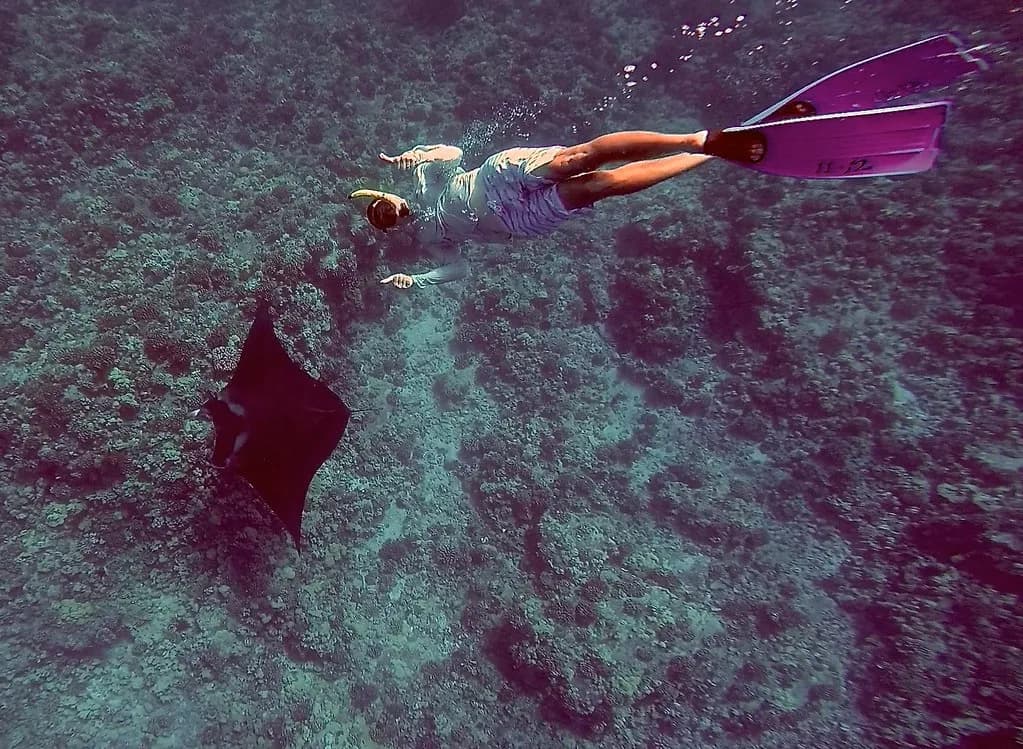
The Maldives sells itself in postcards, overwater villas and glass-floor lounges, but underneath the marketing sits one of the most technically interesting diving regions on earth. Twenty-six natural atolls, thousands of islands, and channels where entire ocean currents funnel between reef walls twice a day. None of that shows up in the brochure photo of an infinity pool.
What does matter, for anyone planning an actual dive trip rather than a beach holiday, is that the Maldives changes character completely depending on the month you book. Two divers visiting six months apart can come home with entirely different stories.
Why atoll geography drives everything
The Maldives sits across the equator in the middle of the Indian Ocean, and its atolls, ring-shaped reef structures enclosing a lagoon, create channels called kandus where open ocean water is forced through narrow gaps on the tide. According to About Diving, these channels are where the country's reputation for big-animal encounters really comes from: the current sweeps in nutrients, and the nutrients bring everything else.
Reef diving inside the atoll lagoons is calmer, shallower and better suited to newer divers or those travelling with family. Channel diving on the ocean-facing side is a different discipline entirely, closer to drift diving, and it rewards divers who are comfortable moving with a current rather than fighting it.
The season that actually controls the calendar
The Maldives runs on two monsoons, and they are the real scheduling tool for any dive trip. The dry season, roughly December through April, brings calmer seas, the clearest visibility, and generally easier diving conditions, according to Liveaboard.com's seasonal guide. The wet season, May through November, brings rougher surface conditions on some routes but is when the country's two most sought-after encounters, manta rays and whale sharks, become most reliable.
Where the manta season actually peaks
Manta ray season runs broadly from May to November, peaking between July and October, and the epicentre is Hanifaru Bay in Baa Atoll, a UNESCO biosphere reserve site where monsoon currents concentrate plankton and, on the best days, draw more than a hundred mantas into a single feeding aggregation, according to IM Maldives. Hanifaru is snorkel-only and tightly managed by marine park rangers, which is worth knowing before planning a scuba-specific trip around it.
Whale sharks, the exception to the calendar
Whale sharks break the seasonal pattern that governs most of the rest of Maldivian diving. South Ari Atoll holds a resident population of juvenile whale sharks year round, according to ZuBlu, making it the more dependable bet for divers whose trip dates are fixed and whose top priority is a whale shark rather than a manta aggregation. Sightings cluster around Dhigurah on the atoll's eastern side during the wet season and shift west during the dry months.
Channel diving and the northern atolls
For divers less focused on a single headline species and more interested in classic drift and channel diving, the northern atolls carry a reputation for stronger currents, cleaning stations thick with reef sharks, and a higher baseline chance of encountering pelagics on any given dive, a pattern noted by Explorer Ventures in its route planning for the region. This is where a liveaboard itinerary earns its cost: land-based resort diving simply cannot cover the distances between the best channel sites in a single week.
Liveaboard versus resort-based diving
How a diver experiences the Maldives also depends heavily on whether the trip is resort-based or run from a liveaboard. A single resort typically has access to a handful of house reefs and a limited radius of day-trip sites, which suits divers who want a relaxed week built around one island. A liveaboard, by contrast, can cover several atolls in a single itinerary, reaching channels and outer reef walls that a resort boat simply cannot get to and back from in a day. According to operators running multi-atoll routes, this is usually the deciding factor for divers whose main goal is maximising the range of sites and species seen in a single trip, rather than comfort on land between dives.
Planning around, not against, the water
The mistake newer visitors make is booking Maldives diving the way they would book a Caribbean beach trip: whenever flights are cheapest. The Maldives rewards the opposite approach, deciding first what you actually want from the water (calm training dives, a manta aggregation, a resident whale shark population, or serious channel current) and then choosing the month and atoll that matches it.
Before booking a Maldives dive trip
- Match your certification and comfort with current to the atoll and season you are booking, not the other way around.
- Confirm which sites require Advanced Open Water or equivalent, since several of the best channel dives do.
- Respect marine park rules around protected sites like Hanifaru Bay, which change and are enforced by local rangers.
Conditions, marine park regulations and seasonal patterns in the Maldives shift from year to year, so divers should confirm current guidance with a licensed local operator before finalising any trip, rather than relying on general seasonal averages alone.
Done with that planning in mind, a Maldives dive trip delivers on a promise few destinations can genuinely make: a real chance, backed by geography rather than luck, of swimming alongside animals most divers only ever see in documentaries, provided the trip is planned around the water's actual rhythm rather than a fixed holiday calendar.
Published in The Outspoken Digest
Editorial desk
Outspoken Digest Diving DeskCovers freediving, recreational and technical diving, dive medicine and the incidents the sport learns from.
Newsletter
The Digest, in your inbox
One edition, sent when it is ready. No noise, and your address is never passed on.
Read Next
More Diving →
Playing Recordings of a Healthy Reef Drew More Coral and Fish Larvae to Artificial Structures Off Hawaii
Oct 9, 2026/3 min read
Blacktip Sharks Can Hear a Sound From Nearly 250 Feet Away and Swim Straight Toward or Away From It
Oct 1, 2026/2 min read
A Sea Turtle Species Never Recorded Nesting in the United States Laid Eggs on a Southern California Beach
Oct 1, 2026/2 min read
Marine Surveyors Confirmed Living Coral Off Benin, More Than Sixty Years After the Reef Was Presumed Dead
Sep 29, 2026/2 min read