Dubai Chocolate: The Viral Bar That Emptied the World's Pistachios
A home cooking experiment in a Dubai kitchen turned into a global chocolate craze, a pistachio shortage, and a wave of copycats chasing the same viral bite.
Wednesday, September 10, 2025/5 min read
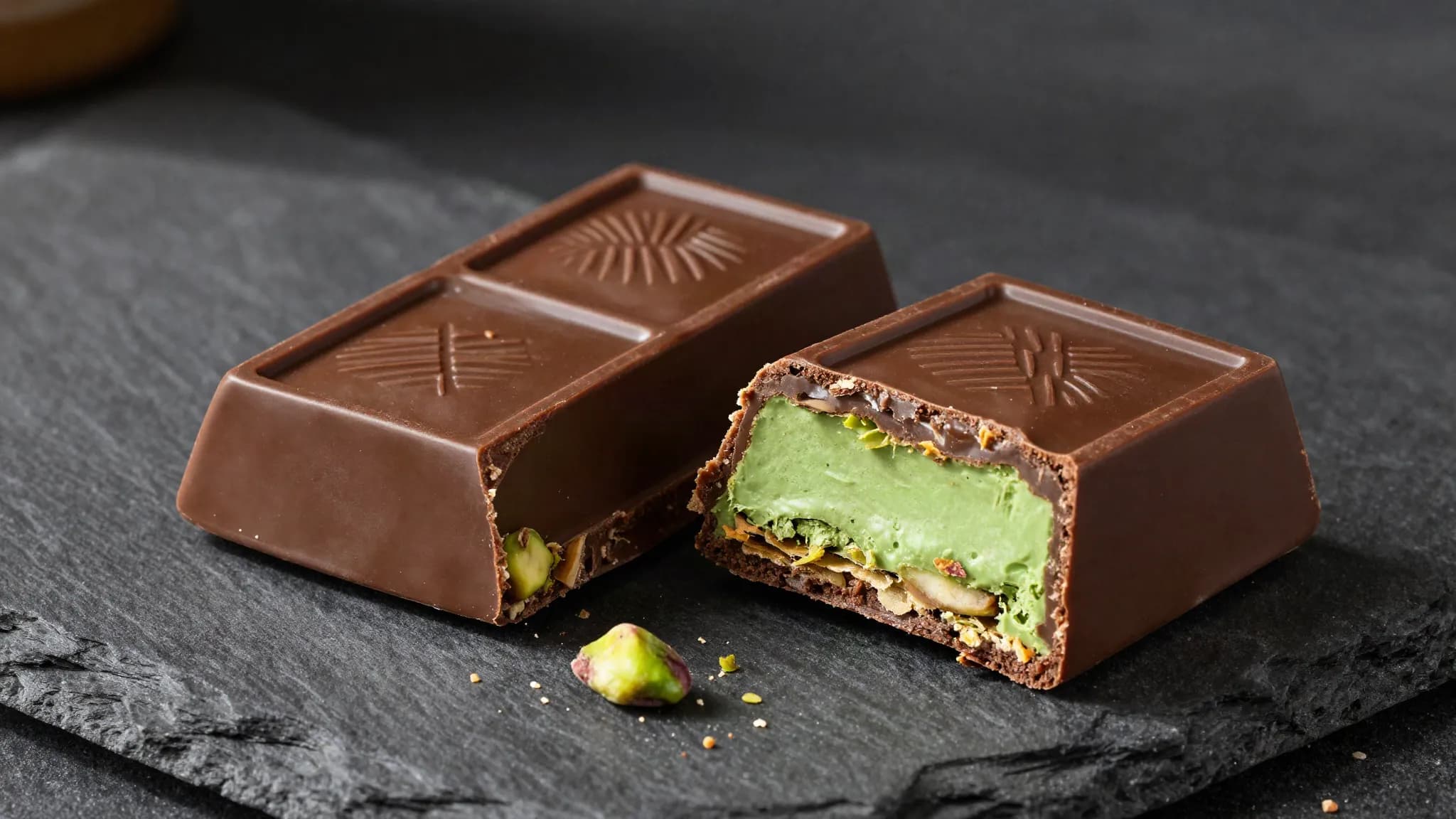
Dubai chocolate is a thick filled chocolate bar containing pistachio cream and shredded kataifi pastry, created in 2021 by Fix Dessert Chocolatier, a small Dubai company founded by Sarah Hamouda. It went global in late 2023 after a single TikTok video, and the demand it created has been large enough to move the world pistachio market.
Somewhere in a Dubai kitchen in 2021, a pregnant woman with a craving she couldn't quite name started melting chocolate. She wasn't trying to start a global shortage of pistachios. She just wanted something better than what was on the shelf.
Her name is Sarah Hamouda, and the bar she eventually built, a thick slab of chocolate cracked open to reveal a gooey seam of pistachio cream and toasted kataifi pastry, is now the most talked about dessert on the internet. Under the label Fix Dessert Chocolatier, it has a name that sounds like a dare: Can't Get Knafeh of It.
The bar has been around, in one form or another, since 2022. What changed everything was a single TikTok video, posted on December 18, 2023, by an influencer named Maria Vehera. She sat in her car and bit into the bar on camera. The snap, the pull of melted pistachio filling, the crunch of the kataifi underneath, it was pure ASMR bait, and it detonated. The clip has been watched well over 100 million times, according to CBC News.
Who actually invented Dubai chocolate?
Hamouda is the founder of Fix Dessert Chocolatier, and by her own account the bar came out of pregnancy cravings and a dissatisfaction with what was already on offer in Dubai's dessert scene, according to CNN. She spent hours in her home kitchen adjusting the ratio of pistachio cream to shredded, toasted kataifi, chasing a texture that would hold together and still ooze on the bite. Early batches went out as gifts to friends before the brand ever had a storefront.
The filling borrows directly from knafeh, the Middle Eastern dessert of shredded phyllo, sweet cheese or cream, and syrup that has been served across the region for generations. As Smithsonian Magazine traced it, the roots of that pastry stretch back centuries before anyone had a phone to film it. Hamouda's contribution wasn't a new flavor so much as a new format: knafeh, but portable, shelf stable, and wrapped in chocolate.
Why did the Dubai chocolate bar go viral?
Part of it is pure sensory engineering. The bar was practically built for a phone camera: the visual crack of the chocolate shell, the slow-motion pull of filling, the ASMR crunch. It hit at a moment when TikTok's food side was hungry for something new after years of feta pasta and whipped coffee.
Part of it is scarcity. Fix Dessert Chocolatier was, and largely still is, based in the UAE, which meant most of the world could look but not easily order. That kind of geographic distance is rocket fuel for hype. When Hamouda told Franki T that the brand logged 30,000 orders in a single hour after the video hit, that wasn't marketing spin, it was a supply chain problem in real time.
What is Dubai chocolate actually made of?
Strip away the branding and the bar is built from three components: a tempered chocolate shell, a pistachio cream or paste filling, and shredded kataifi (sometimes called kadayif) that's been toasted in butter until it turns golden and crisp, then folded through the filling for texture. Some versions swap in tahini, vanilla custard, or even Turkish tea and biscuit flavors, but the pistachio and kataifi combination is the one that made the format famous.
Is Dubai chocolate causing a pistachio shortage?
Yes, and this is the part of the story that has stopped being cute. As FoodNavigator and other trade outlets have reported, the sudden global demand for pistachio-filled chocolate has strained supply out of the United States, Iran, and Turkey, the three biggest pistachio producing countries. Wholesale pistachio prices in Turkey have nearly doubled. Retailers in several countries have started rationing pistachio-based chocolate products because suppliers can't keep pace.
Copycat bars have multiplied everywhere from supermarket own-brands to artisan chocolatiers, and not all of them are being honest about what's actually inside. Reports of dubious Dubai chocolate using cheaper nut pastes or synthetic flavoring have started to surface as the real thing gets harder to source at scale.
Does the hype match the taste?
By most independent accounts, yes, at least the original does. The textural contrast between the shattering chocolate shell, the gooey pistachio center, and the crisp kataifi is genuinely unusual, and unusual textures are rare in mass market chocolate. It isn't subtle. It isn't trying to be. It's a dessert built to be filmed and eaten in one indulgent bite, and on that metric it delivers exactly what the video promised.
Whether it deserves to be reshaping a global commodity market is a separate question, and one that pistachio farmers from California to Iran are currently having to answer in real time as the world discovers just how much of one nut it can suddenly want.
How has Fix Dessert Chocolatier responded to the fame?
Rather than franchising aggressively or licensing the format out to mass manufacturers, Hamouda has largely kept the brand rooted in Dubai, expanding capacity in stages instead of chasing every retail opportunity at once. That restraint has helped preserve some scarcity value, but it has also meant that most of the world experiences Dubai chocolate through imitators rather than the original bar itself, a dynamic that has only fed the mythology around the real thing.
Along the way, the brand has leaned into its status as a homegrown UAE success story, with collaborations and limited flavor drops that keep the product feeling like an event rather than a static grocery item. That approach stands in contrast to how most viral food products eventually get treated once big manufacturers move in, mass produced, shelf stable, and stripped of whatever made the original feel special in the first place.
What should shoppers know before buying a Dubai chocolate bar?
With so many imitators flooding supermarket shelves, price and ingredient lists are the most reliable signals of quality. A genuine kataifi and pistachio filling should list real pistachio paste near the top of the ingredients, not a vague pistachio flavoring or green coloring further down. Bars priced dramatically below the originals are worth treating with suspicion, since real pistachio has gotten expensive enough that a cheap version is unlikely to be using much of it.
For now, Fix Dessert Chocolatier remains based in Dubai, still fighting to keep up with orders, while the rest of the food world tries to figure out whether this is a passing craze or the start of a permanent shift in how chocolate gets made. Either way, the pistachio has never had a moment quite like this one.
Published in The Outspoken Digest
Editorial desk
Outspoken Digest Food DeskCooking, ingredients, restaurants and the economics of what ends up on the table.
Newsletter
The Digest, in your inbox
One edition, sent when it is ready. No noise, and your address is never passed on.
Read Next
More Latest Trends →
Navi Pillay, the South African Jurist Who Led the UN Gaza Inquiry, Wins the 2026 Nobel Peace Prize
Oct 9, 2026/3 min read

Trump Says the US Will Not Attack Iran Before the Midterms, While Tanker Attacks Cut Hormuz Traffic to a Two-Month Low
Oct 9, 2026/3 min read

Russian Strikes Killed 22 in Pryluky and at Least 30 on Two Buses in Kramatorsk Within Two Days
Oct 9, 2026/2 min read
A Year After the Gaza Ceasefire, More Than 100 Aid and Rights Groups Say It Exists in Name Only
Oct 9, 2026/2 min read