Egypt's $5 Billion Clean-Energy Pipeline Is Bigger Than Solar Farms
Scatec's proposed two-year investment program spans batteries, desalination, wind, solar and green data centers, revealing how Egypt wants clean power to support industry.
Outspoken Digest Energy & Infrastructure Desk
Monday, August 3, 2026/2 min read
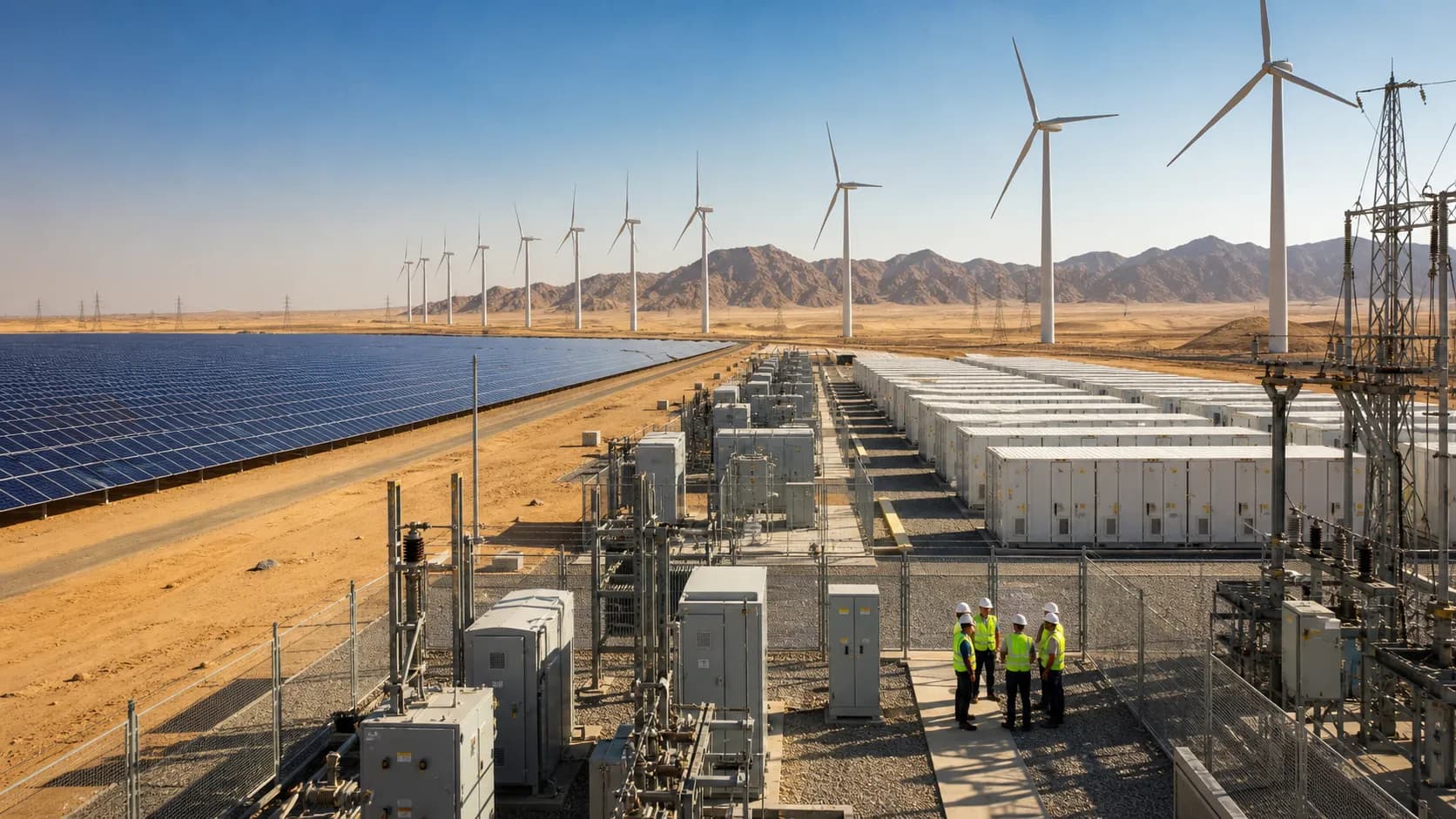
Egypt's latest renewable-energy push is not simply a plan to add more solar panels. Norwegian developer Scatec has outlined potential investment of up to $5 billion over two years across solar, wind, batteries, renewable-powered desalination, green data centers and infrastructure for industrial decarbonization.
The portfolio approach
According to an Egyptian government account of the June talks, the pipeline includes the Obelisk solar-and-storage project in Qena, the much larger Energy Valley development, the Shadwan wind project and clean electricity for Egypt Aluminum.
The common thread is firm power. Solar and wind output vary, while factories, data centers and desalination plants need predictable electricity. Batteries and diversified generation can turn low-cost renewable output into a supply profile that industrial buyers can use.
Obelisk is the proof point
Scatec says the first phase of Obelisk reached commercial operation in February. The full project combines about 1.1 gigawatts of solar capacity with a 100-megawatt, 200-megawatt-hour battery system. The company's commercial-operation announcement says the second phase was under construction for completion during summer 2026.
Delivery matters more than the headline pipeline. Successful commissioning provides evidence about grid connection, financing, construction speed and battery performance. Those results will influence whether larger follow-on projects can attract capital on reasonable terms.
Clean power becomes industrial policy
Egypt wants renewables to lower fuel exposure, meet rising electricity demand and protect exports as overseas buyers impose stricter carbon requirements. Supplying an aluminum plant with solar and storage is therefore not only an environmental project. It is a competitiveness strategy for an energy-intensive industry.
The electricity ministry has said it wants renewable energy to reach 45 percent of the mix by 2028. A June ministry update emphasized grid schedules and battery expansion, showing that integration is now a central policy concern.
The execution risks
A $5 billion intention is not the same as committed capital. Each project needs land, permits, financing, currency protection, equipment, transmission capacity and a creditworthy buyer. Large batteries also require clear operating rules so they are paid for the flexibility they provide.
Readers should follow financial close, signed power-purchase agreements, grid-connection dates and actual commissioned capacity. If those milestones arrive, Egypt will be building more than renewable plants. It will be assembling an energy platform for desalination, digital infrastructure and cleaner industry, with lessons that could travel across the Middle East and Africa.
Published in The Outspoken Digest
Editorial desk
Outspoken Digest Energy & Infrastructure DeskReports for The Outspoken Digest across Technology, Business.
Newsletter
The Digest, in your inbox
One edition, sent when it is ready. No noise, and your address is never passed on.
Read Next
More Business →
Tesla Beats Profit Estimates on $28.05 Billion in Revenue, Then Slips After Hours
Oct 22, 2026/2 min read

Nasdaq Jumps 1.05% as SpaceX and Super Micro Revive the AI Trade While Netflix and AT&T Slide
Oct 22, 2026/2 min read

Jio Platforms Raises Rs 8,110 Crore From Anchors at the Top of Its Range as India's Biggest IPO Opens
Oct 21, 2026/2 min read

Netflix Beats on Profit, Then Slides After Hours as It Trims Its Ad Forecast and Guides Lower
Oct 21, 2026/2 min read