Emirati Thareed: Stew Poured Over Bread That Drinks It
A spiced lamb and vegetable saloona ladled over thin regag bread until it collapses. Ramadan tables across the UAE run on this, and the bread is the point.
Monday, July 27, 2026/3 min read
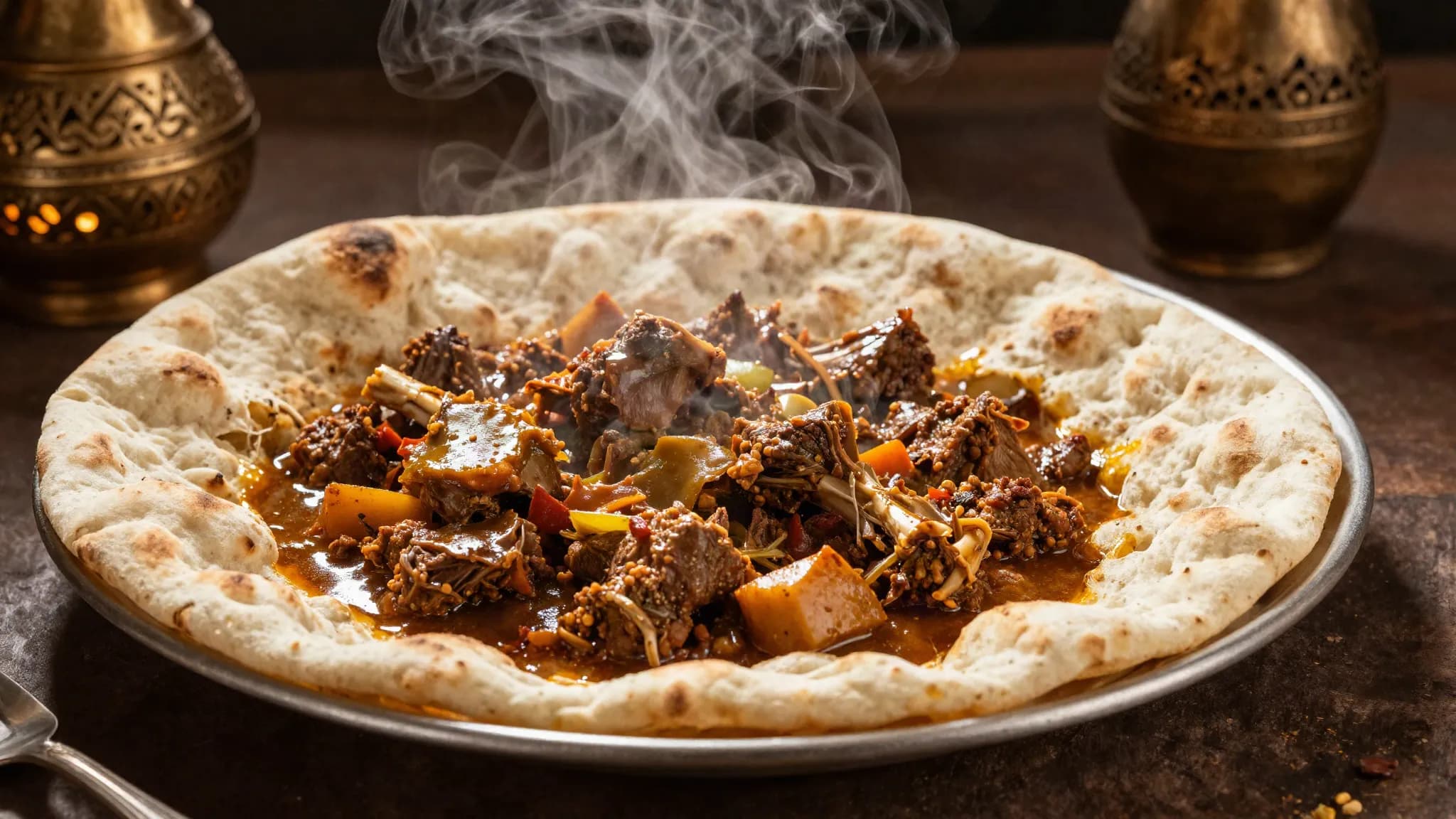
Thareed is a dish about bread, which is an odd thing to say about a stew. The meat and vegetables matter, but the moment that defines it is the pour: hot spiced broth going over layers of thin dried bread until the bread gives up and becomes something between pasta and pudding.
It is a traditional Emirati stew of meat, usually lamb or chicken, with vegetables and spice, served over thin crisp bread that soaks up the broth, as this survey of traditional Emirati dishes describes. The broth itself is a saloona, a spiced tomato base carrying cumin, turmeric and the wider Emirati spice vocabulary. It appears constantly during Ramadan, where a dish that is filling, hot and gentle on an empty stomach earns its place.
Thareed sits within a broader khaleeji repertoire alongside machboos, harees and madrouba, mapped out in this guide to Gulf states gastronomy. It is worth saying plainly that this is not a mansaf variant. It belongs to a separate Gulf tradition with its own logic, and the bread base is the clearest evidence of that.
Ingredients
Serves 5. Total time: 2 hours, mostly unattended.
- 1 kg lamb shoulder on the bone, cut into large pieces, or 8 chicken thighs
- 3 tbsp ghee or vegetable oil
- 2 onions, chopped
- 5 garlic cloves, crushed
- 1 tbsp finely grated ginger
- 2 tbsp tomato paste
- 400 g chopped tomatoes
- 2 tsp ground cumin
- 2 tsp ground coriander
- 1.5 tsp ground turmeric
- 1 tbsp baharat or Emirati mixed spice
- 2 dried limes (loomi), pierced twice
- 1 cinnamon stick
- 1.2 litres water or light stock
- 2 carrots, in thick chunks
- 2 potatoes, quartered
- 1 small marrow or courgette, in thick chunks
- 150 g pumpkin, in chunks
- Salt to taste
- 4 to 6 regag or thin flatbreads, or 3 large thin pitta
Method
- Pat the meat dry and brown it hard in the ghee in a heavy pot, in batches. Crowding the pan steams the meat instead of browning it, and the browning is where a third of the flavour comes from.
- Set the meat aside. Cook the onions in the same pot 8 to 10 minutes until soft and golden, then add the garlic and ginger for a minute.
- Stir in the tomato paste and cook it 2 minutes until it darkens. Add the chopped tomatoes, cumin, coriander, turmeric and baharat and cook 3 minutes more, until the oil separates at the edges.
- Return the meat, add the dried limes, cinnamon and water, and season. Bring to the boil, then reduce to a gentle simmer, cover, and cook 60 minutes for lamb or 35 for chicken.
- Add the carrots and potatoes and simmer 15 minutes. Then add the marrow and pumpkin and cook a further 12 to 15 minutes, until everything is tender but not disintegrating.
- Taste and adjust the salt. Fish out the dried limes if you find them assertive, or press one against the side of the pot to release more of its sourness if you want that edge.
- Toast or crisp the bread briefly in a dry pan or a hot oven until it dries out and snaps. This matters: soft fresh bread turns to slurry on contact.
- Break the bread into a wide serving dish in overlapping layers. Ladle over enough hot broth to soak it, then arrange the meat and vegetables on top and pour the remaining broth over at the table.
Notes, swaps and keeping
Dried limes are the ingredient people leave out and should not. They give a fermented, faintly bitter sourness that no fresh citrus replicates. Pierce them so the broth can get inside, and remember they strengthen the longer they sit.
Regag is the traditional bread, paper thin and cooked on a griddle. Any thin flatbread crisped in the oven does the job. What matters is that it is dry going in.
Chicken thighs make this a weeknight dish at about half the cooking time. A vegetarian version built on chickpeas and the same saloona base works genuinely well, since the spice profile carries it and the bread provides the substance.
The stew keeps three days refrigerated and improves overnight. Assemble with the bread only at the moment of serving, never before, since bread left sitting in broth becomes paste within twenty minutes.
Published in The Outspoken Digest
Editorial desk
Outspoken Digest Food DeskCooking, ingredients, restaurants and the economics of what ends up on the table.
Newsletter
The Digest, in your inbox
One edition, sent when it is ready. No noise, and your address is never passed on.
Read Next
More Recipes →
Cheesy Ramen on the Stove: Instant Noodles in a Real Cheese Sauce in Ten Minutes
Oct 18, 2026/3 min read
Beer-Battered Jalapeno Cheese Curds: The Wisconsin Bar Snack, Fried Properly at Home
Oct 18, 2026/3 min read
A Thanksgiving Turkey Sub With Hot Stuffing, Cranberry and Gravy to Dip
Oct 17, 2026/3 min read

Pecan Pie Bars With a Shortbread Base and a Caramel Filling That Slices Cleanly
Oct 17, 2026/3 min read