Cassini's Old Data Just Showed How Enceladus Sorts Its Ocean Chemistry Into Different Ice Grains
A reanalysis of nearly a thousand ice grain spectra from Saturn's icy moon found that freezing droplets separate salts into distinct pockets, a sorting process that could make it far easier for a future probe to detect organic chemistry from its hidden ocean.
Thursday, October 1, 2026/3 min read
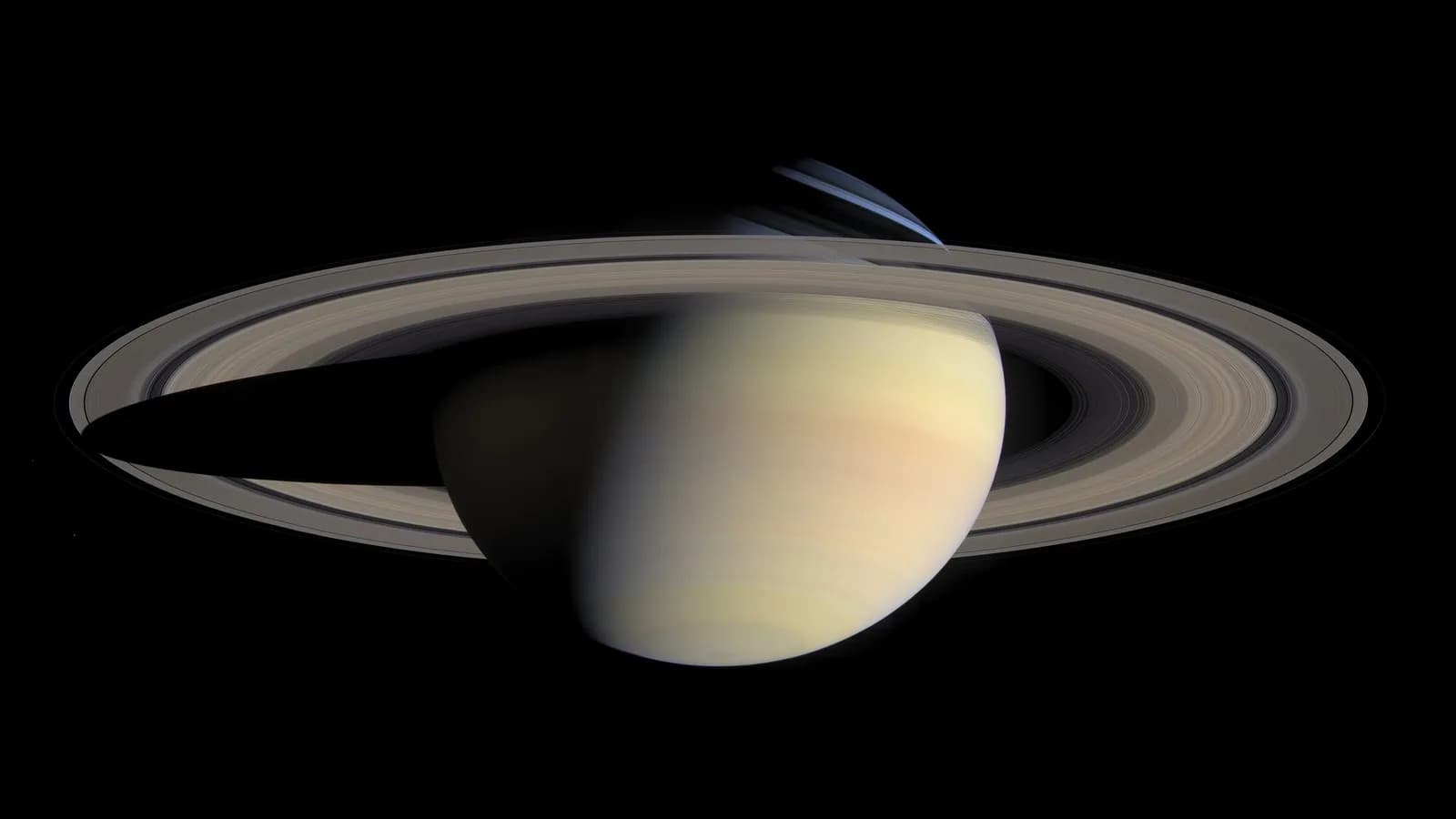
A team led by Frank Postberg at the Freie Universitat Berlin has worked out why the ice grains blasting out of Saturn's moon Enceladus carry such a confusing mix of chemical signatures, publishing a study on 28 September that reanalysed 961 mass spectra collected by NASA's Cassini spacecraft before it ended its mission in 2017. The report on the findings describes how the grains, known to researchers as Type 3 particles, show striking chemical diversity from one grain to the next, with some rich in sodium chloride and others dominated by carbonates, phosphates or potassium chloride.
A hidden ocean leaking through cracks
Enceladus hides a liquid water ocean beneath an icy crust, and that ocean escapes into space through cracks near the moon's south pole, freezing into grains as it sprays outward in plumes that Cassini flew directly through during several of its closest passes. Because those plumes offer a direct physical sample of an alien ocean without the need to drill through kilometres of ice, planetary scientists have treated Enceladus as one of the solar system's most accessible targets in the search for conditions that could support life.
Why the grains vary so much
The new analysis found that when a droplet of ocean water freezes slowly enough, different salts separate into distinct regions within the same grain, with sodium chloride concentrating on one side and potassium chloride on another, roughly the way impurities push to the edges of an ice cube as it forms in a freezer. As grains accelerate through the moon's vents, collisions with the icy walls can then shatter them into smaller fragments that each carry an uneven slice of that original chemical layering, which explained why Cassini's instruments kept recording what looked like mismatched readings from what should have been a single, well mixed ocean.
Published in Science Advances
The study appeared in the journal Science Advances with the citation Science Advances, 2026, 12 (39), and included scientists from UC Riverside alongside the Freie Universitat Berlin team. A summary from UC Riverside said the sorting mechanism means a future spacecraft equipped with the right instruments could target specific grains more likely to carry concentrated organic material, rather than averaging across a jumble of chemically mixed particles the way Cassini's instruments effectively did.
What it means for the hunt for life
NASA has no confirmed mission yet dedicated solely to Enceladus, though the moon has repeatedly come up in proposals for a dedicated orbiter or lander that would fly through its plumes with more sensitive mass spectrometers than Cassini carried. Knowing that the grains sort themselves by freezing physics rather than random mixing gives mission designers a genuine advantage, since it suggests that sampling multiple grain types, rather than relying on a single bulk measurement, could reveal far more about the chemistry of the ocean underneath without needing to land on the moon's surface at all.
A decade of data still paying off
Cassini ended its twenty year mission by deliberately burning up in Saturn's atmosphere in September 2017, but researchers continue to mine its archive for new findings, and this study is a reminder that some of the mission's most useful results are still emerging years after the spacecraft itself stopped sending data home. With interest in ocean worlds elsewhere in the solar system, including Jupiter's moon Europa, only growing, the sorting mechanism identified in Enceladus's ice grains is likely to shape how instruments on future missions are designed to read chemical clues from a world nobody has ever set foot on.
Published in The Outspoken Digest
Editorial desk
Outspoken Digest Science DeskReports for The Outspoken Digest across Technology, Latest Trends, Health.
Newsletter
The Digest, in your inbox
One edition, sent when it is ready. No noise, and your address is never passed on.
Read Next
More Technology →
Astronomers Say a Pulsar's Odd Slowdown Is Explained by a Hidden Sunlike Star, Making It a Rare Stellar Trio
Oct 21, 2026/2 min read
Interstellar Comet 3I/ATLAS May Have Lost Metres of Its Surface to the Sun, a New Estimate Finds
Oct 21, 2026/2 min read

A Power Event in Google Cloud's London Region Knocked Out Banking Apps and Delivery Services for Hours
Oct 21, 2026/2 min read

An Indian Certificate Authority's Private Keys Were Trivially Guessable, and Browsers Have Revoked Them
Oct 21, 2026/2 min read