Enchante Gallardo Ties the Women's Free Immersion Record at 106m
At the Asian Freediving Cup in Panglao, the Hawaii-based American pulled herself to 106 metres and back on one breath, matching a mark Natalia Zharkova has held alone until now.
Monday, August 3, 2026/4 min read
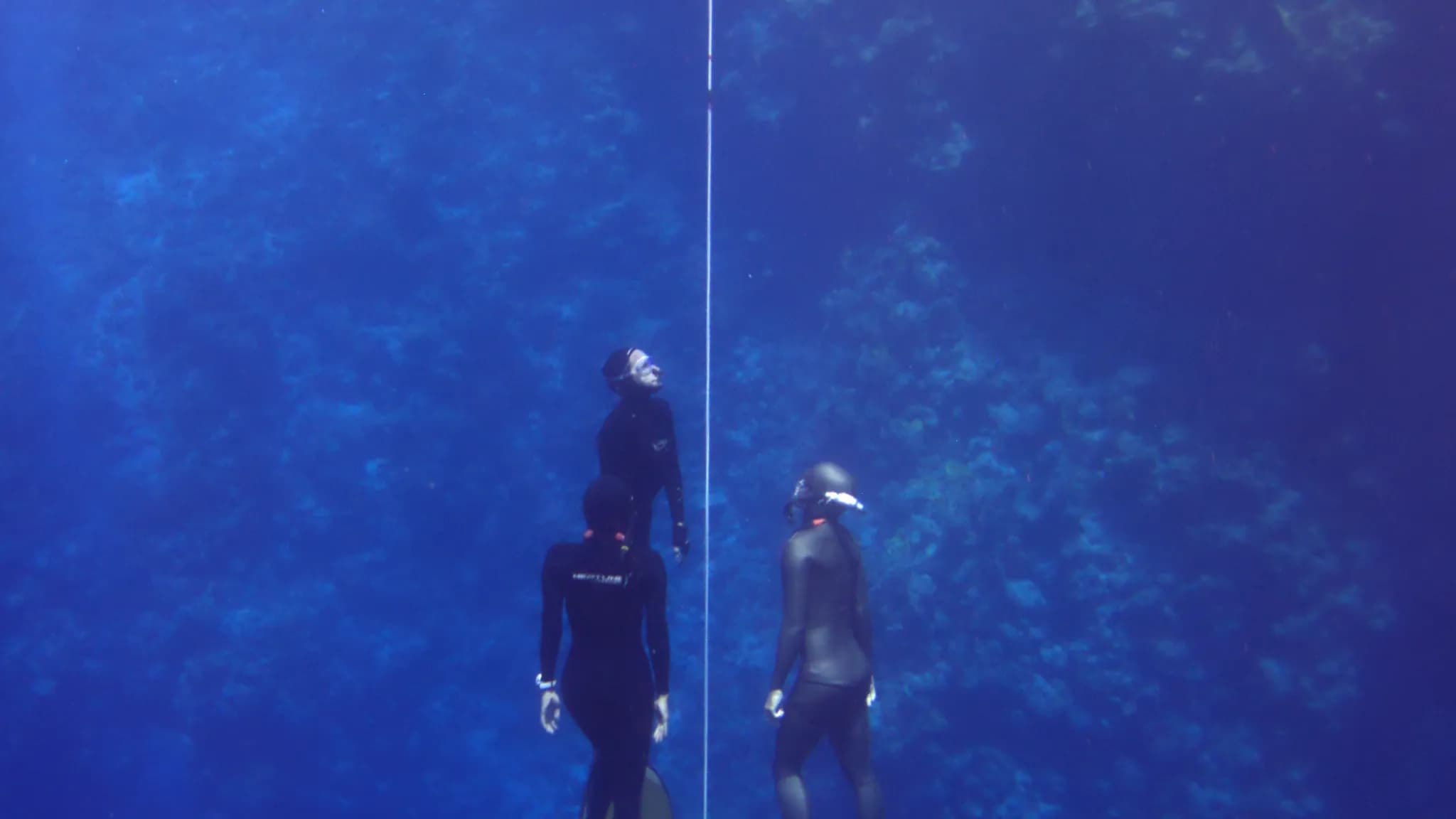
Free immersion is the discipline that looks the least like sport and asks the most obvious question. No fins, no monofin, no push. The athlete takes hold of a rope and pulls, hand over hand, down into water that gets darker and heavier with every metre, then turns around and pulls back.
On 21 July, at the AIDA Asian Freediving Cup in Panglao in the Philippines, Enchante Gallardo pulled herself to 106 metres and returned. The dive ties the women's free immersion world record, a mark held by Ukraine's Natalia Zharkova.
It is the sort of result that arrives quietly, gets a paragraph in the sport's own press, and would be a national story in almost any discipline with a broadcast contract.
What the record actually is
Free immersion, abbreviated FIM, is one of the depth disciplines recognised by AIDA International. The rope is there to be used, which sounds like an advantage and is not much of one. Pulling costs the arms, and arms are expensive: muscular work burns oxygen a freediver does not have to spare.
What the discipline removes is propulsion efficiency, and what it exposes is everything else. Equalisation has to keep pace with a descent the athlete controls by hand. Relaxation has to survive the effort of pulling. The turn at the bottom happens at a pressure of around eleven atmospheres, where the lungs have been compressed to a fraction of their surface volume.
Gallardo's 106 metres, announced by USA Freediving, matches rather than beats the standing record. In freediving that distinction matters less than it sounds. Depth records move in single metres, and a tie at the top of a discipline means two athletes have independently found the same edge.
Who Enchante Gallardo is
Gallardo is based in Hawaii and coached by the Slovak freediver Martin Ruman. She was ranked the world's number one depth freediver in both 2024 and 2025, and second overall among freedivers in 2025, so the record is a confirmation of form rather than a surprise.
On the dive she said that it represented "so much more than a number", adding that "every challenge, setback, and even the small victories along the way made this moment even more meaningful".
That is the standard language of athlete statements, and in freediving it also happens to be a technical description. Depth progression is measured in seasons. Athletes spend years adding a handful of metres, because the adaptations involved, particularly in equalisation technique and in tolerance of compression, do not respond to enthusiasm.
Why the Philippines keeps producing deep results
Panglao, on Bohol in the central Philippines, has become one of the reliable venues of the competitive depth calendar, and the reasons are unromantic. Deep water sits close to shore, the conditions are consistent, and the logistics of running a competition platform with safety divers and a counterballast system are manageable.
Those are the same qualities that made Dean's Blue Hole in the Bahamas and Kalamata in Greece into fixtures. Depth competitions are constrained less by athletes than by places where a safety operation can be run properly, day after day, for a week.
The Asian Freediving Cup has grown into one of the season's serious depth meets on exactly that basis, and a world record set there is a record set with a full safety structure around it, which is the only kind that should count.
How the depth records stand
Records in freediving belong to a specific discipline and a specific sanctioning body, and quoting them without both is how misinformation spreads. AIDA International and CMAS run separate record lists with separate rules, so an athlete can hold a world record in one and not the other.
Within AIDA's list, the deepest constant weight dive on record remains Alexey Molchanov's 136 metres, set in September 2023, according to the current AIDA and CMAS record lists. The women's free immersion record now carries two names at 106 metres.
Elsewhere in the 2026 depth season, the Croatian freediver Petar Klovar reached 137 metres in free immersion at a competition in Mabini in April, a result reported as the deepest dive in that event's history across all disciplines.
The part that is not a record
Every article about a deep freedive owes its readers the other half of the subject, because the discipline that produces these numbers is the same one that kills people who train alone.
Shallow water blackout is the mechanism. A freediver who pushes a breath-hold too far can lose consciousness on the way up or at the surface, often in the final metres, where falling ambient pressure drops the partial pressure of oxygen in the lungs below what the brain needs. There is frequently no struggle and no warning. An unconscious freediver in water with nobody watching drowns.
This is why competition dives happen with safety divers meeting the athlete on ascent, with a lanyard connecting them to the line, and with a counterballast system that can bring a diver up mechanically. It is also why the first rule taught in any recreational freediving course is that you never, under any circumstances, breathe-hold train alone, including in a swimming pool.
Records like Gallardo's exist inside that safety structure. Reproducing the ambition without reproducing the structure is the single most dangerous thing a new freediver can do.
This article is journalism, not instruction. Freediving is taught by certified instructors through recognised agencies, and depth progression belongs in that setting.
The depth season runs on into the autumn, and with two athletes now sharing 106 metres in free immersion, the interesting question is whether the number stays where it is.
Published in The Outspoken Digest
Editorial desk
Outspoken Digest Diving DeskCovers freediving, recreational and technical diving, dive medicine and the incidents the sport learns from.
Newsletter
The Digest, in your inbox
One edition, sent when it is ready. No noise, and your address is never passed on.
Read Next
More Diving →
Divers Cement Storm-Torn Corals Back Onto Hawaii's Reefs While a 45-Day Clock Runs
Oct 25, 2026/2 min read
Polish Diver Reaches 338 Metres in North Macedonia's Vrelo Cave, a Claimed Depth Record
Oct 23, 2026/3 min read
Breathless and Coughing Pink Froth After a Dive: Immersion Pulmonary Edema Explained
Oct 17, 2026/3 min read
Your Gas Consumption Is Not One Number: Why Depth, Cold and Nerves Change It
Oct 16, 2026/3 min read