Fattet Hummus: Crisp Bread, Warm Chickpeas, Garlic Yoghurt
A Levantine assembly built on stale bread, designed so that every spoonful catches something crunchy and something soft. Timing is the only difficult part, and it is unforgiving.
Sunday, August 2, 2026/4 min read
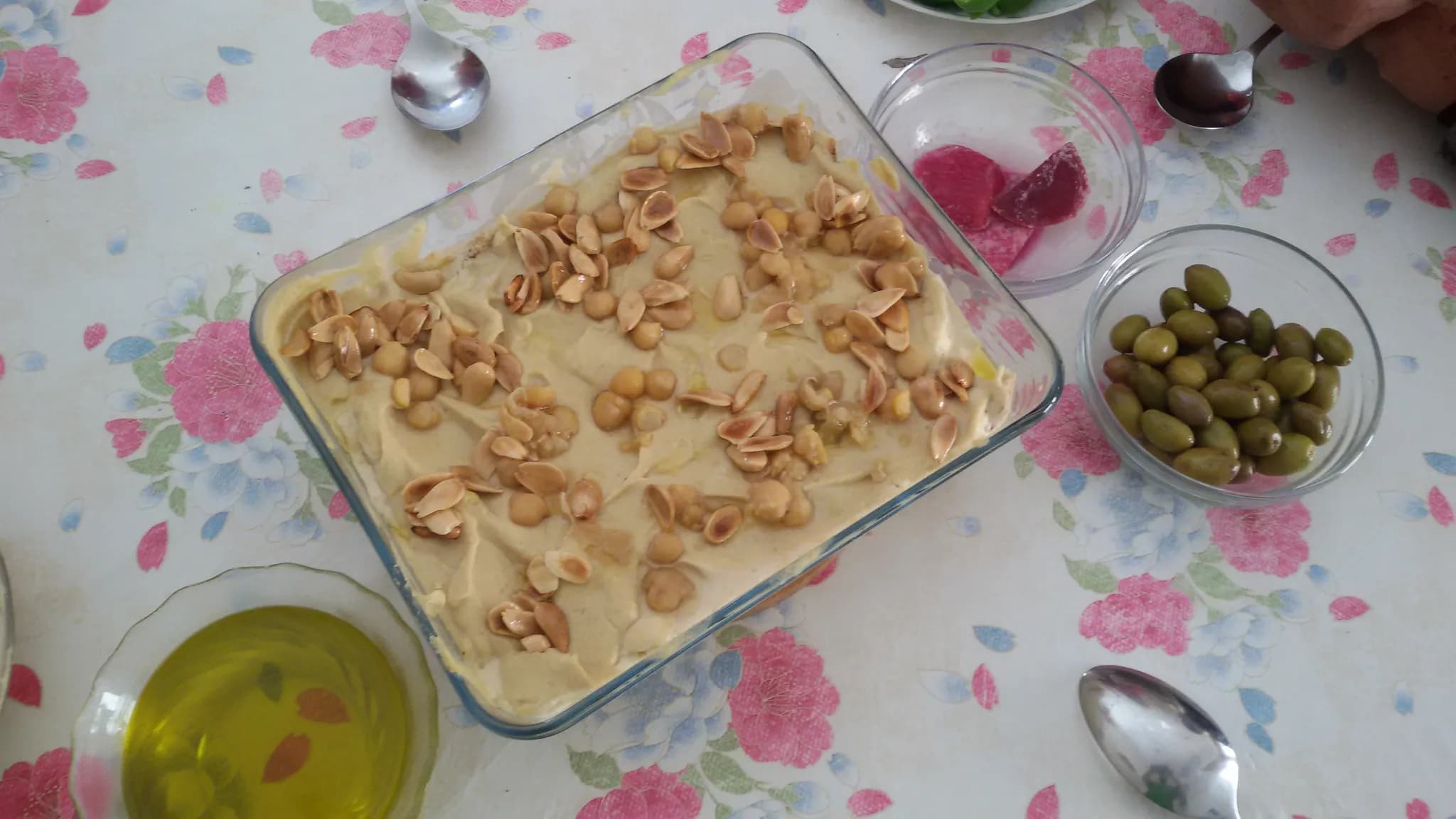
Fatteh comes from the Arabic verb fatta, to tear or break apart, and the broken thing is bread. That tells you what kind of dish this is: one invented to use up what was already going stale, in kitchens where throwing bread away was not an option.
What it became is a layered plate of crisp pita, warm garlicky chickpeas and a cool tahini yoghurt poured over the top, finished with toasted nuts and a spoonful of browned butter. It appears across Palestine, Lebanon, Syria and Jordan, and it is most often eaten at breakfast or brunch, though it turns up at lunch and at iftar throughout Ramadan.
The version with chickpeas is fattet hummus, and it is the one most people meet first. It takes twenty minutes and it demands that you assemble it at the last possible moment, because the entire dish is a race between crisp bread and wet sauce.
Ingredients
Serves 4 as a generous breakfast or 6 as a mezze. About 25 minutes if you use tinned chickpeas.
- 3 large pita or Arabic flatbreads, preferably a day old
- 2 tbsp olive oil, for the bread
- 500 g cooked chickpeas (2 x 400 g tins, drained), or 250 g dried chickpeas soaked and cooked
- 1 tsp ground cumin
- 1/2 tsp salt for the chickpeas
- 150 ml of the chickpea cooking liquid or tinned liquid
- 400 g Greek yoghurt, at room temperature
- 3 tbsp tahini, well stirred
- 2 garlic cloves, crushed to a paste with a pinch of salt
- 2 tbsp lemon juice
- 1/2 tsp fine salt for the sauce
- 50 g butter
- 50 g pine nuts or flaked almonds
- 1 tsp sumac
- 1 tbsp chopped parsley
- A pinch of paprika or Aleppo pepper
Method
- Heat the oven to 200C fan. Tear the pita into rough pieces about 4 cm across, toss with the 2 tbsp olive oil and spread on a baking tray in one layer.
- Bake for 6 to 8 minutes, turning once, until deeply golden and properly dry. Take a piece out and let it cool for 20 seconds before testing it: it should snap, not bend. Underdone bread turns to paste on contact with the yoghurt.
- Warm the chickpeas in a small pan with the cumin, the 1/2 tsp salt and the 150 ml chickpea liquid. Simmer gently for 5 minutes. They should be hot and slightly soupy, not dry. Keep them warm.
- Make the sauce. Whisk the yoghurt, tahini, crushed garlic, lemon juice and 1/2 tsp salt together until completely smooth. It should pour thickly, like double cream. If it is stiff, loosen it with 1 or 2 tbsp of the warm chickpea liquid.
- Taste the sauce and correct it now. It wants to be noticeably garlicky and clearly lemony, because the bread and chickpeas underneath are mild and will mute it.
- Toast the nuts. Melt the butter in a small pan over a medium heat, add the pine nuts and cook, stirring, for 3 to 4 minutes until both the nuts and the butter turn nut brown. Take it off the heat the moment it smells toasted. Browned butter goes from perfect to acrid in about fifteen seconds.
- Now assemble, and work quickly. Spread the crisp bread across a wide shallow serving dish.
- Spoon the hot chickpeas and a little of their liquid over the bread, letting some pieces stay exposed.
- Pour the yoghurt sauce over the top, covering most but not all of the surface.
- Pour over the browned butter and nuts, then scatter with sumac, parsley and a pinch of paprika. Take it to the table immediately.
The timing problem, and how to beat it
Fatteh has a working life of about five minutes. After that the bread beneath the sauce softens, and while soft fatteh still tastes good, the textural contrast that justifies the dish is gone.
This is not a flaw to engineer around, it is the dish's nature, and Levantine cooking accepts it. The bread is meant to be part crisp and part soaked, which is why you leave some pieces uncovered and let others go under.
The practical answer is preparation order. Crisp the bread first and leave it out. Make the sauce and leave it at room temperature. Have the nuts browning as the chickpeas finish. Assemble only when everyone is seated.
Cold yoghurt straight from the fridge will chill the whole plate and can split when it meets hot chickpeas, so take it out twenty minutes ahead.
Variations and notes
Fattet betinjan swaps the chickpeas for fried aubergine. Fattet djaj adds shredded chicken. There are meat versions with spiced lamb mince browned and scattered over the top, and all of them use the same bread-and-yoghurt architecture.
Dried chickpeas, soaked overnight with a pinch of bicarbonate of soda and simmered until they collapse under light pressure, give a softer and more flavourful result than tinned, and their cooking liquid is better in the sauce. It is worth doing if you have the time, and tinned is entirely acceptable if you do not.
For a dairy-free version, use a thick coconut or cashew yoghurt and increase the tahini to 4 tbsp, and replace the butter with olive oil for the nuts. It is a different dish, but a good one.
None of it keeps. Leftover components will happily sit in the fridge for 2 days separately, but assembled fatteh does not survive an hour, let alone a night.
Make it on a slow morning for people who are already in the kitchen, and hand out spoons before you pour the butter.
Published in The Outspoken Digest
Editorial desk
Outspoken Digest Food DeskCooking, ingredients, restaurants and the economics of what ends up on the table.
Newsletter
The Digest, in your inbox
One edition, sent when it is ready. No noise, and your address is never passed on.
Read Next
More Recipes →
Chicken Cheesesteak at Home: Seared Thigh, Sweet Onions and Melted White American on a Sesame Roll
Oct 26, 2026/3 min read
Marry Me Chicken Pasta: Creamy Sun-Dried Tomato Chicken, Ready in 40 Minutes
Oct 23, 2026/4 min read

Cheesy Ramen on the Stove: Instant Noodles in a Real Cheese Sauce in Ten Minutes
Oct 18, 2026/3 min read
Beer-Battered Jalapeno Cheese Curds: The Wisconsin Bar Snack, Fried Properly at Home
Oct 18, 2026/3 min read