FDA Approves Ekitna Plus Sunitinib for Advanced GIST, the First New Second-Line Option in About 20 Years
The agency cleared Cogent's bezuclastinib on Tuesday for adults whose gut tumours progressed after imatinib. In the 413-patient PEAK trial, disease control lasted a median 16.5 months against 9.2.
Thursday, November 26, 2026/3 min read
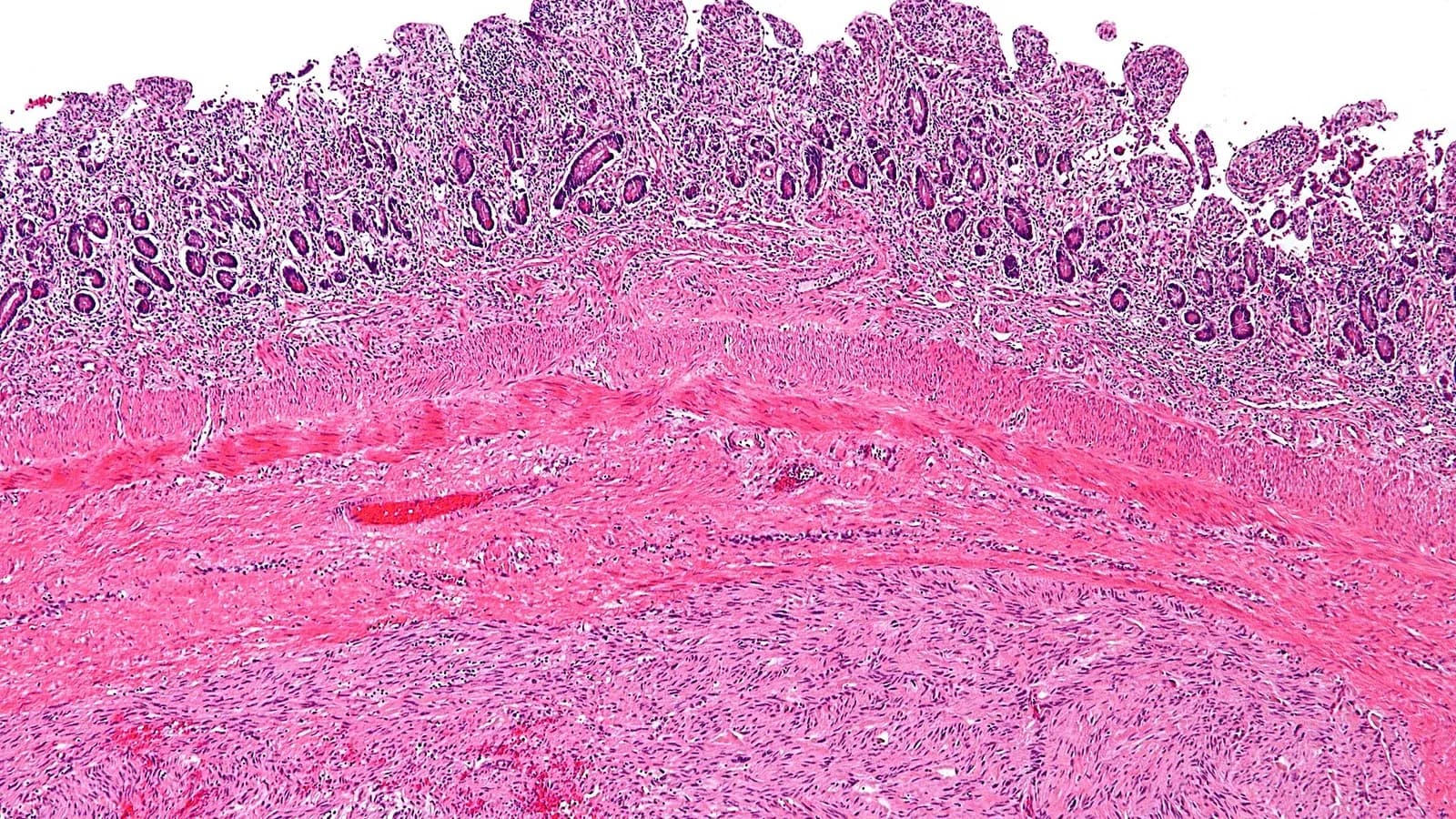
The US Food and Drug Administration approved bezuclastinib, sold as Ekitna, on Tuesday 24 November for use with sunitinib in adults with advanced gastrointestinal stromal tumours, known as GIST, who have already been treated with imatinib. The decision, reported by The ASCO Post, gives patients a pill combination in the second-line setting where sunitinib alone has been the standard for roughly two decades.
STAT noted on Wednesday that the sponsor, Cogent Biosciences, won the clearance for a drug to be used alongside Pfizer's much older sunitinib, sold as Sutent. The combination is a targeted therapy, not chemotherapy, and is taken by mouth.
What is GIST and why does the second line matter?
GIST arises from abnormal cells in the wall of the stomach, small intestine or large intestine. Dana-Farber Cancer Institute says about 4,000 to 5,000 people are diagnosed in the United States each year, and most tumours carry a mutation in a gene called KIT that drives uncontrolled cell division.
Drugs that block KIT, such as imatinib first and sunitinib second, have improved outcomes, but tumours often become resistant by picking up further KIT mutations. Bezuclastinib was designed to block common primary and secondary resistance mutations, Dana-Farber said in a release carried by Medical Xpress.
What did the PEAK trial show?
The approval rests on PEAK, an open-label, randomised phase 3 trial of 413 patients whose disease had progressed on, or who could not tolerate, imatinib. Patients received bezuclastinib plus sunitinib or sunitinib alone until progression, and those on sunitinib alone could cross over to the combination after confirmed progression, according to The ASCO Post.
Median progression-free survival, judged by blinded central review, was 16.5 months with the combination against 9.2 months with sunitinib alone, a hazard ratio of 0.50. The objective response rate was 46 percent against 26 percent. Overall survival data were not mature at the time of the analysis, so it is not yet known whether the combination helps patients live longer.
Dr Andrew Wagner of Dana-Farber, who works on the study, called it a new standard of care after imatinib. That is a clinician's view of the trial, and long-term follow-up will test it.
What are the side effects and warnings?
The label carries a boxed warning for liver toxicity, the most serious kind the agency issues, and a warning for harm to an unborn baby. The most common side effects, seen in at least one in five patients, include diarrhoea, raised liver enzymes, high blood pressure, altered taste, nausea, hair colour changes, fatigue, abdominal pain and vomiting, the ASCO Post reports. Common laboratory changes include higher liver enzymes and lower blood cell counts, so regular blood tests are part of treatment.
The ASCO Post lists the FDA's priority review, breakthrough therapy and orphan drug designations, and says the application was reviewed under its Real-Time Oncology Review programme. None of the reports we found gave a list price or a launch date.
What happens next for GIST patients?
Because many GIST patients take imatinib for years before their disease progresses, the practical effect will arrive gradually, as oncologists decide who should move to the combination and when. Open questions include survival, how well patients tolerate liver monitoring over long periods, and how the cost compares with sunitinib alone.
This article is reporting, not medical advice. Decisions about starting, switching or stopping cancer treatment belong with an oncologist who knows the patient's history, tumour mutations and other medicines.
Published in The Outspoken Digest
Editorial desk
Outspoken Digest Health DeskMedicine, public health and the research behind the headlines, read carefully.
Newsletter
The Digest, in your inbox
One edition, sent when it is ready. No noise, and your address is never passed on.
Read Next
More Health →
US Measles Cases Pass 6,000 as the CDC Reports Nine Deaths and Pauses Its Updates Until 4 December
Nov 27, 2026/2 min read

FDA Approves Oral Wilserdly for Early Breast Cancer, the First New Hormone Therapy in That Setting in 20 Years
Nov 25, 2026/2 min read

FDA Approves Lembaz for Niemann-Pick Type C and Infilbray for Type 3 Gaucher Disease on Consecutive Days
Nov 23, 2026/3 min read
FDA Approves Nelkarmi for Previously Treated ALK-Positive Lung Cancer, Based on a 49 Percent Response Rate
Nov 19, 2026/2 min read