Freediving in the Red Sea and the Gulf: Where People Actually Train
Dahab's Blue Hole draws freedivers year round for a reason: shore access to real depth, warm water, forgiving conditions and an established training community.
Friday, November 14, 2025/4 min read
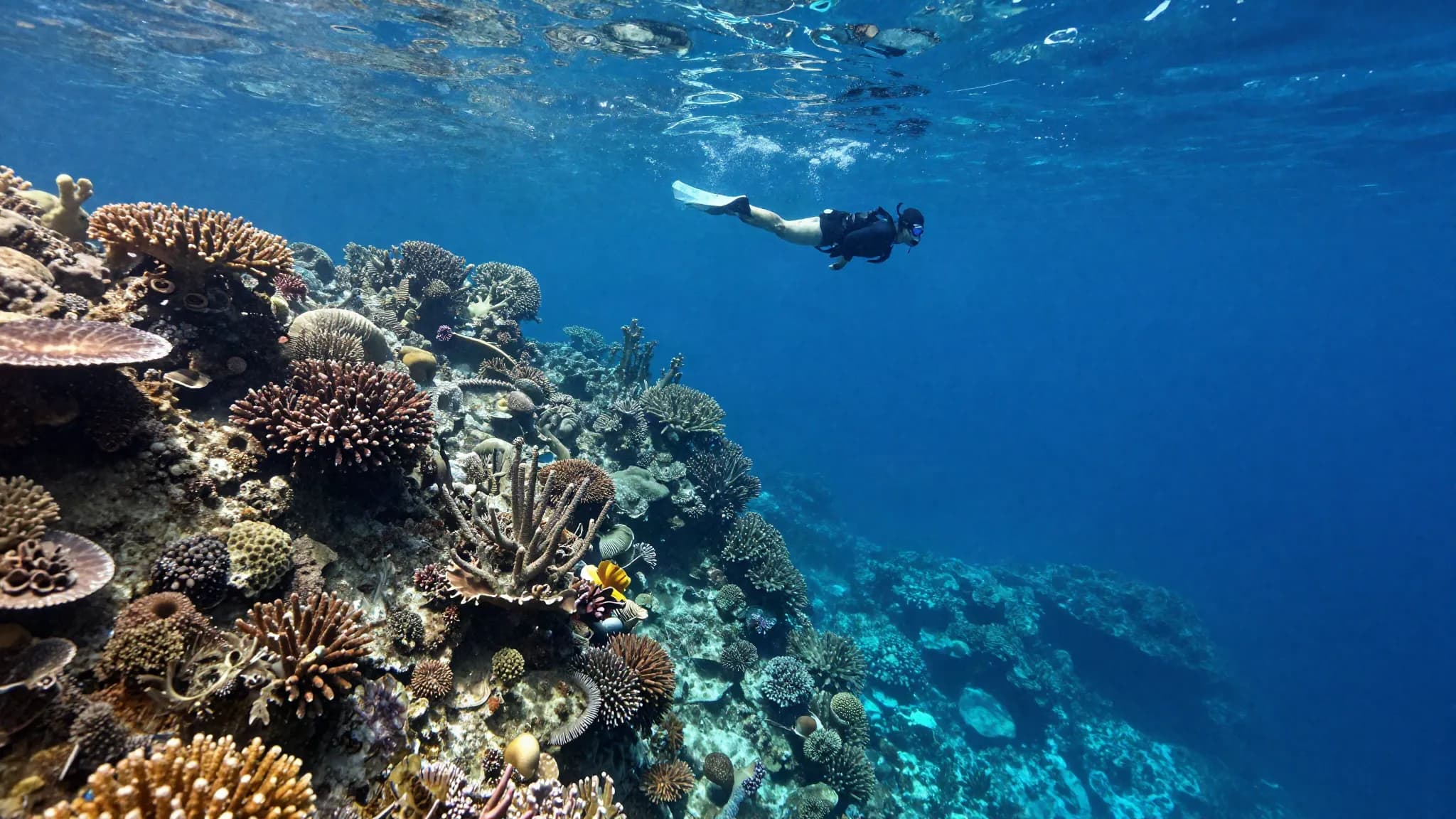
There is a stretch of the Sinai Peninsula coast where the desert meets the Gulf of Aqaba, and within a few metres of the shoreline the seabed simply falls away. No boat required, no long swim out, just a short walk from a cafe table to water deep enough for a serious training dive. That accident of geology is most of the reason Dahab has become one of the world's most visited freediving destinations rather than a random dot on the Red Sea coast.
What makes Dahab specifically different from other Red Sea sites?
Dahab sits on the southeast coast of the Sinai Peninsula, facing the Gulf of Aqaba, and its reputation among freedivers rests on a combination most sites cannot offer together: warm water year round, consistently good visibility, and dive sites that suit everyone from a first time student to an athlete training for competition depth, according to a guide from Freedivingbase's overview of freediving in Dahab.
The town's best known site, the Blue Hole, is a submarine sinkhole reaching a maximum depth of around 100 metres, and unusually for a site that deep, it is accessible directly from the shore rather than requiring a boat, according to Routri's guide to Dahab's freediving and training spots. It is known among freedivers for calm conditions with minimal current and a tight, established training community that has built up around it over years. Visiting instructors and competitive athletes alike describe the site as one of the few places in the world where a diver can genuinely progress from a first breath hold to serious depth work without ever changing location.
A second major site, Lighthouse Reef, forms Dahab's main bay and tends to be the preferred spot for beginners specifically, with a shallow sandy bottom that slopes gradually before reaching a maximum diving depth of about 50 metres, again reachable from shore, according to the same Freedivingbase guide.
When is the best time of year to train there?
Spring, roughly March through May, and autumn, roughly September through November, are generally considered the strongest windows, balancing comfortable air temperature against manageable wind conditions, and these shoulder seasons often produce the most consistent training stretches of the year, according to SSI's guide to freediving in Dahab. Water temperature swings from around 22 degrees Celsius in winter up to roughly 28 degrees in summer, mild enough that a wetsuit is a comfort choice rather than a strict necessity for much of the year, according to The Freedive Place's guide to courses available in Dahab. Even peak summer heat rarely disrupts water conditions the way storm systems can affect open ocean training elsewhere, which is part of why the site holds a reputation for reliability that few comparable destinations can match.
Why has a training culture built up here specifically?
Reliable shore access to real depth is unusual almost everywhere else in the world, where reaching serious training depth typically means a boat trip and a fixed dive window each day. In Dahab, a diver can walk from a cafe to the water, complete a session, surface, warm up, and go back in again within the same morning, which lets both students and competitive athletes log far more sessions per week than most other locations allow, a point emphasised across several of the guides above. That density of access is part of why so many freediving schools have clustered in one small town rather than spreading evenly along the wider Red Sea coast.
What should a visiting freediver actually expect on arrival?
Multiple certified schools operate directly on the two main sites, offering courses that run from complete beginner through to instructor level training, and the surrounding town has grown almost entirely around supporting that population of visiting divers, cafes, gear shops and accommodation within short walking distance of the water. None of that changes the core safety expectations that apply anywhere in the world: sessions run with a buddy or supervising instructor, and depth progression follows a structured course rather than a diver's own instinct about what they can handle that day.
Beyond Dahab, along the wider Gulf
Dahab is the best documented and most established training hub in the region, but it sits within a broader Red Sea and Gulf diving culture that stretches along the Egyptian, Saudi and Jordanian coastlines, all sharing the same warm, clear, relatively current-free conditions that make breath hold training more forgiving than in colder, rougher water elsewhere. The specific combination of shore access, warm water and an established instructor community is what keeps pulling freedivers back to this one stretch of coast in particular.
This article is journalism, not instruction. Anyone travelling to train should book with a certified school and instructor on arrival rather than diving independently, however easy shore access to depth might look from the surface. Visitors are also reminded that equalisation problems and blackout risk do not disappear simply because the water is warm and clear, conditions that can make a diver feel more confident than their actual training level supports.
For a sport that usually depends on chartering a boat to reach meaningful depth, a town where you can do it on foot remains a genuine rarity, and it is not hard to see why so much of the sport's global training calendar has quietly gathered around it. Divers who visit once for a two week course routinely describe returning year after year, less for the depth on offer than for the ease of simply getting to it every single day.
Published in The Outspoken Digest
Editorial desk
Outspoken Digest Diving DeskCovers freediving, recreational and technical diving, dive medicine and the incidents the sport learns from.
Newsletter
The Digest, in your inbox
One edition, sent when it is ready. No noise, and your address is never passed on.
Read Next
More Diving →
Playing Recordings of a Healthy Reef Drew More Coral and Fish Larvae to Artificial Structures Off Hawaii
Oct 9, 2026/3 min read
Blacktip Sharks Can Hear a Sound From Nearly 250 Feet Away and Swim Straight Toward or Away From It
Oct 1, 2026/2 min read
A Sea Turtle Species Never Recorded Nesting in the United States Laid Eggs on a Southern California Beach
Oct 1, 2026/2 min read
Marine Surveyors Confirmed Living Coral Off Benin, More Than Sixty Years After the Reef Was Presumed Dead
Sep 29, 2026/2 min read