Freekeh Risotto: An Ancient Levantine Grain Meets Italian Method
Green wheat harvested early and burned in the field, cooked with the patience Italians give arborio. Smoky, chewy and considerably harder to overcook than rice.
Thursday, July 30, 2026/4 min read
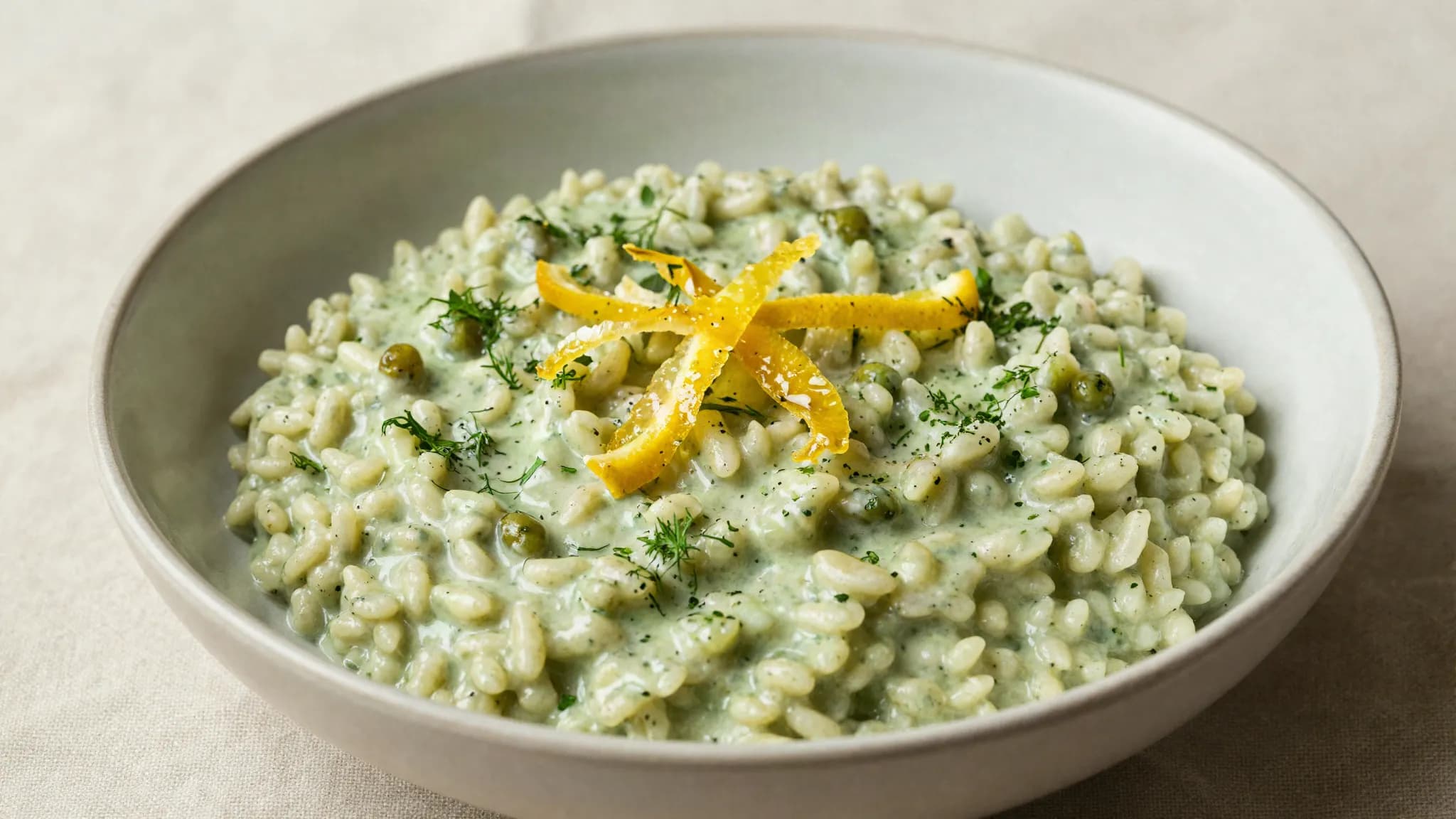
Freekeh begins with what sounds like a disaster. Wheat is harvested while still green and soft, then set alight in the field. The high moisture in the immature grain keeps the kernel from burning while the chaff and straw burn away, and what survives is smoky, firm and deeply savoury.
The record on freekeh places it across Levantine and North African cooking, still widely eaten around the eastern Mediterranean where wheat was first domesticated, with a history running back through Lebanon, Jordan, Syria and ancient Egypt. The Whole Grains Council tells the origin story that gets repeated in the region: a city expecting attack around 2300 BC harvested its wheat early rather than lose it, and discovered the fire had improved it.
Cooking it by risotto method is the fusion, and it is a better match than it sounds. Freekeh releases starch slowly as it is agitated in hot stock, which is exactly what risotto asks for. It is also far more forgiving than arborio: cracked freekeh keeps a distinct chew well past the point where rice would collapse into paste. A recent review in Critical Reviews in Food Science and Nutrition tracks its move from traditional cereal to a grain of wider interest.
Ingredients
Serves 4. Total time: 50 minutes, mostly active at the stove.
- 300 g cracked freekeh, rinsed until the water runs clear
- 1.2 litres hot vegetable or chicken stock, kept at a bare simmer
- 2 tbsp olive oil, plus more to finish
- 30 g butter
- 1 large onion, finely diced
- 2 garlic cloves, finely chopped
- 1 tsp ground cumin
- 0.5 tsp ground allspice
- 150 ml dry white wine
- 1 preserved lemon, pulp discarded, rind finely chopped
- 60 g parmesan or aged pecorino, finely grated
- 50 g toasted pine nuts
- A large handful of flat leaf parsley, chopped
- Salt and black pepper
Method
- Rinse the freekeh properly. It carries field dust and ash and the water should run clear before you start. Drain well.
- Warm the olive oil and half the butter in a wide heavy pan over medium heat. Cook the onion gently with a pinch of salt for 8 to 10 minutes until soft and translucent, without colouring it.
- Add the garlic, cumin and allspice and cook for 1 minute, until fragrant. Toasting the spices in fat rather than adding them to liquid later is what gives the base its depth.
- Stir in the drained freekeh and toast for 2 minutes, coating every grain in fat.
- Pour in the wine and let it bubble away almost completely, scraping the base of the pan.
- Add hot stock a ladleful at a time, stirring often and waiting until each addition is nearly absorbed before the next. Keep the pan at a steady gentle simmer.
- Continue for 30 to 35 minutes. Cracked freekeh should be tender with a definite chew at the centre. Whole grain freekeh takes longer, closer to 45 minutes, and needs more stock.
- Off the heat, beat in the remaining butter, the cheese and the preserved lemon rind. Cover and rest 3 minutes, then loosen with a splash of stock: it should spread slowly, not sit in a mound. Finish with pine nuts, parsley, pepper and a thread of olive oil.
Why the stirring matters here
Risotto method works by mechanical abrasion. Grains knocking against each other in hot liquid shed surface starch, and that starch is what thickens the liquid into something creamy without any cream involved.
Freekeh gives up less starch than arborio, so the result is looser than a classic risotto and will never reach the same gloss. That is the honest trade for the smoke and the chew, and it is why the butter and cheese at the end are doing more work than usual.
Keep the stock genuinely hot. Adding cold liquid drops the pan temperature and stalls the process each time.
Notes, swaps and keeping
Buy cracked rather than whole freekeh for this if you can, since the cooking time is much more manageable and the texture suits the method better. Check the packet, as the two are not always clearly labelled.
Preserved lemon is worth seeking out; the rind carries a salty floral note that fresh zest cannot reproduce. If you have none, use the zest of a whole lemon plus half a teaspoon of salt, added at the end. To make it vegetarian use vegetable stock and a vegetarian hard cheese, and for a vegan version drop the dairy, finish with a spoon of tahini and add a little extra olive oil.
Freekeh risotto sets much firmer than rice risotto when chilled, which is a feature. Leftovers keep three days and can be pressed into patties, floured and fried into something close to arancini without any of the fuss.
Published in The Outspoken Digest
Editorial desk
Outspoken Digest Food DeskCooking, ingredients, restaurants and the economics of what ends up on the table.
Newsletter
The Digest, in your inbox
One edition, sent when it is ready. No noise, and your address is never passed on.
Read Next
More Recipes →
Cheesy Ramen on the Stove: Instant Noodles in a Real Cheese Sauce in Ten Minutes
Oct 18, 2026/3 min read

Beer-Battered Jalapeno Cheese Curds: The Wisconsin Bar Snack, Fried Properly at Home
Oct 18, 2026/3 min read
A Thanksgiving Turkey Sub With Hot Stuffing, Cranberry and Gravy to Dip
Oct 17, 2026/3 min read

Pecan Pie Bars With a Shortbread Base and a Caramel Filling That Slices Cleanly
Oct 17, 2026/3 min read