Gaza's First Winter Storm Floods Tents of 26,000 Households as the UN Warns Shelter Stocks Are Exhausted
Five people died when an embankment collapsed on tents near Deir al-Balah, and the UN says tents and blankets inside the strip are virtually gone while more than 150,000 tents wait outside.
Tuesday, November 10, 2026/2 min read
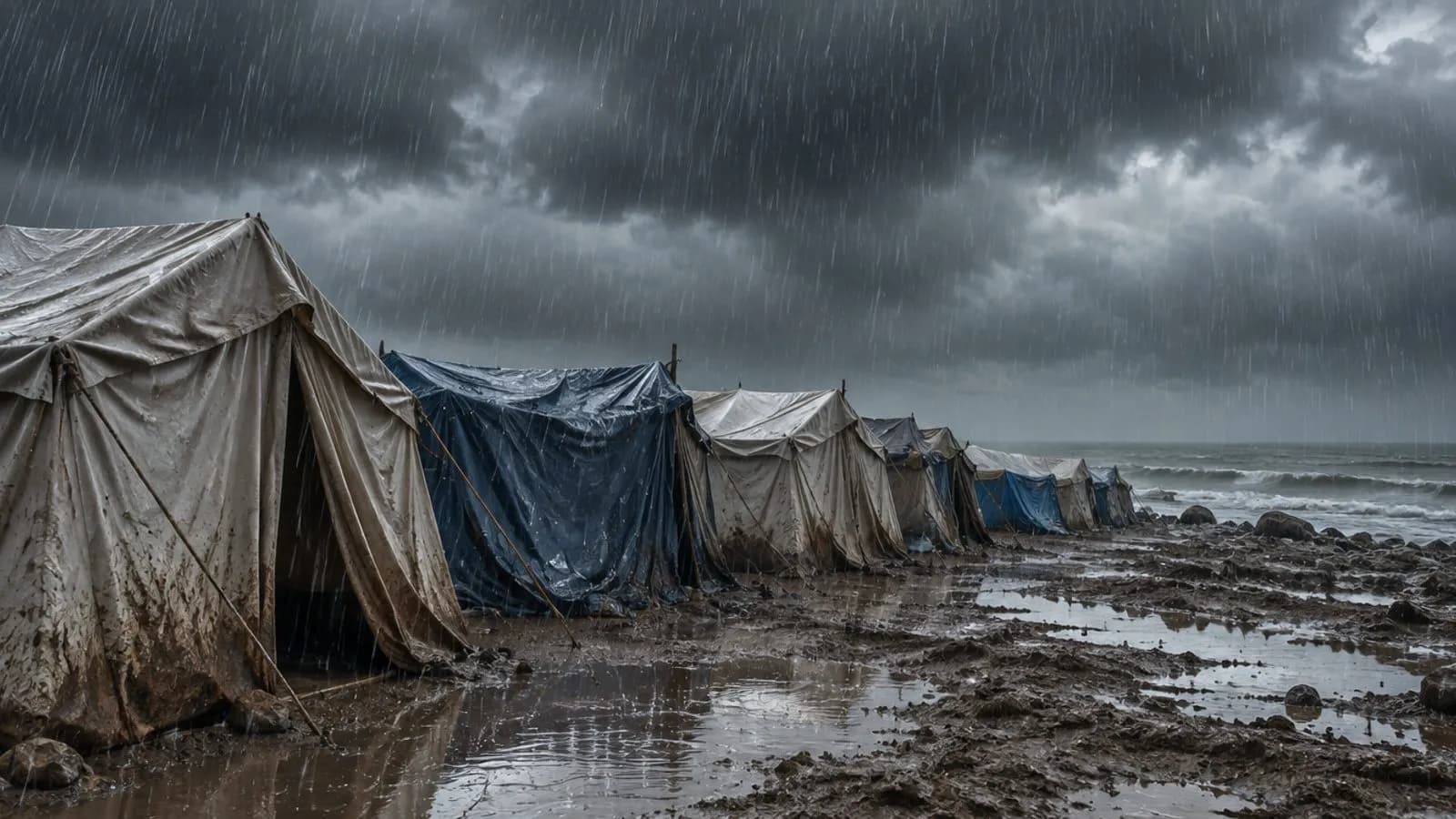
The rain that began late on Friday in Gaza did what aid agencies had warned it would: it found the thin places in a city of tents. By the weekend, water was standing inside shelters across the strip, and on Sunday a rain-soaked sand embankment collapsed onto tents at a displacement site west of Deir al-Balah. Gaza's Civil Defence said five people died.
The United Nations puts the first big storm of the season in sharper terms than the headline figures from Gaza's authorities. In a situation report dated 8 November and published on Monday, the UN humanitarian office OCHA said more than 26,000 households had reported damaged shelters or belongings, and that the true impact is believed to be larger.
How many people were hit by the Gaza floods?
Two sets of numbers are circulating, and they measure different things. Gaza's Government Media Office says about 70,000 tents were flooded within 12 hours, according to Al Jazeera's weekly roundup. OCHA counts households, citing the shelter cluster: more than 6,000 family shelters destroyed, 17,400 damaged, over 3,900 households with no shelter at all, and about 600 households displaced a second time. An estimated 1.4 million people, 65 percent of the population, live in tents or makeshift shelters.
Civil Defence logged more than 2,100 distress calls by Monday and warned that over 2,000 buildings risk collapse, Al Jazeera reported. OCHA says at least 4,000 high-risk buildings have been identified.
Why is there so little shelter inside Gaza?
OCHA says stocks of tents, tarpaulins, blankets and clothes inside the strip are "virtually exhausted," while more than 150,000 tents, 300,000 tarpaulins and 500,000 blankets are ready to be sent from outside, about 117,000 of the tents held by the Egyptian Relief Committee in Al-Arish. The agency attributes the thin preparedness to Israeli restrictions on bringing in supplies and equipment, together with funding shortfalls, and says pumps and drainage are failing for lack of fuel, engine oil and spare parts.
The International Rescue Committee, in a statement on Monday, put the need at about 121,000 tents and 1.7 million mattresses as of 1 November, against about 2,800 tents available inside Gaza. Its emergencies vice president Bob Kitchen said the ceasefire had not brought shelter to almost 2 million displaced people. Al Jazeera adds that Israel told the UN on 1 November it would suspend shipments from Egypt, and that aid groups warn daily cooked meals could fall from about 600,000 to 330,000. The sources reviewed carry no Israeli government statement on the flooding itself.
What is the ceasefire toll since October 2025?
Gaza's Ministry of Health says 20 more Palestinians were killed in the past week, bringing the toll since the October 2025 ceasefire to 1,613 as of 9 November. Hamas has urged mediators and the Board of Peace not to tie rebuilding to political or security conditions.
Most tents are designed to last about six months, the IRC notes, and many families are in ones from last winter or earlier. More storms will come before spring, and what reaches the strip through the crossings in the next few weeks decides how many of those households stay dry.
Published in The Outspoken Digest
Editorial desk
Outspoken Digest News DeskReports for The Outspoken Digest across Latest Trends, Business, Technology, Sports.
Newsletter
The Digest, in your inbox
One edition, sent when it is ready. No noise, and your address is never passed on.
Read Next
More Latest Trends →
EU Will Adopt New Russia Sanctions on Monday Covering 150 Entities and 50 Banks, France Says
Nov 12, 2026/2 min read

Spain Approves One Housing Decree by a Single Vote and Rejects Another, 17 Days Before the Election
Nov 12, 2026/2 min read

Amnesty Says South Sudan and UN Knew an Abiemnom Attack Was Likely Before More Than 200 Were Killed
Nov 12, 2026/2 min read

London Jury Convicts Two Iranian Men of Helping Iran Spy on Journalists and a Lawyer
Nov 12, 2026/2 min read