Two Cargo Ships Sink Near the Strait of Hormuz as Attacks on Shipping Surge
A Singapore-flagged container ship and a bulk carrier have gone down within a day of each other, and two senior Iranian officials told Reuters that Tehran is using new tactics against vessels.
Thursday, October 15, 2026/2 min read
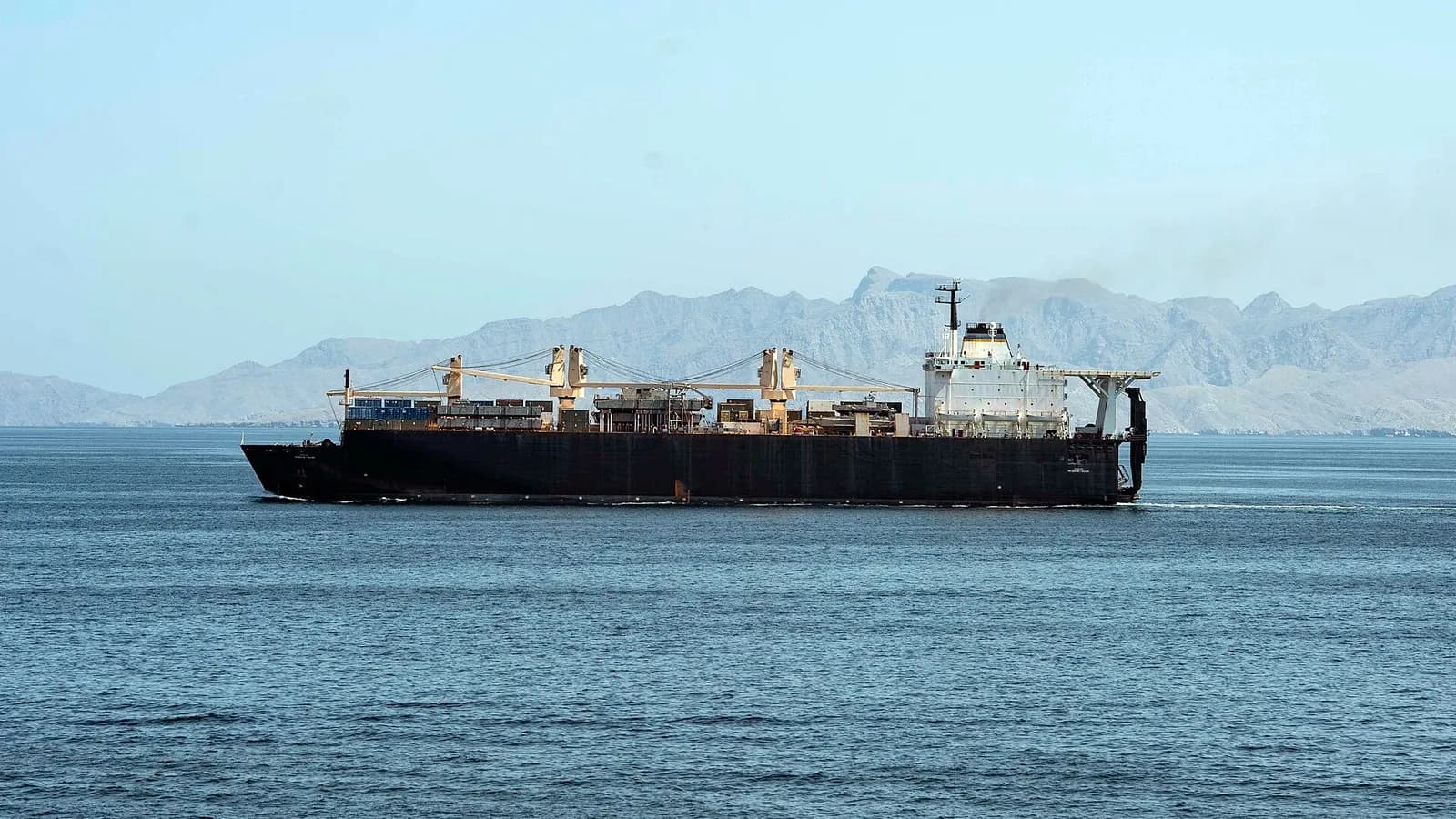
Two merchant ships have sunk near the Strait of Hormuz within about a day of each other, the clearest sign yet that the surge in attacks on shipping around the waterway is now costing vessels, not just damaging them. Maritime officials said both were hit by projectiles in separate incidents, Reuters reported.
The ships are the second and third to sink in the region since the US-Iran war began on 28 February, according to an analysis of International Maritime Organization data cited in the report. The dead include one crew member.
Which ships sank near the Strait of Hormuz?
The GFS Pride, a Singapore-flagged container ship with a capacity of 2,824 twenty-foot units, was transiting the strait on Tuesday when it was struck. The Maritime and Port Authority of Singapore said it "sustained damage and a fire on board, and has since sunk." All 21 crew were evacuated safely and no injuries were reported.
The second vessel, the Antigua and Barbuda-flagged bulk carrier Cape Dao, had been hit by a projectile on 23 September and went down close to the strait, per IMO data released on Wednesday. One crew member, identified by CNN as an Indian national, was killed in the original strike, and the rest were evacuated at once.
Who is responsible for the attacks?
That is contested. Iranian state media outlet Press TV said the GFS Pride hit a sea mine on an unauthorized route, but experts told CNN they think a drone attack is more likely. CNN verified video of black smoke and later footage and satellite images showing cargo in the water and a small oil slick. Charlie Brown, a former US Navy officer now with United Against Nuclear Iran, called the sinking a dangerous escalation.
Singapore's maritime authority said it was deeply concerned and called attacks on commercial shipping unprovoked and a breach of international law, without naming a culprit. Iran has said it is stepping up strikes in response to the US blockade of its ports and tougher sanctions. Two senior Iranian officials told Reuters that Tehran is increasingly using new tactics against ships in transit, aiming to keep oil prices high and influence US midterm elections. Neither report says what those tactics are. The UK Maritime Trade Operations centre logged nine attacks in or near the strait since Monday, including a drone strike on a tanker, CNN said.
What does it mean for oil flows?
Before the war the strait carried about a fifth of the world's oil and liquefied natural gas. Kpler data cited by CNN showed 4.147 million barrels transiting on Monday, less than a quarter of pre-war levels. The US military continues to enforce its blockade of Iranian ports, and the sinkings land as Tehran and Washington trade accusations over the strait, which we followed in our report on Iran's rejection of the US reply.
The question now is whether insurers and owners treat the strait as survivable. A maritime risk firm, MARISKS, told Reuters the threat is not confined to tankers, and that is likely to be reflected in premiums and routing in the days ahead.
Published in The Outspoken Digest
Editorial desk
Outspoken Digest News DeskReports for The Outspoken Digest across Latest Trends, Sports, Nutrition, Crypto.
Newsletter
The Digest, in your inbox
One edition, sent when it is ready. No noise, and your address is never passed on.
Read Next
More Latest Trends →
Houthi Missile Hits Aramco's Dhahran Headquarters as Saudi Arabia and Yemen's Rebels Trade Strikes
Oct 15, 2026/3 min read

Kimberly Guilfoyle Resigns as US Ambassador to Greece After the White House Asked Her to Go
Oct 15, 2026/2 min read

Pope Leo XIV Has Lung Cancer, the Vatican Says, After Surgery to Remove Part of His Right Lung
Oct 15, 2026/2 min read

Denmark Says US Exploration in Greenland Must Follow Local Law After Trump Touts a 'Massive' Oil and Mineral Push
Oct 14, 2026/2 min read