Gulf Builders Keep Awarding Work While the Risk Premium Rises
Shipping, insurance and construction costs are all higher because of the Iran conflict. Saudi Arabia and the UAE are pressing ahead with project awards anyway, and the reasoning is deliberate.
Outspoken Digest Gulf Economics Desk
Tuesday, August 4, 2026/4 min read
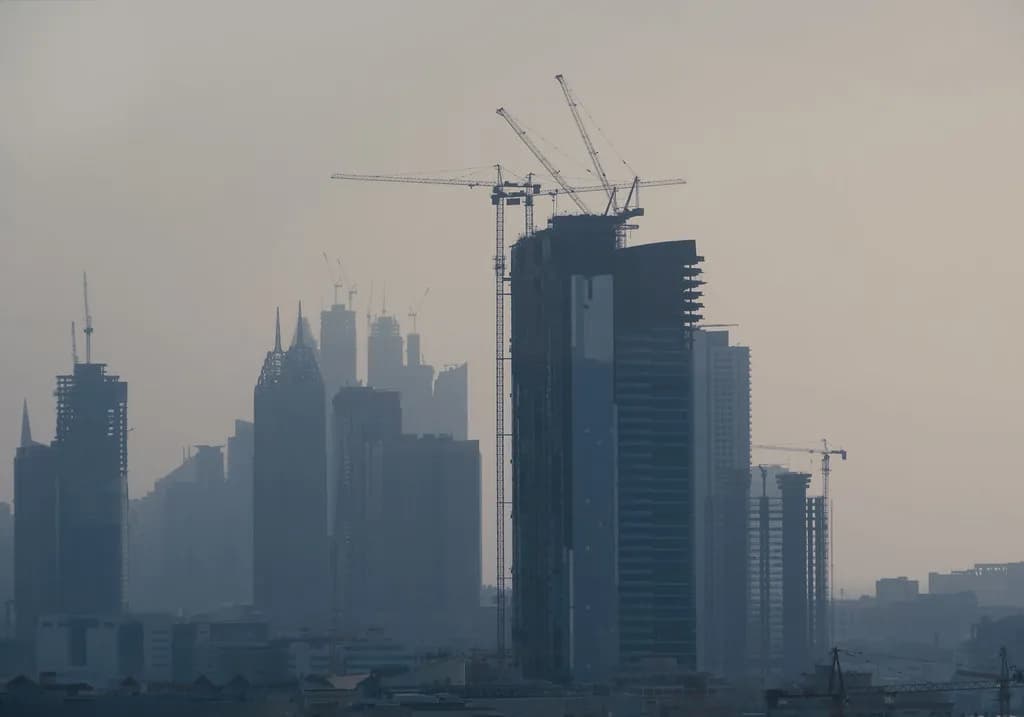
When a region gets riskier, the textbook says capital slows down and waits. The Gulf is currently doing the opposite, and it is worth understanding why before assuming it is bravado.
Saudi Arabia and the UAE are expected to lead a fresh wave of project awards through the second half of 2026, even with shipping, insurance and construction costs all carrying a premium linked to the Iran conflict. The UAE recorded the highest absolute value of awards in the Gulf across the first half of the year.
The numbers behind the confidence
The macro backdrop supports the behaviour. Saudi GDP expanded 3 percent year on year in the first quarter of 2026, with growth spread across all major economic activities rather than concentrated in one sector, according to analysis reported by Arab News.
Corporate earnings tell a similar story. Saudi Aramco posted adjusted net income of 67.2 billion dollars for the first half of 2026.
Reporting from Arab News on the ADCB assessment frames the pipeline as continuing despite conflict related costs, which is a different proposition from continuing because the risk was ignored.
Why higher costs have not stopped the pipeline
Two structural reasons, and neither is optimism.
The first is that these are diversification projects, not opportunistic ones. A programme designed to reduce dependence on hydrocarbon revenue does not become less necessary when the region gets volatile. If anything the argument for it strengthens.
The second is timing. Delaying a multi year infrastructure award to wait out a geopolitical situation only works if you know when it ends. Nobody does, and a delayed award does not become cheaper in the meantime.
The competition nobody is hiding
There is also a race running underneath the numbers. Blackstone is establishing an office in Kuwait through the Kuwait Direct Investment Promotion Authority, with operations expected to begin in the third quarter, as Arabian Business reports.
Saudi Arabia's regional headquarters programme, which pushes multinationals to base operations in Riyadh, is the same contest from the other side. Each state is trying to become the default address for capital that has already decided to be in the Gulf.
Where this could go wrong
Cost inflation on long duration projects is a slow poison. A premium on insurance and freight sustained across several years does not stay a rounding error, and awards made at today's assumptions get delivered against tomorrow's invoices.
There is also concentration risk. A pipeline led by two states means regional momentum depends heavily on two budgets, both still linked to an oil price nobody controls.
What a risk premium actually does to a project
Higher insurance and freight costs do not land evenly. They fall hardest on projects with long import chains and heavy equipment, which describes most large infrastructure work in the region.
Contractors respond by pricing contingency into bids. That either raises the cost of the programme or, where budgets are fixed, quietly reduces what gets built for the money. The second outcome is harder to observe from the outside, because the announcement value stays the same while the specification moves.
It also shifts risk between parties. In a volatile input market, contractors resist fixed price terms, and the negotiation over who carries cost escalation becomes the most consequential part of the deal.
Diversification is a slow instrument
The strategic logic is sound and worth stating plainly: an economy exposed to oil price swings reduces that exposure by building industries that are not oil, and it has to do this using revenue that currently comes from oil.
That is an awkward sequencing problem. The spending is largest in the years before the new sectors generate meaningful returns, so the programme is most vulnerable exactly when it is least complete.
Both Saudi Arabia and the UAE are far enough along that stopping would waste committed capital, which is part of why awards continue through instability. The economics of a half finished programme are considerably worse than the economics of finishing it.
The labour question
Large simultaneous construction programmes compete for the same finite pool of skilled labour and specialist contractors, and that competition is its own form of cost inflation.
When several megaprojects run at once in one region, the binding constraint stops being money and becomes the availability of people who can actually deliver. Schedules slip not because funding dried up but because the specialists are already committed elsewhere.
This is the quiet risk in a pipeline that keeps growing through a period when regional logistics are already strained.
What the oil price still decides
Diversification programmes are funded substantially from hydrocarbon revenue, which makes the oil price the variable underneath everything else in the pipeline.
Both governments build budgets around an assumed price, and a sustained shortfall against that assumption forces a choice between borrowing, drawing on reserves, or slowing the programme. Each option is available and none is free.
Aramco earnings of 67.2 billion dollars in adjusted net income for the first half suggest the current position is comfortable. The point is that comfort is a function of a price nobody in the region sets, which is precisely the dependency the whole diversification effort exists to end.
What to watch next
Watch whether the second half awards actually match the forecast, because a pipeline is an intention until a contract is signed. Watch the spread between announced and awarded value, which is where confidence quietly turns into caution.
The Gulf is making a bet that building through instability beats waiting it out. It is a defensible bet. It is still a bet.
Published in The Outspoken Digest
Newsletter
The Digest, in your inbox
One edition, sent when it is ready. No noise, and your address is never passed on.
Read Next
More Business →
Tesla Beats Profit Estimates on $28.05 Billion in Revenue, Then Slips After Hours
Oct 22, 2026/2 min read

Nasdaq Jumps 1.05% as SpaceX and Super Micro Revive the AI Trade While Netflix and AT&T Slide
Oct 22, 2026/2 min read

Jio Platforms Raises Rs 8,110 Crore From Anchors at the Top of Its Range as India's Biggest IPO Opens
Oct 21, 2026/2 min read
Netflix Beats on Profit, Then Slides After Hours as It Trims Its Ad Forecast and Guides Lower
Oct 21, 2026/2 min read