Harissa Gochujang Roast Chicken: Two Chilli Pastes, One Bird
Tunisia's national condiment and Korea's fermented chilli paste share more than heat. Together they build a lacquered crust that neither manages alone.
Tuesday, July 28, 2026/4 min read
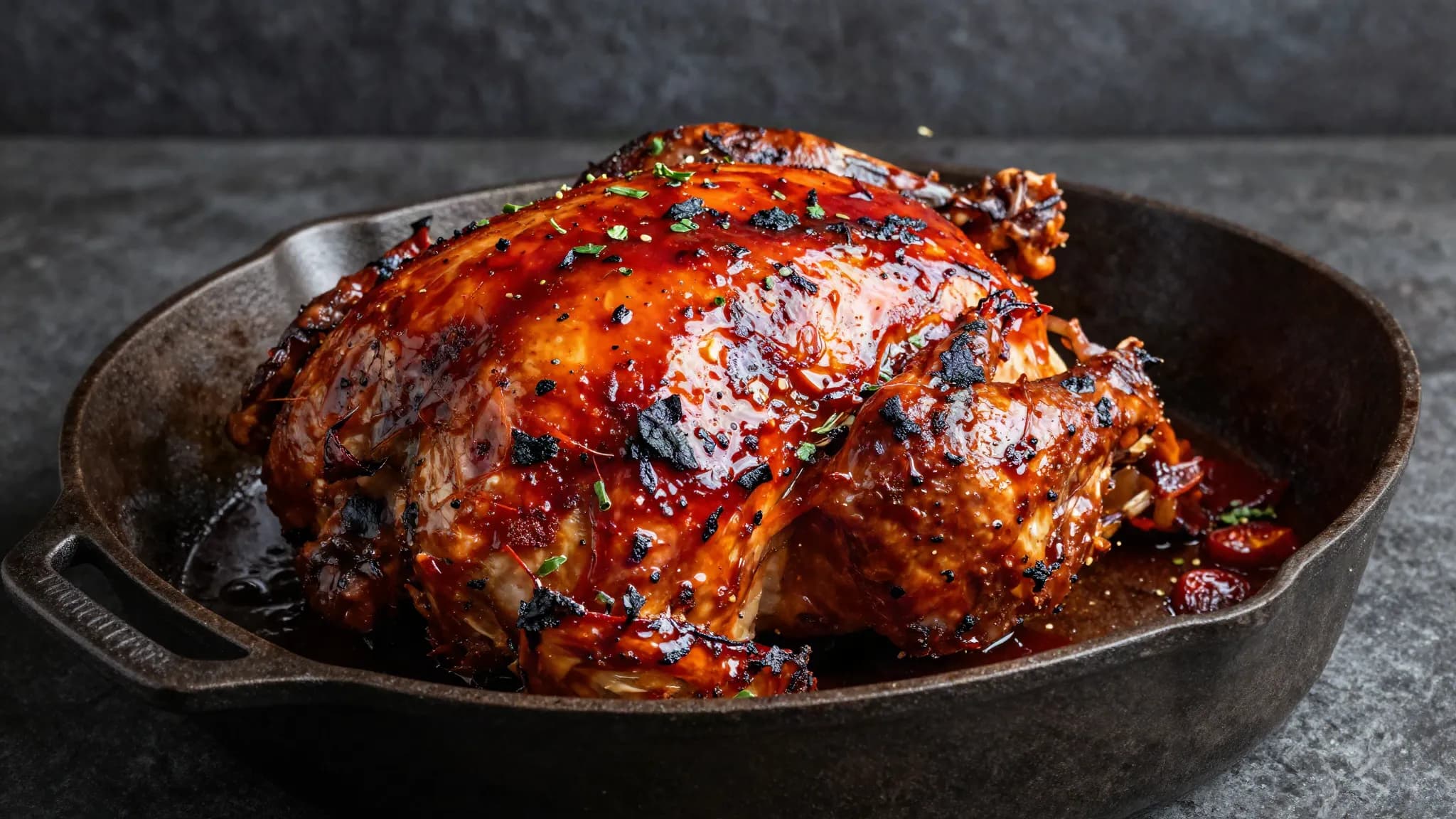
Harissa and gochujang are both chilli pastes, and that is roughly where the similarity stops. Harissa is bright, garlicky and immediate, built on rehydrated dried chillies with caraway and coriander seed. Gochujang is fermented, thick, faintly sweet and slow to arrive.
Put them on the same chicken and each covers the other's weakness. As the record on harissa sets out, it comes from the Maghreb with its strongest ties to Tunisia, where it is treated as a national condiment. Carthage Magazine traces its arrival to the sixteenth century, when chillies reached North Africa after Spanish and Portuguese contact with the Americas and local cooks combined them with garlic, olive oil and their own spice traditions.
That history is a useful reminder that harissa is itself a fusion, roughly four centuries old. Adding a Korean fermented paste to it is not a violation of anything ancient. The fermented sugars in gochujang are also what make this work mechanically: they caramelise under heat into a genuine lacquer, which harissa alone will not do.
Ingredients
Serves 4. Total time: 1 hour 40 minutes, of which 20 is active. Allow 4 hours or overnight for the marinade.
- 1 whole chicken, about 1.6 kg, or 8 bone in thigh and drumstick pieces
- 2 tbsp harissa paste
- 2 tbsp gochujang
- 2 tbsp olive oil
- 1 tbsp honey
- 2 tbsp lemon juice, plus the spent halves
- 4 garlic cloves, crushed
- 2 tsp ground cumin
- 1 tsp smoked paprika
- 1.5 tsp fine salt
- 500 g small potatoes, halved
- 1 red onion, cut into thick wedges
- 1 tbsp toasted sesame seeds
- A handful of coriander leaves
Method
- Whisk the harissa, gochujang, olive oil, honey, lemon juice, garlic, cumin, paprika and salt into a loose paste. It should be spreadable, not stiff. Loosen with a splash of water if needed.
- Pat the chicken thoroughly dry. This matters more than any other step for crust. Rub two thirds of the paste all over, working some under the breast skin, and reserve the rest.
- Refrigerate uncovered for at least 4 hours or overnight. Uncovered is deliberate: the surface dries and browns far better for it.
- Take the chicken out 45 minutes before cooking. Heat the oven to 200C fan.
- Toss the potatoes and onion in the reserved paste and spread them in a roasting tin. Sit the chicken on top, breast up, with the spent lemon halves in the cavity.
- Roast for 55 to 70 minutes for a whole bird, or 40 to 45 for pieces. If the skin darkens too fast, tent loosely with foil. The sugars in both pastes brown early.
- Check for doneness at the thickest part of the thigh: the juices should run clear and a thermometer should read 74C. Pull it as soon as it does.
- Rest for 15 minutes before carving, uncovered so the crust stays crisp. Scatter with sesame seeds and coriander and spoon the pan juices over.
Why the dry brine does the work
The uncovered overnight rest is the step people skip and it is the one that decides how the skin turns out. Salt in the paste draws moisture out of the skin, that moisture dissolves the salt, and the resulting brine is slowly reabsorbed into the meat while the surface itself dries.
Dry skin browns. Wet skin steams, and no oven temperature fixes it. The fridge is a remarkably effective dehydrator because the air inside is dry and constantly moving, which is why leaving the bird uncovered beats wrapping it.
The same logic explains the 45 minutes out of the fridge before roasting. A cold bird cooks unevenly, the outside overshooting while the thigh is still catching up.
Watching the sugar
Both pastes carry sugar, and gochujang carries a lot of it in fermented form. Sugar begins browning well below the temperature at which chicken finishes cooking, so this bird colours much earlier than a plain roast would.
That is why the foil tent is in the method rather than a footnote. Judge doneness by temperature at the thigh rather than by how dark the surface looks, or you will pull an underdone bird because the crust looked ready twenty minutes early.
If your oven runs hot at the top, move the tin down a shelf rather than dropping the temperature, since you still want enough heat to render the fat under the skin.
Heat, swaps and leftovers
Harissa strengths vary enormously between brands, from mild to genuinely painful, so taste yours before committing. If it is fierce, drop to one tablespoon and make up the volume with tomato paste. Rose harissa is milder and more floral and works beautifully here.
Gochujang is sold in heat grades, usually marked on the tub. There is no true substitute, though a mix of miso and chilli paste gets you within sight of it. The dish is naturally dairy free; check your gochujang if you need it gluten free, since some contain wheat.
Cooked chicken keeps three days in the fridge. Shredded into flatbread with garlic yoghurt and pickled onion, it is arguably better the next day than it was hot, which is the quiet advantage of a marinade this heavily spiced.
Published in The Outspoken Digest
Editorial desk
Outspoken Digest Food DeskCooking, ingredients, restaurants and the economics of what ends up on the table.
Newsletter
The Digest, in your inbox
One edition, sent when it is ready. No noise, and your address is never passed on.
Read Next
More Recipes →
Cheesy Ramen on the Stove: Instant Noodles in a Real Cheese Sauce in Ten Minutes
Oct 18, 2026/3 min read
Beer-Battered Jalapeno Cheese Curds: The Wisconsin Bar Snack, Fried Properly at Home
Oct 18, 2026/3 min read
A Thanksgiving Turkey Sub With Hot Stuffing, Cranberry and Gravy to Dip
Oct 17, 2026/3 min read

Pecan Pie Bars With a Shortbread Base and a Caramel Filling That Slices Cleanly
Oct 17, 2026/3 min read