Divers Cement Storm-Torn Corals Back Onto Hawaii's Reefs While a 45-Day Clock Runs
After hurricanes Lala and Lowell, Hawaii's emergency reef network is reattaching broken coral with cement and steel frames, and a Kauai response targeted more than 2,000 colonies before they died.
Sunday, October 25, 2026/2 min read
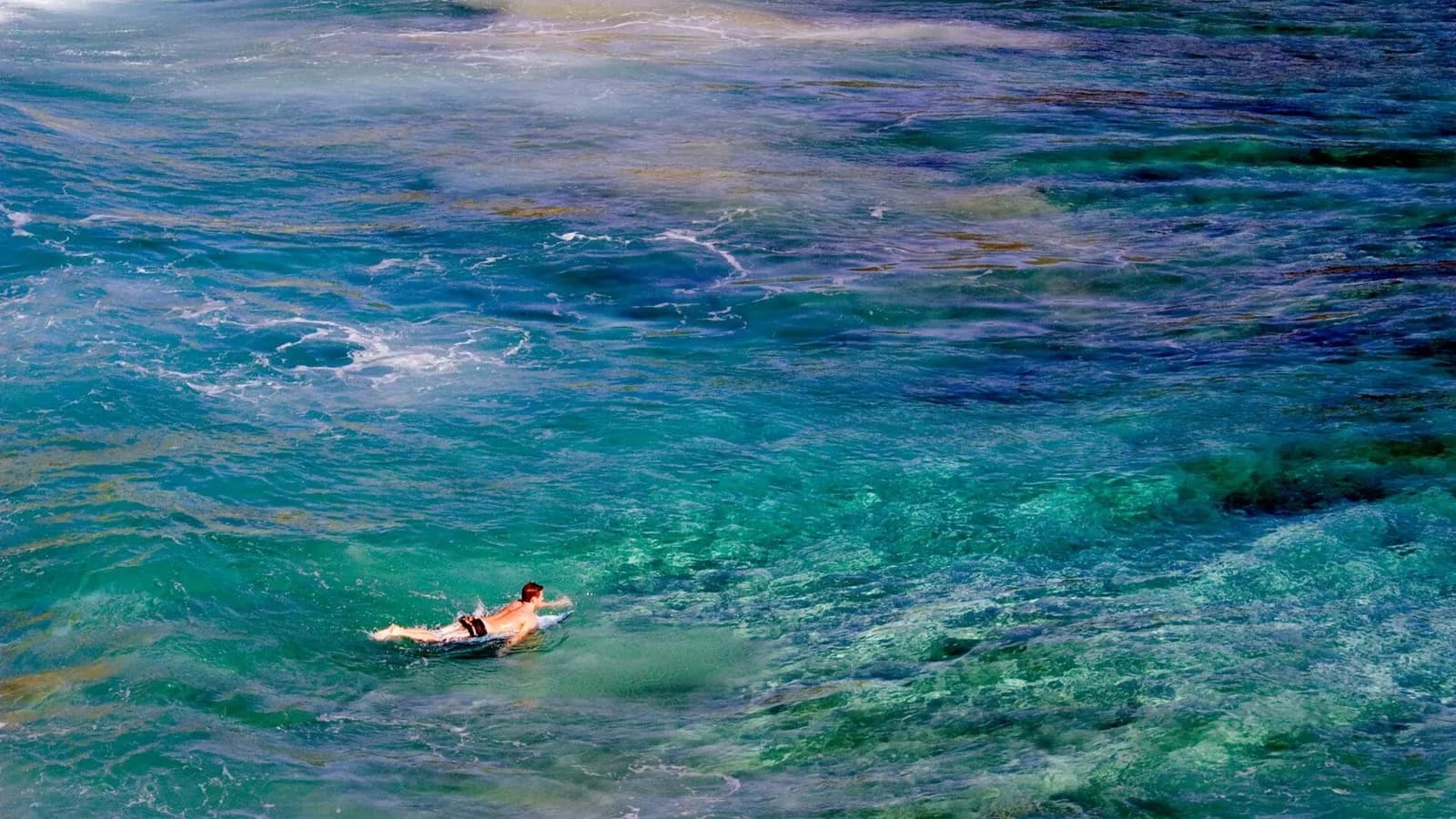
A broken coral head on the seabed is on a timer. Fragments knocked loose by a storm survive for roughly 45 days, which is why Hawaii's reef teams reached the water about two weeks after Hurricane Lowell, the earliest it was safe, and why they are mixing cement on boats, the Star-Advertiser reported in a story republished by The Garden Island on Saturday.
Two hurricanes, Lala in August and Lowell in September, damaged reefs across the state. Kauai's south shore, the Big Island including Kona, and leeward Oahu are among the hotspots.
How do divers reattach broken coral?
The work is closer to construction than gardening. Teams tow snorkelers slowly across a reef to survey it, then choose repair sites. On boats an assembly line mixes concrete, hands it to snorkelers, and passes it to certified scientific divers, who set the corals back on the seabed. Cementing coral directly to the bottom is the leading technique, though Kuleana Coral's Alika Garcia found that slightly raised substrate held up better.
Kuleana Coral also builds "reef stars," steel frames coated in epoxy and sand that interlock to hold loose rubble. Twelve survived the hurricane, while nearby reef areas were wrecked. Murky brown water kept divers out for up to two weeks in places.
What happened at Kauai's Koloa Landing?
At Hanakaape Bay, reached through the Koloa Landing ramp, the Kauai Coral Restoration Nursery (Hoomalu Ke Kai) and partners aimed to locate, document, reposition and cement dislodged coral heads, with more than 2,000 damaged corals the target, according to The Garden Island. Teams had assessed nearly 20 miles of reef on the island's south and west shores. Deeper Blue described an 11-day response that ran under a NOAA restoration permit, with certified divers securing heavier structures while snorkelers and freedivers watched from the surface and carried gear, it reported on 24 October.
Sources differ on the storm's name for that response, with some local reports using Nolo, and on its exact dates, so treat the timeline as approximate. Organisers stressed that applying for a permit does not allow anyone to touch live coral. Only people named on it and assigned by the lead team may do so. They called the damage "heartbreaking to witness."
Who is paying, and will it work?
Lala and Lowell were the first disasters for which The Nature Conservancy could draw on its reef insurance, the first such policy in the country, taken out in 2022. The payout totals $500,000, with $200,000 for Lala and $300,000 for Lowell. One nonprofit has reattached more than 2,000 colonies using over 150 volunteers, and the state is investing in a hybrid artificial reef off Kalaeloa Harbor. Fish, dolphins, turtles and sharks have started to come back, the Star-Advertiser said.
It is not a fix for the root causes. Garcia said pollution and climate change mean reefs now need active help to recover. Damage figures are not final, and the work continues.
This is journalism, not instruction. Coral work in Hawaii happens only under permits by trained teams, and anyone who wants to dive or help should train with a certified instructor and agency and join an organised programme.
Published in The Outspoken Digest
Editorial desk
Outspoken Digest Diving DeskCovers freediving, recreational and technical diving, dive medicine and the incidents the sport learns from.
Newsletter
The Digest, in your inbox
One edition, sent when it is ready. No noise, and your address is never passed on.
Read Next
More Diving →
Polish Diver Reaches 338 Metres in North Macedonia's Vrelo Cave, a Claimed Depth Record
Oct 23, 2026/3 min read
Breathless and Coughing Pink Froth After a Dive: Immersion Pulmonary Edema Explained
Oct 17, 2026/3 min read
Your Gas Consumption Is Not One Number: Why Depth, Cold and Nerves Change It
Oct 16, 2026/3 min read
SS United States Reef Sinking Targeted for November: What Divers Should Know
Oct 16, 2026/2 min read