Hawaii's 90-Foot Hōlei Sea Arch, About 550 Years Old, Collapsed Into the Pacific During Storm Nolo
The National Park Service says one of the Big Island's best-known landmarks was standing on 23 September and gone by the night of 27 September. Rangers are warning people to stay back from the unstable cliffs.
Saturday, October 3, 2026/2 min read
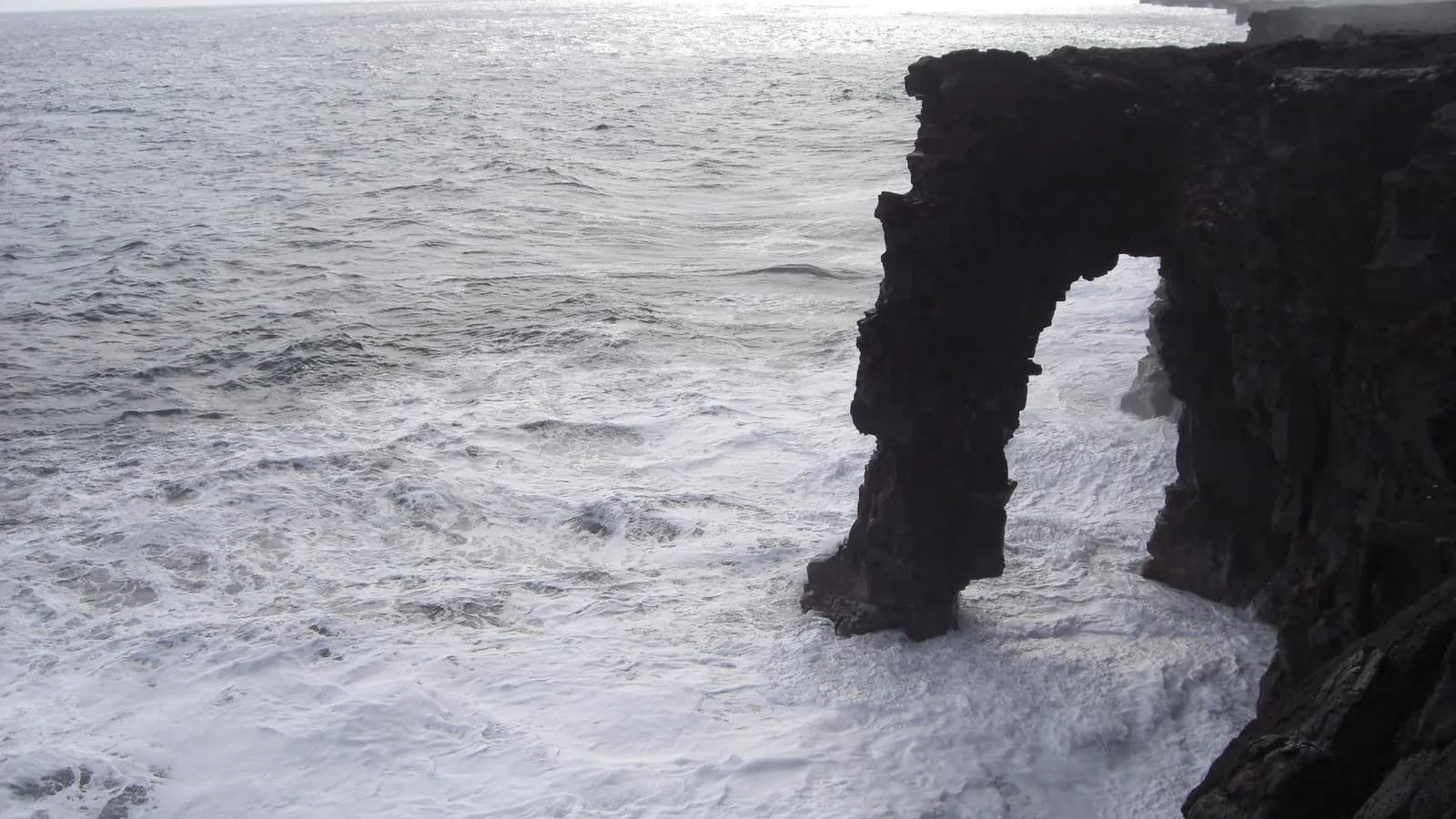
The Hōlei Sea Arch, a 90-foot lava rock formation at the end of Chain of Craters Road in Hawaiʻi Volcanoes National Park, has collapsed into the Pacific Ocean. The National Park Service said in a news release on 1 October that the arch was still standing on Wednesday 23 September and had gone by Sunday night, 27 September.
When it fell
The exact moment is unknown. The park said it could have happened while the area was closed during Storm Nolo, which brought heavy surf and rain to the Big Island in late September. That timing fits the way sea arches die: waves attack the softer rock at the base, and a big swell can finish what years of erosion began. NBC News says the arch formed from lava flows about 550 years old.
A landmark under stress for years
The park had been watching the coastline for some time. The 2018 Kīlauea eruption and the summit collapse that went with it damaged the cliffs beside the arch. In early 2020 new cracks appeared and the original viewing area was closed, and a safer viewing area, set farther back from the cliff edge, opened in March of that year. Later, a storm known as Darby broke off a chunk from the lower part of the arch.
The park explained the formation's fate by differential erosion, where softer rock wears away faster than the harder rock around it. Put simply, the arch had a lifespan, and the sea was always going to set the end date.
A warning for visitors
With the arch gone, the park service has a safety problem of its own. It said people have been entering closed areas to look at what is left, as seen on social media, and warned that the cliffs drop vertically into the ocean and can collapse without warning. In the park's words: "Visitors are urged to stay back from the unstable coastal cliff edges which drop off vertically into the ocean and present a serious falling hazard." Rangers say anyone who gets too close puts themselves and first responders at great risk of falling and drowning off the rough coast.
What visitors can still do
Chain of Craters Road is a scenic drive down the flank of the volcano to the sea, and the coast beyond is still dramatic, with sea cliffs and lava fields. The park's instruction is simple: stay out of closed areas and away from the edges. What has changed is the postcard. For visitors who have seen the arch in photographs for years, the shot they planned is no longer there.
The loss is also a reminder of how quickly Hawaii's coast is changing. Landmarks that look permanent in a photograph are, on a geological clock, temporary, and this one has made that point in a single storm.
Published in The Outspoken Digest
Editorial desk
Outspoken Digest Travel DeskDestinations, airlines, borders and the practicalities of getting there.
Newsletter
The Digest, in your inbox
One edition, sent when it is ready. No noise, and your address is never passed on.
Read Next
More Travel →
Western Sydney Airport Opens to Passengers on Sunday: First Flights, Airlines and How to Get There
Oct 22, 2026/2 min read

Alaska and Hawaiian Airlines Will Fly Nonstop From Seattle to Osaka and Tahiti From Spring 2027
Oct 20, 2026/2 min read
Norte Fire Put 16,000 Under Evacuation Orders in San Clemente, and They Are Now Lifted: What Travelers Should Know
Oct 18, 2026/2 min read
Tropical Storm Trudy Is Forecast to Become a Major Hurricane as It Nears Mexico's Pacific Coast
Oct 15, 2026/2 min read