Honey-Glazed Ham With Orange and Cloves: A Thanksgiving Turkey Alternative That Needs No Brine
A fully cooked bone-in ham, warmed slowly and glazed with honey, brown sugar, orange and Dijon, with clove-studded orange slices. Metric quantities, oven times and leftover advice.
Wednesday, November 25, 2026/3 min read
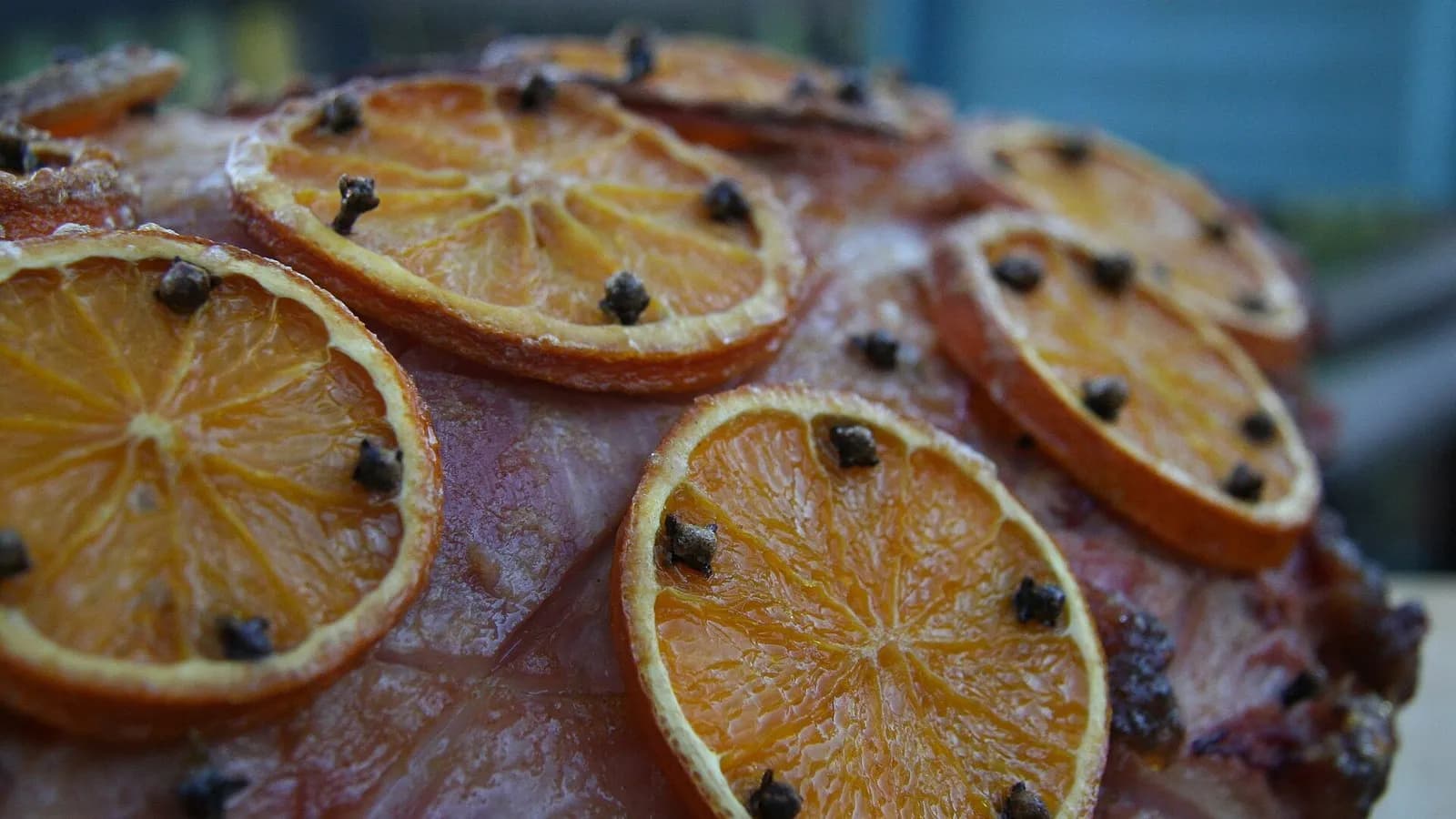
There is a quiet rebellion on the Thanksgiving table every year, and it is usually pink. A glazed ham, studded with cloves and lacquered until the surface turns the colour of dark amber, asks for far less of the cook than a turkey does: no brine, no basting marathon, no anxiety about the breast drying out while the thigh catches up. The meat is already cooked. Your job is to warm it gently and give it a shine.
This week, ham is being pitched as a serious alternative. A Yahoo Lifestyle roundup on 19 November reminds readers that ham is just as traditional as turkey in some households, and offers a cherry-pineapple glazed version as a retro alternative. On 11 November, WYPR's Radio Kitchen featured a chef's cranberry bourbon-glazed ham as one of three menus for people who would rather skip the bird.
The method below follows the same logic as established recipes such as Food Network Kitchen's basic glazed ham, which covers the ham while it heats and glazes it late, and Williams Sonoma's honey orange ham, which roasts at 165 C and finishes at an internal 60 C. This version uses honey, brown sugar, orange and Dijon, with orange slices and cloves on top.
Ingredients
Serves 10 to 12, with leftovers. Allow about 4 hours 30 minutes in total, including an hour for the ham to lose its chill and a rest at the end. Use a fully cooked, bone-in half ham (smoked, shank or butt end). A raw cured gammon is a different product and must be simmered first.
- 3.5 kg fully cooked bone-in half ham
- 20 whole cloves
- 2 oranges, one sliced into 6 thin rounds and one for zest and juice
- 200 ml water, for the roasting tin
- 150 g runny honey
- 100 g light brown sugar
- 120 ml orange juice, from about 2 oranges
- 2 tbsp Dijon mustard
- 1 tbsp cider vinegar
- 1/2 tsp ground cinnamon
- 1/4 tsp ground black pepper
Method
- Take the ham out of the fridge an hour before cooking. Set an oven rack in the lower third and heat the oven to 165 C (145 C fan).
- Trim away any skin, leaving a layer of fat about 1 cm thick. Score the fat in a diamond pattern about 2 cm apart, cutting through the fat but not into the meat.
- Stand the ham fat side up on a rack in a deep roasting tin and pour in the water. Push a clove into each cut intersection, about 20 in all.
- Cover the tin tightly with foil and roast for 2 hours, topping up the water if the tin dries.
- Meanwhile, simmer the honey, sugar, orange juice, zest of 1 orange, mustard, vinegar, cinnamon and pepper in a small pan for 6 to 8 minutes, until syrupy and able to coat a spoon. Keep it warm.
- Remove the foil, brush the ham with a third of the glaze and lay the orange rounds on top, tucking in the cloves to hold them. Return it, uncovered, to the oven.
- Brush with more glaze every 20 minutes. Roast until a probe in the thickest part, away from the bone, reads 60 C, about 1 hour to 1 hour 30 minutes more. If the top darkens too fast, tent it loosely with foil.
- Rest the ham on a board for 20 minutes. Skim the fat from the tin juices, boil them down for 3 to 4 minutes with any leftover glaze, and spoon over the slices.
- Carve thin slices against the grain, working down to the bone, and remove the cloves before eating.
How do you store and use leftover ham?
Chill carved ham within two hours of it leaving the oven. Wrapped tightly, it keeps three to four days in the fridge and freezes for up to two months. Cold slices belong in sandwiches with mustard, or chopped into a gratin, a pot pie or a pan of beans.
If your ham is smaller, scale the roasting time rather than the temperature, and trust the probe over the clock. A bone-in half ham will tell you when it is ready: the glaze will crackle at the edges, the fat will turn translucent, and the kitchen will smell like a holiday.
Can you make the glaze ahead?
Yes. The glaze keeps in a jar in the fridge for up to a week and loosens when warmed. Swap the orange juice for pineapple juice and the cinnamon for allspice for a more retro version, or use maple syrup in place of the honey for a darker, woodier finish. Whichever you choose, the same rule holds: warm the meat slowly, glaze it late and let it rest.
Published in The Outspoken Digest
Editorial desk
Outspoken Digest Food DeskCooking, ingredients, restaurants and the economics of what ends up on the table.
Newsletter
The Digest, in your inbox
One edition, sent when it is ready. No noise, and your address is never passed on.
Read Next
More Recipes →
Trifle Recipe: Classic English Sherry Trifle With Raspberries and Real Custard
Nov 25, 2026/4 min read
Sweet Potato Pie Recipe: A Silky Spiced Custard in a Buttery Crust for Thanksgiving
Nov 25, 2026/4 min read

Homemade Cranberry Sauce Recipe: Orange, Cinnamon and 12 Minutes on the Hob
Nov 23, 2026/3 min read

Potato Gratin Recipe: Creamy Gratin Dauphinois You Can Bake Ahead for Thanksgiving
Nov 23, 2026/3 min read