Houdini's Library at the Harry Ransom Center Marks 100 Years Since the Escape Artist's Death
Three days before the centenary of Houdini's death, a Texas exhibition shows the books he hoarded: a 1584 witchcraft exposé, a milk can poster and his own scathing notes on a rival author.
Wednesday, October 28, 2026/2 min read
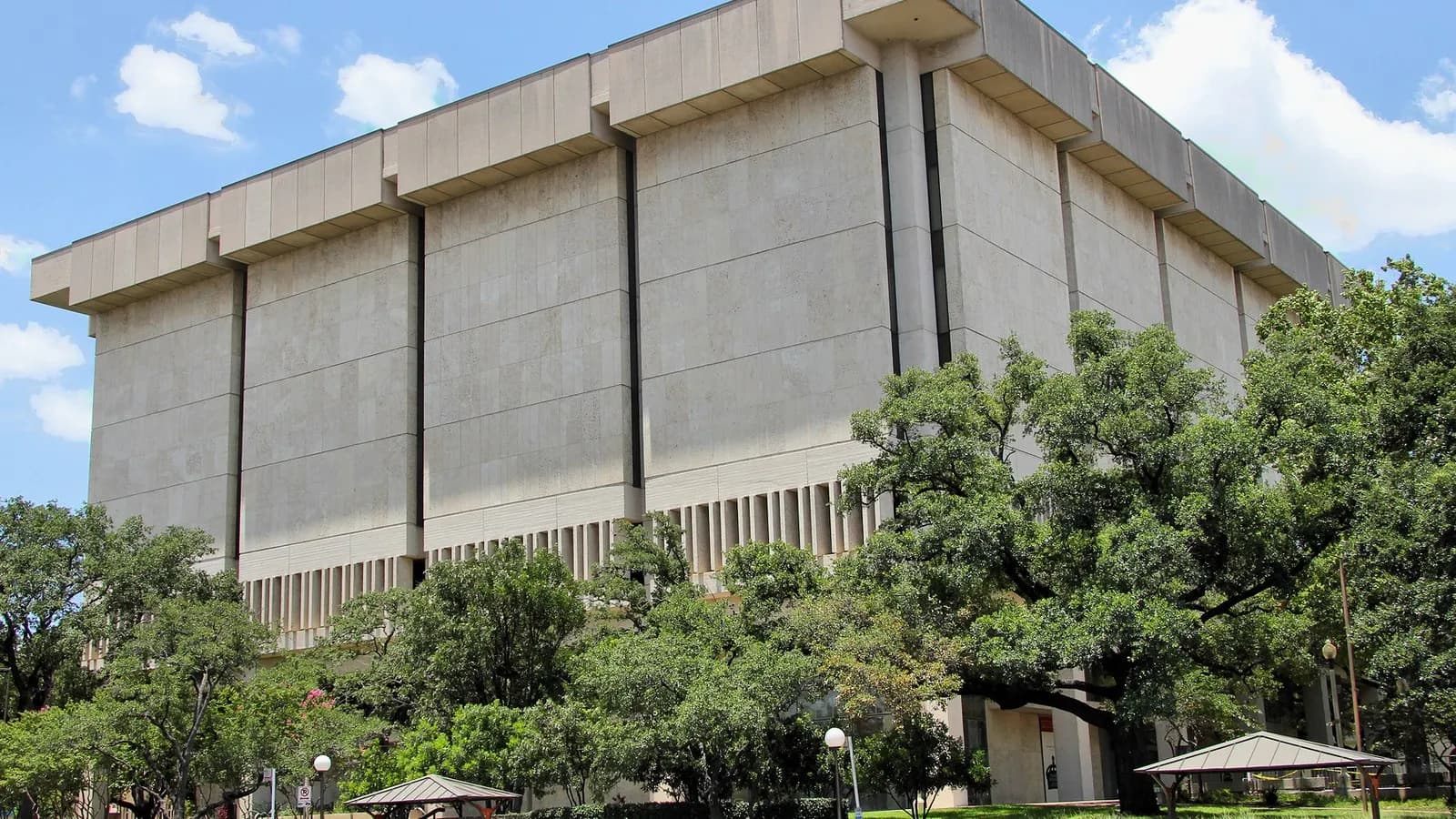
Harry Houdini is remembered for chains, water tanks and milk cans, but he spent as much time among books as behind curtains. This Saturday, 31 October, marks 100 years since he died, and an exhibition in Austin, Texas, argues that his library says more about the man than any stunt does.
Houdini's Library is on at the Harry Ransom Center at the University of Texas, and runs through 24 January 2027, according to The Art Newspaper. It opened on 29 August, the centre's exhibition page says, so the centenary arrives with the show in full swing.
What is on view in Houdini's Library?
The curator, Eric Colleary, spent more than ten years researching how Houdini collected. The Art Newspaper lists the highlights: Reginald Scot's 1584 Discovery of Witchcraft, an exposé of the occult that carries early information on sleight of hand; broadsides advertising Henry "Box" Brown, who escaped slavery by mailing himself in a crate; engravings of mechanical automata; and 18th-century theatrical playbills.
There is also a 1908 poster for the milk can escape, Houdini's copy of the sermons of Bernard de Clairvaux printed in Strasbourg in 1497, and his annotated catalogue of his holdings. In it he turns on Thomas Frost's 1881 The Lives of the Conjurers, calling it a pack of mistakes and wilful errors "from the start to the finish". The Ransom Center's page also lists a first edition of Scot and the handwritten travel diary of the actor David Garrick among the show's treasures.
Why did Houdini collect so many books?
He had little formal schooling and taught himself largely from books. Born Ehrich Weiss in Budapest in 1874, he arrived in the United States in 1878 and grew up in Appleton, Wisconsin, the son of a rabbi, with early memories of his father's theological volumes. He took his stage name from the French magician Jean-Eugene Robert-Houdin, and he was an early president of the Society of American Magicians, where he argued that magic deserved to be treated as a serious subject of study.
Colleary says what Houdini loved about the collection was the ability to encounter the unexpected. It is a collector's instinct as much as a showman's one, and it explains why the library reached from magic into theatre, history and the occult.
Where did the collection end up?
Houdini died on 31 October 1926, aged 52, of a ruptured appendix while on tour. His magic collection went to the Library of Congress, and his drama collection reached the Ransom Center in 1958. The typed 53-page catalogue of his holdings is now with David Copperfield's museum in Las Vegas. An accompanying book of the same name is published by Abbeville Press.
When can you see it?
The Ransom Center is open Tuesday to Friday from 10 a.m. to 5 p.m. and at weekends from noon to 5 p.m., closed on Mondays, with public tours at noon on weekdays and at 1 p.m. and 2 p.m. on Saturdays and Sundays, according to its page. Check the centre's site before travelling, as hours and tours can change. For anyone who has only known Houdini through the escape stories, the show is a reminder that the greatest trick was how much he read.
Published in The Outspoken Digest
Editorial desk
Outspoken Digest Culture DeskReports for The Outspoken Digest across Lifestyle, Design, Fashion, Latest Trends.
Newsletter
The Digest, in your inbox
One edition, sent when it is ready. No noise, and your address is never passed on.
Read Next
More Lifestyle →
Art Basel Paris Cuts Public Days to a Single Friday as Protests Loom
Oct 23, 2026/2 min read

Street Fighter Wins the Weekend With $31 Million, but an Elizabeth Holmes Documentary Opens to $15 Million
Oct 19, 2026/2 min read

Street Fighter Opens With $4 Million in Thursday Previews as Critics Split on the Video Game Reboot
Oct 16, 2026/2 min read
Two Stolen Renoirs Found Behind a Cinder-Block Wall as Police Say Suspects Eyed the Fondation Maeght
Oct 15, 2026/2 min read