Is Scuba Diving Safe? A Beginner's Honest Answer
Scuba has real hazards, but recreational diving within training and conditions is a managed-risk activity, not the extreme gamble suggested by rare accident headlines.
Saturday, July 25, 2026/4 min read
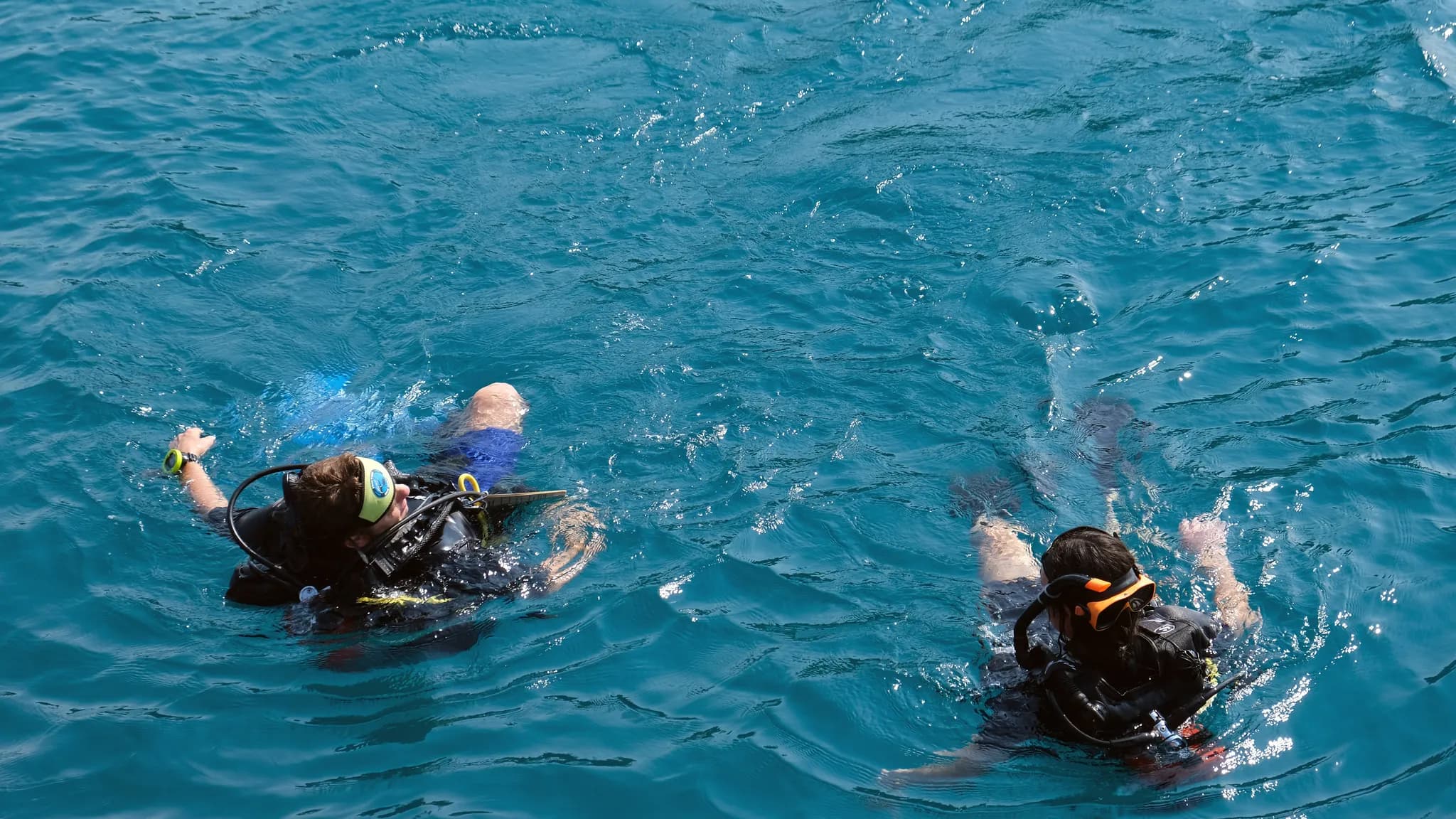
A week of bad diving news can make taking a first course feel irrational. A cave tragedy, a respected instructor's death and a rescue operation appear beside photographs of tanks and masks, and the equipment starts to look like evidence that the whole activity is extreme.
That is not an accurate picture of ordinary recreational scuba. Diving has real hazards: breathing gas is finite, pressure changes the body, open water can move, and a diver cannot simply ignore training underwater. But entry-level diving is designed around controlling those hazards with instruction, conservative limits, a buddy, maintained equipment and the option to end a dive at any time.
The honest answer is not that scuba has no major risks. It is that those risks are known, taught and usually manageable when a diver stays inside the system built around them.
Accident headlines mix very different activities
A supervised open-water student dive on a calm reef is not the same undertaking as a 60-metre cave penetration, a rebreather expedition or a recovery mission. They share the word diving, just as a walk and a high-altitude expedition share the word outdoors.
Recent Maldives deaths involved a deep overhead environment far outside normal beginner limits. The recovery required specialist cave divers and medical support. Those facts should improve respect for limits, not persuade a healthy beginner that a shallow training dive carries the same risk.
What the safety record actually tells us
Divers Alert Network has collected and analysed incidents and fatalities for decades. Its publication library makes annual reports available so training and practice can respond to recurring problems. DAN cites an annual diving-related death rate of about 16 per 100,000 divers among members in one study. That is not zero, and comparisons with other activities are difficult because exposure and reporting differ.
The data is more useful for identifying patterns than for selling reassurance. DAN notes that roughly one-third of fatalities are associated with an acute cardiac event. Gas management, emergency ascents, panic, separation and diving beyond capability recur in incident analysis. These are not random sea monsters. They are areas addressed through screening, training, planning and conservative choices.
The British Sub-Aqua Club also publishes an annual incident report and explicitly uses the findings to improve training. The existence of these reports is a strength: the industry studies what goes wrong instead of pretending accidents do not happen.
What a good first course changes
A proper beginner course does more than show how to breathe through a regulator. It teaches why a diver breathes continuously, how to control buoyancy, monitor gas, equalize pressure, stay with a buddy, make a controlled ascent and respond when something feels wrong. Skills begin in a controlled environment before open water.
An instructor should not rush a student who needs another attempt. Anxiety is information, not failure. DAN's guidance on panic emphasizes communication, practice and ending a dive when discomfort escalates. A learner who knows they can stop is usually safer than one trying to prove they belong.
The safety habits that matter most
- Choose a reputable training centre. Ask about instructor ratios, equipment maintenance, emergency oxygen and where open-water dives occur.
- Complete the medical questionnaire honestly. A changed health condition may require assessment by a clinician familiar with dive medicine.
- Stay within certification and recent experience. A qualification is a starting boundary, not a demand to use its maximum depth.
- Check gas and equipment with a buddy. Familiar routines catch ordinary mistakes before entry.
- Control the ascent. Follow the computer, training and instructor; never race to the surface.
- Do not dive when ill, exhausted or pressured. Any diver can cancel any dive for any reason.
- Refresh after time away. Skills become less automatic when unused.
Equipment is more reliable when the diver understands it
Modern regulators, buoyancy devices, gauges and computers are mature technologies, and DAN notes that improvements in equipment, training and operations have made diving significantly safer. Equipment still requires inspection, correct assembly and maintenance. Renting is normal; blindly accepting an unfamiliar setup is not.
A beginner should be able to identify controls, confirm cylinder pressure, locate alternate air and release weights before entering. The instructor and buddy check are opportunities to ask questions, not ceremonies to perform quickly.
Fitness and comfort count
Most calm recreational dives are not athletic contests, but a current, surface swim or boat ladder may demand sudden effort. DAN's cardiac guidance stresses that immersion, cold, exertion and stress affect the heart, especially as divers age. Reasonable swimming comfort, honest medical screening and choosing conditions that match fitness matter.
Fear deserves the same honesty. Some students need more time with a mask skill, descent or open water. A responsible professional reduces task loading and never uses embarrassment as instruction.
Safe does not mean guaranteed
Accidents can happen even when people make reasonable choices. That is true in water, on roads and in ordinary sport. The aim of training is not to promise immunity. It is to prevent common problems, recognize changes early and keep a small issue from becoming an emergency.
This article is general journalism, not instruction or medical clearance. Learn with a certified instructor, follow the standards of the training agency, and seek dive-medicine advice when the medical form indicates it.
The first dive should feel controlled, not heroic
A good beginner dive is often pleasantly uneventful. The group checks equipment, enters in manageable conditions, moves slowly, sees more than expected and returns with gas in reserve. Nobody wins a contest. Nobody needs rescuing. That ordinary outcome happens far more often than the rare event that becomes international news.
Respect the headlines enough to learn from them, but do not let technically extreme or poorly understood incidents define all diving. Within training, health, conditions and comfort, recreational scuba is a managed-risk activity that millions of people practice for the quietest reason possible: to look around underwater and come back safely.
Published in The Outspoken Digest
Editorial desk
Outspoken Digest Diving DeskCovers freediving, recreational and technical diving, dive medicine and the incidents the sport learns from.
Newsletter
The Digest, in your inbox
One edition, sent when it is ready. No noise, and your address is never passed on.
Read Next
More Diving →
Black Swallower Filmed With a Hugely Swollen Belly 1,259 Metres Down Off Trinidad and Tobago
Oct 13, 2026/2 min read

Playing Recordings of a Healthy Reef Drew More Coral and Fish Larvae to Artificial Structures Off Hawaii
Oct 9, 2026/3 min read
Blacktip Sharks Can Hear a Sound From Nearly 250 Feet Away and Swim Straight Toward or Away From It
Oct 1, 2026/2 min read
A Sea Turtle Species Never Recorded Nesting in the United States Laid Eggs on a Southern California Beach
Oct 1, 2026/2 min read