Italy Honours the Finnish Divers Who Finished the Maldives Recovery
Sami Paakkarinen, Jenni Westerlund and Patrik Grönqvist received Italian state honours for a recovery mission defined by preparation, restraint and humanity.
Saturday, July 25, 2026/4 min read
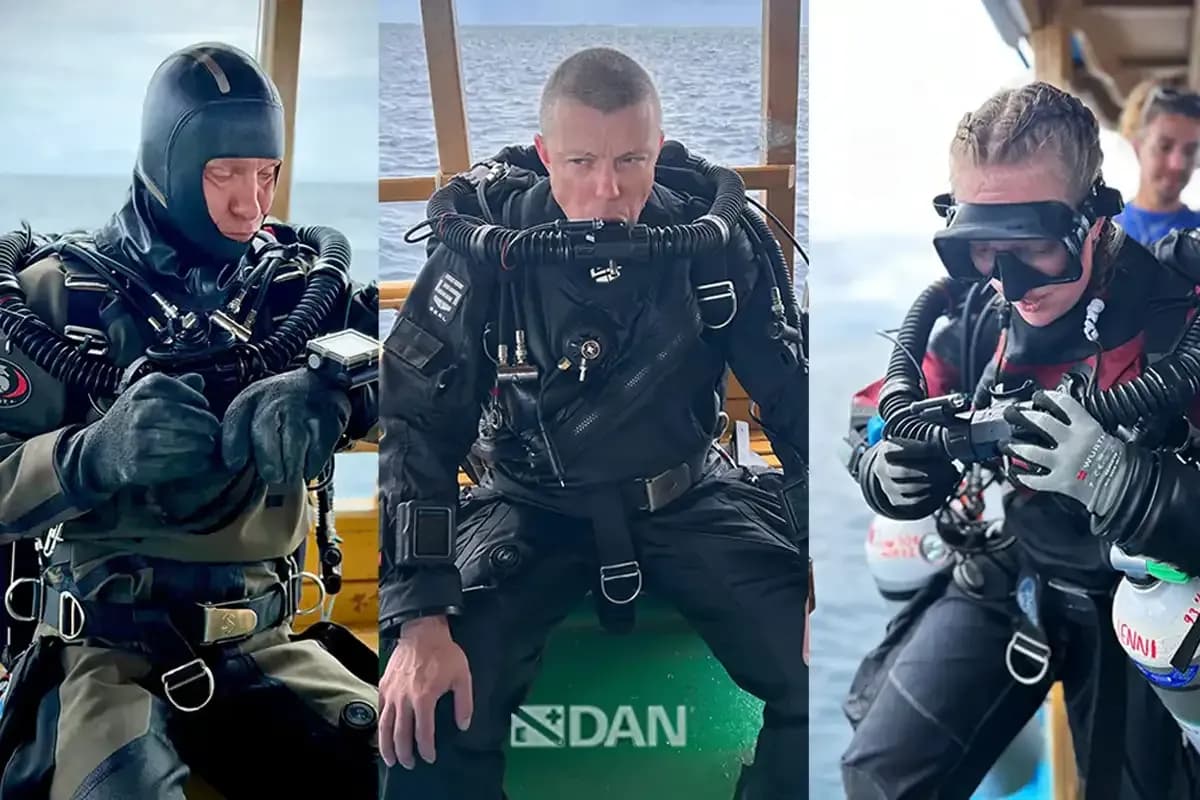
The highest compliment paid to a difficult recovery team is often that it made the work look quiet. At Dhekunu Kandu in the Maldives, Sami Paakkarinen, Jenni Westerlund and Patrik Grönqvist entered a deep cave after an earlier attempt had already cost the life of a Maldivian military diver. Over four operational days, they located and recovered four Italian divers while DAN Europe, Maldivian agencies and surface teams built a medical and logistical system around them.
On 30 May, Italian President Sergio Mattarella conferred the Order of Merit of the Italian Republic on all three under his own initiative. The presidency cited the professionalism and humanity they showed. Those two words belong together. Skill made the mission possible; restraint kept it from claiming more lives.
What the team was asked to do
Five Italian divers died during a 14 May cave dive near Alimathaa Island. One body was recovered early. The other four lay inside the cave system, around 60 metres deep, beyond an overhead passage where direct ascent was impossible. MNDF diver Sergeant Major Mohamed Mahudhee died during the initial recovery effort, and operations were suspended.
DAN Europe then mobilised an international task force with the Maldives National Defence Force, Maldives Police Service, Italian authorities and local support organizations. Its mission statements identify Paakkarinen, Westerlund and Grönqvist as the Finnish specialist team responsible for the in-cave work.
The recovery was a chain, not three individuals
The Finnish divers did the portion that required specialist cave and deep-diving capability, but they did not work alone. Maldivian Coast Guard divers received the victims at shallower depth. Boat crews, police, military personnel, logisticians and medical staff maintained the operation above and around them. DAN Europe provided continuous medical supervision, while equipment, gas, weather and decompression obligations shaped every movement.
This matters in an appreciation article because rescue stories often compress a system into a few heroic names. Paakkarinen, Westerlund and Grönqvist deserve the honour they received. The competence they displayed also included knowing that no single diver can make a recovery safe alone.
Experience built before the call
Paakkarinen and Grönqvist were known well beyond Finland before the Maldives. Both were connected to the 2014 Plura cave tragedy and the later recovery of two friends from the flooded Norwegian system, a story documented in the film Diving Into the Unknown. That history was not a badge of fearlessness. It was experience with the emotional and technical weight of bringing people home from a cave.
Westerlund brought her own deep and cave-diving experience to a team selected for a rare combination of abilities: precise buoyancy, line discipline, equipment familiarity, communication in zero or reduced visibility, stamina and the judgment to stop when a plan no longer holds. DAN Europe did not send people who merely tolerate risk. It sent people trained to reduce it.
The skills the photographs cannot show
Cave-recovery images naturally emphasize equipment: rebreathers, cylinders, guideline and lights. The more important qualities are less visible.
- Patience: waiting for weather, support and medical conditions instead of forcing a timetable.
- Repeatability: performing checks and handovers the same way when fatigue and emotion make shortcuts tempting.
- Team awareness: protecting the living divers remains the first duty, even during recovery of the dead.
- Humility: accepting that depth, current and visibility decide what is possible on a given attempt.
- Humanity: understanding that the work is for families, not for spectacle.
Why the Italian honour matters
The Order of Merit does more than thank three foreign specialists. It recognizes recovery as public service across borders. The divers had no obligation to accept a call involving unfamiliar water and a recently fatal operation. They did so inside a structure that gave medical authority, local agencies and dive specialists distinct roles.
DIVE Magazine reported that the award was conferred motu proprio, on the president's own initiative. That detail gives the recognition unusual clarity: Italy was formally acknowledging not only a successful operation but the way it was carried out.
Appreciation without turning risk into romance
The wrong lesson would be that elite divers can solve any cave emergency. The right lesson is almost the reverse. Specialist recoveries succeed because the divers respect how narrow the margin is. Their preparation begins years before a call, and their willingness to decline, delay or change a plan is part of their expertise.
This article is not cave-diving instruction. Overhead and deep diving require dedicated training, equipment, team practice and site-specific planning.
They brought people home
Laura Marroni, DAN Europe's chief executive, summarized the mission by saying that before being doctors, researchers or emergency specialists, they were divers helping other divers. The line works because it does not erase expertise; it explains what the expertise was for.
Paakkarinen, Westerlund and Grönqvist gave four families the ability to receive their loved ones. The Maldivian and international teams helped them do it without another death. Italy's honour belongs to three names, but the achievement also demonstrates the best quality of dive rescue: disciplined people placing service above drama.
Published in The Outspoken Digest
Editorial desk
Outspoken Digest Diving DeskCovers freediving, recreational and technical diving, dive medicine and the incidents the sport learns from.
Newsletter
The Digest, in your inbox
One edition, sent when it is ready. No noise, and your address is never passed on.
Read Next
More Diving →
Black Swallower Filmed With a Hugely Swollen Belly 1,259 Metres Down Off Trinidad and Tobago
Oct 13, 2026/2 min read
Playing Recordings of a Healthy Reef Drew More Coral and Fish Larvae to Artificial Structures Off Hawaii
Oct 9, 2026/3 min read
Blacktip Sharks Can Hear a Sound From Nearly 250 Feet Away and Swim Straight Toward or Away From It
Oct 1, 2026/2 min read
A Sea Turtle Species Never Recorded Nesting in the United States Laid Eggs on a Southern California Beach
Oct 1, 2026/2 min read