Before Booking a Liveaboard, Ask These Safety Questions
DAN warns that remote liveaboard incidents rose sharply in 2024-2025. Divers can reduce risk by checking oxygen, drills, charging rules, exits and evacuation plans before sailing.
Outspoken Digest Diving Safety Desk
Sunday, August 2, 2026/2 min read
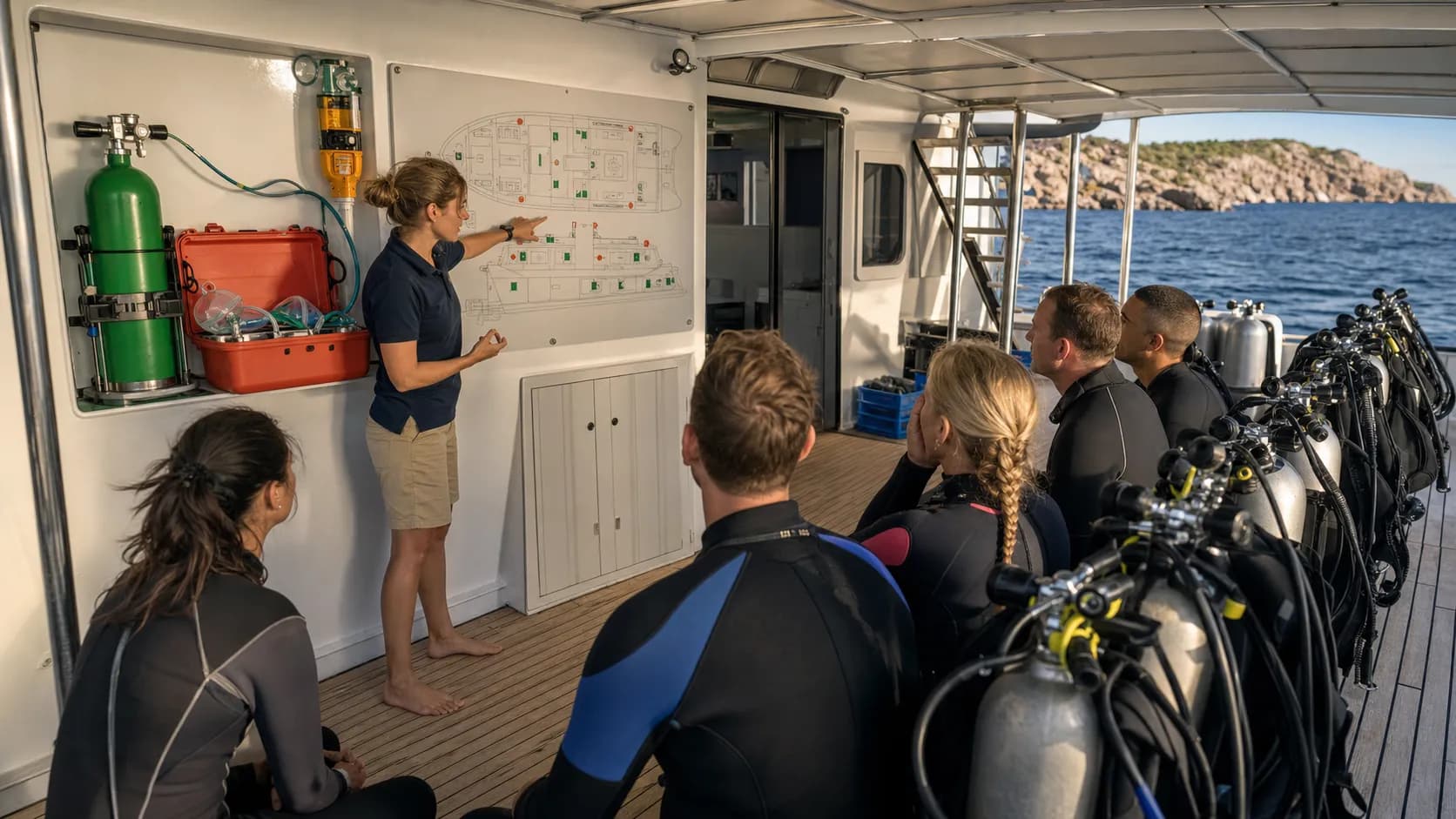
A liveaboard offers access to reefs that day boats cannot reach, but distance changes the safety equation. Help may be hours away, weather can close an evacuation route and a vessel carries fuel, batteries, compressors and sleeping passengers in a compact space. A beautiful itinerary is not a substitute for a credible emergency plan.
What the latest evidence says
Divers Alert Network's 2026 guidance says liveaboard incidents in 2024-2025 rose to almost double the number in a typical year. It identifies fires, sinking, capsizing, weather and unforeseen events, with severity worsened by poor maintenance, inadequate procedures, missing emergency equipment and insufficient drills.
DAN 2026 liveaboard safety guide provides the primary data and institutional assessment behind this report.
DAN publication library adds the second official reference used to compare the outlook and its risks.
Why this matters now
Divers should ask operational questions before paying. How much oxygen is carried and for how many casualties? When was the crew's last fire and abandon-ship drill? Where may batteries be charged? Are cabin exits usable in darkness? What medical facility and evacuation asset can actually be reached from the most remote point of the route?
What to expect in the upcoming period
Responsible operators should welcome these questions and answer specifically. They can show inspection records, explain charging rules, identify muster stations and describe communications redundancy. A vague promise that the crew is experienced is weaker than a named procedure practiced on a schedule.
The risk inside the forecast
No checklist eliminates every accident, and passengers still have responsibilities. Keep exits clear, attend the briefing, avoid charging damaged batteries unattended and report hazards early. On the diving side, conservative profiles, appropriate insurance and honest fitness decisions reduce the chance that a manageable problem becomes a remote emergency.
What readers should watch next
The point is not to make liveaboards frightening. Most trips finish with remarkable diving and no serious event. Good preparation preserves that experience. Choose the boat with the same care as the destination, because once land disappears over the horizon, the vessel and its crew become the entire safety system.
Published in The Outspoken Digest
Editorial desk
Outspoken Digest Diving Safety DeskCovers freediving, recreational and technical diving, dive medicine and the incidents the sport learns from.
Newsletter
The Digest, in your inbox
One edition, sent when it is ready. No noise, and your address is never passed on.
Read Next
More Diving →
Breathless and Coughing Pink Froth After a Dive: Immersion Pulmonary Edema Explained
Oct 17, 2026/3 min read
Your Gas Consumption Is Not One Number: Why Depth, Cold and Nerves Change It
Oct 16, 2026/3 min read
SS United States Reef Sinking Targeted for November: What Divers Should Know
Oct 16, 2026/2 min read

Divers Excavating Off Kekova Find a Wreck Believed to Be the World's Oldest, Turkey Says
Oct 15, 2026/2 min read