Loop Engineering Is the New Skill Behind Better AI Coding
Claude Code lead Boris Cherny's shift from writing prompts to designing loops points to a more disciplined way of building reliable software with agents.
Outspoken Digest Editorial Desk
Monday, July 27, 2026/3 min read
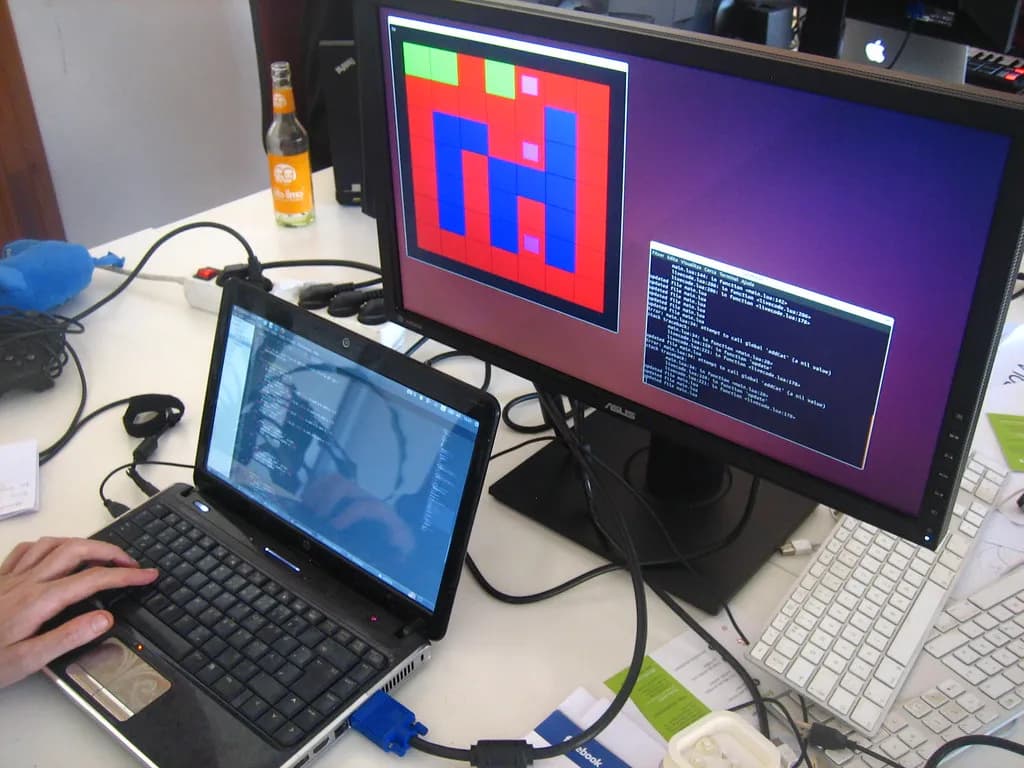
The most useful sentence in the current AI coding conversation is not about a bigger model. It is the idea that an engineer can stop treating an agent like a chatbot and start designing the cycle around it. Claude Code lead Boris Cherny has described his own work in those terms: less time composing one perfect instruction, more time deciding how work should repeat, what evidence counts and when the system must stop.
Why this is landing now
Anthropic: Getting Started With Loops provides the factual starting point. Anthropic defines a loop as an agent repeating a cycle until a stop condition is met. That definition matters because it moves attention away from clever wording and toward operating design: the trigger, the tools, the context, the verifier and the exit. A loop might revisit a pull request every few minutes, keep testing a performance change until a benchmark is reached or work through a queue until nothing remains.
The phrase can sound like another layer of AI jargon, yet the underlying practice is familiar. Continuous integration already repeats checks, incident teams already observe and react, and optimization systems already measure progress against a target. What changes is that a language model can now inspect messy state and choose the next action. That flexibility is valuable, but it also makes vague goals and weak boundaries more expensive.
What to notice before copying it
For developers, the practical test is whether the idea improves clarity, verification or maintainability after the first impressive demo. Sustainable adoption should make a team easier to understand, not more dependent on hidden magic.
A good first loop is narrow and observable. Give it one repository, one measurable goal and one verification command. Let the agent inspect, make a small change, run the check and revise only when the result supplies new evidence. Record each iteration. If three passes fail in the same way, stop for human review. The point is not to remove the engineer; it is to reserve human attention for judgment instead of repetitive coordination.
A compact reader's checklist
- Write the stop condition before the first instruction.
- Use tests, benchmarks or review evidence as feedback.
- Escalate repeated failure instead of burning more tokens.
What the wider evidence adds
IBM: What Is Loop Engineering? adds a second, independent lens. IBM's explanation places loop engineering above the model itself: goals, feedback, memory, tools and governance form the system. That is why two teams using the same coding agent can get very different results. The better team has clearer tests, smaller permissions, useful state and an honest escalation rule.
That context turns a passing headline into a more useful question: which part changes behavior, and which part is simply memorable language? Readers do not need to adopt every new idea. They need enough detail to test the strongest claim in proportion to its cost and risk.
The part worth resisting
Loops magnify whatever is inside them. A strong test suite and a precise metric can compound progress. A misleading benchmark, permissive credentials or an incomplete definition of done can compound error and cost. Long-running autonomy should arrive only after short supervised runs have shown that the feedback signal is trustworthy.
The lasting idea
The best response is neither instant enthusiasm nor reflexive dismissal. Try the smallest honest version, observe what improves and keep the parts that still make sense when the novelty fades. That is how a trend becomes knowledge, a purchase becomes personal style or a new technical practice becomes dependable engineering.
Published in The Outspoken Digest
Editorial
Outspoken Digest Editorial DeskThe Digest's own desk: the pieces that do not sit in one section.
Newsletter
The Digest, in your inbox
One edition, sent when it is ready. No noise, and your address is never passed on.
Read Next
More Technology →
Some White Dwarfs Would Look Green, Pink or Purple, Warwick Astronomers Calculate
Oct 15, 2026/2 min read

Oxford Physicists Reproduce the Aharonov-Bohm Effect on a Hybrid Quantum Computer
Oct 15, 2026/2 min read

Japan Will Fund Up to $21 Billion for Two GlobalFoundries Chip Plants in New York
Oct 15, 2026/2 min read

Apple's $299 HomeView Smart Display Takes Preorders, but Not in the European Union
Oct 15, 2026/2 min read