Luqaimat: Crisp Emirati Dumplings Under Cold Date Syrup
A yeasted batter fried into shatter-crisp spheres, then drenched while still hot. The trick nobody mentions is the temperature of the syrup, and it decides everything.
Friday, July 31, 2026/4 min read
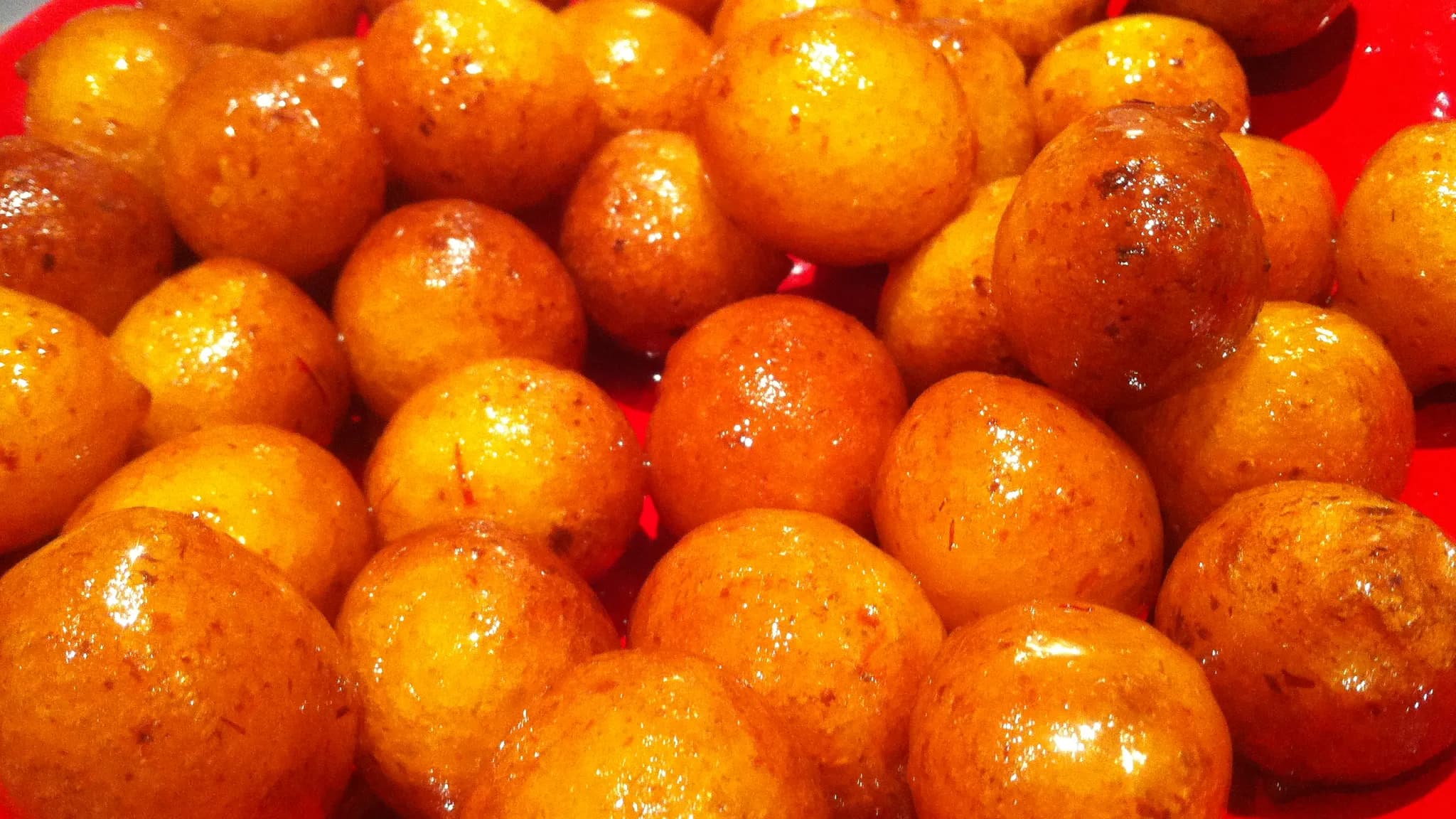
There is a specific sound a good luqaimat makes when you bite it, a dry crack before the give, and it lasts about four minutes after the syrup goes on. That short window is the whole craft.
Luqaimat means "small bites". They are the dessert of the Gulf iftar table, present at almost every Ramadan gathering in the UAE, Saudi Arabia, Bahrain, Kuwait, Qatar and Oman, and at cultural festivals year round. The lineage runs a long way back: in medieval Baghdad a very similar fritter was known as luqmat al qadi, the judge's mouthful, and it was served at the caliph's table.
The batter is nothing much on paper, flour, yeast, sugar, water, scented with cardamom and saffron, and most versions agree on that much. What turns it into something worth queueing for is fermentation, oil temperature and a piece of counterintuitive advice about the syrup that most recipes skip.
Ingredients
Makes about 40 dumplings, serving 6. About 2 hours, of which 90 minutes is the batter proving untouched.
- 250 g plain flour
- 2 tbsp cornflour
- 1 1/2 tsp instant dried yeast
- 1 tbsp caster sugar
- 1/2 tsp fine salt
- 1/2 tsp ground cardamom
- A generous pinch of saffron threads, crushed and soaked in 1 tbsp warm water
- 1/4 tsp ground turmeric, for colour (optional)
- 300 ml warm water, around 40C
- Sunflower or another neutral oil, for deep frying
- 250 ml date syrup (dibs), well chilled
- 1 tbsp sesame seeds, toasted, to finish (optional)
Method
- Whisk the flour, cornflour, yeast, sugar, salt, cardamom and turmeric together in a large bowl. Add the saffron with its soaking water.
- Pour in the warm water and whisk until you have a smooth batter with no lumps. It should be thicker than pancake batter and looser than a dough, roughly the consistency of double cream. Add water a tablespoon at a time if it is stiff.
- Cover the bowl and leave somewhere warm for 90 minutes, until visibly doubled and covered in bubbles across the surface. Do not rush this. Under-proved batter fries dense, and dense luqaimat are just doughnuts.
- Chill the date syrup properly in the fridge while the batter proves. This is the step that matters most and the one most often ignored.
- Heat 8 cm of oil in a deep pan to 170C. Use a thermometer if you have one. Too hot and the outside sets before the inside cooks, leaving a raw centre; too cool and they drink oil and go heavy.
- Do not stir the batter down. Wet one hand and a teaspoon in cold water. Scoop a rounded teaspoon of batter and drop it gently into the oil. Work in batches of 8 to 10 so the oil temperature holds.
- Fry for 4 to 5 minutes, turning them with a slotted spoon so they colour evenly. They will bob and turn themselves as they puff. Take them out when they are a deep even amber, not pale gold. Pale luqaimat go soft within a minute.
- Drain briefly on a wire rack, not on kitchen paper, so steam escapes from underneath and the base stays crisp.
- While the dumplings are still hot, pour the cold date syrup over them, or dip them and lift them straight out.
- Scatter with toasted sesame seeds and serve immediately, with Arabic coffee if you are doing it properly.
Why the syrup has to be cold
This is the one piece of technique that separates a good plate from a soggy one, and it is a matter of physics rather than tradition.
Hot syrup on hot dough steams. The moisture goes straight into the crust and softens it, and the dumpling collapses inward within a minute. Cold syrup hitting a hot fried surface sets almost on contact, coating the outside in a thin glaze while the crust underneath stays intact.
The temperature contrast also stops the syrup soaking too deep, which keeps the interior light rather than cloying.
Date syrup, dibs, is the traditional Emirati finish, and its caramel depth suits the fried dough better than a plain sugar syrup does. If you cannot find it, a good pomegranate molasses gives a sharper version, or use honey thinned with a little water and chilled the same way.
Getting the shape and keeping them crisp
The classic method uses no spoon at all. You take a fistful of batter and squeeze so a ball extrudes between thumb and forefinger, then scrape it off with a wet spoon into the oil. It takes practice and produces the roundest results. A wet teaspoon is a perfectly respectable substitute and nobody will interrogate you.
Keep both hand and spoon wet. Batter releases from wet surfaces and clings to dry ones.
Luqaimat do not keep. They are a dessert to be made and eaten in the same half hour, which is why they are a gathering food rather than a make-ahead one. The batter, however, can be made and proved, then refrigerated for up to 24 hours: bring it back to room temperature for 30 minutes before frying.
If you want them for a crowd, fry in batches and syrup each batch as it comes out, rather than frying everything and syruping at the end. Serve them the moment they are glazed, and let the crack do its work.
Published in The Outspoken Digest
Editorial desk
Outspoken Digest Food DeskCooking, ingredients, restaurants and the economics of what ends up on the table.
Newsletter
The Digest, in your inbox
One edition, sent when it is ready. No noise, and your address is never passed on.
Read Next
More Recipes →
Chicken Cheesesteak at Home: Seared Thigh, Sweet Onions and Melted White American on a Sesame Roll
Oct 26, 2026/3 min read
Marry Me Chicken Pasta: Creamy Sun-Dried Tomato Chicken, Ready in 40 Minutes
Oct 23, 2026/4 min read

Cheesy Ramen on the Stove: Instant Noodles in a Real Cheese Sauce in Ten Minutes
Oct 18, 2026/3 min read
Beer-Battered Jalapeno Cheese Curds: The Wisconsin Bar Snack, Fried Properly at Home
Oct 18, 2026/3 min read