Madrouba: The Gulf Porridge That Gets Beaten Into Shape
The name means beaten, and that is the method. Rice and chicken cooked past the point of holding their shape, then worked with a spoon until the whole pot turns creamy.
Wednesday, August 5, 2026/4 min read
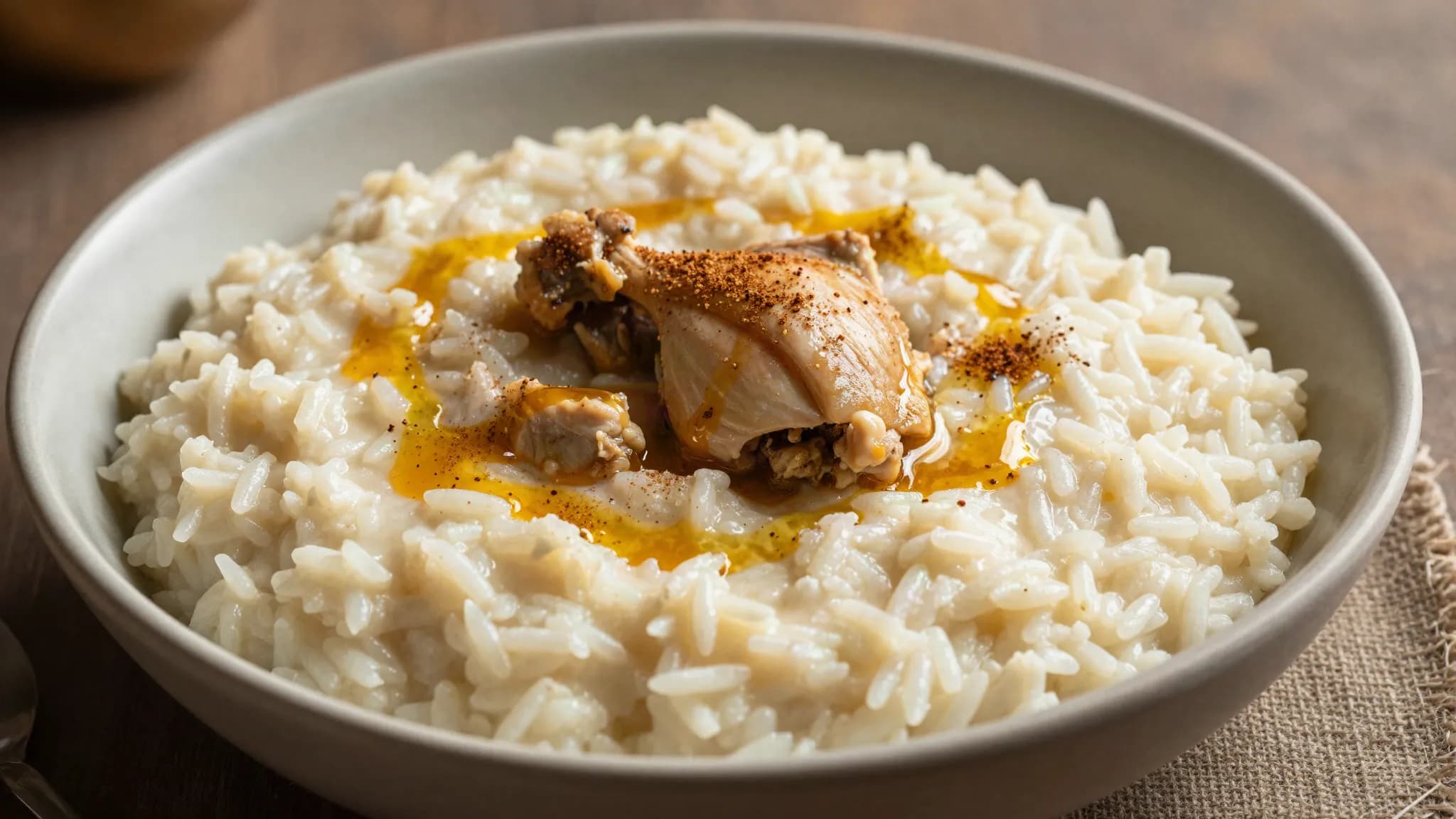
Most rice dishes are judged on whether the grains stay separate. Madrouba is judged on the opposite. The word means beaten, and the cook's job is to work the pot with a spoon until rice and meat stop being distinguishable and the whole thing turns thick and creamy.
It is a comforting Emirati dish of rice, meat and spice, slow cooked to a porridge consistency closer to risotto than pilaf, as this guide to traditional Emirati dishes describes, and it is understood to have Bedouin origins, where it was a staple often served to guests.
That origin explains the design. A dish that stretches a modest amount of meat across a large pot, needs no special equipment, holds heat for a long time and is easy to eat is a dish built by people who moved. It belongs to the same khaleeji family as thareed, harees and machboos, described in this survey of Gulf gastronomy, and like harees it depends on texture more than on any single flavour.
Ingredients
Serves 5. Total time: 1 hour 30 minutes.
- 1 whole chicken, about 1.3 kg, jointed, or 8 bone in thighs
- 300 g short or medium grain rice, rinsed
- 3 tbsp ghee
- 1 large onion, finely chopped
- 4 garlic cloves, crushed
- 1 tbsp grated ginger
- 2 tbsp tomato paste
- 1 tbsp baharat
- 1 tsp ground turmeric
- 1 tsp ground cumin
- 0.5 tsp ground cardamom
- 2 dried limes (loomi), pierced
- 1 cinnamon stick
- 1.8 litres water or chicken stock, plus more as needed
- 2 tsp salt, to taste
- 2 tbsp ghee and 1 sliced onion, for the topping
- A handful of coriander, chopped
Method
- Brown the chicken pieces in the ghee in a large heavy pot over medium high heat until golden on both sides. Remove and set aside.
- Cook the chopped onion in the same pot 8 minutes until soft, then add the garlic and ginger for a minute.
- Stir in the tomato paste, baharat, turmeric, cumin and cardamom and cook 2 minutes until fragrant and slightly darkened.
- Return the chicken, add the dried limes, cinnamon, water and salt. Bring to the boil, then reduce to a simmer, cover and cook 30 minutes.
- Lift out the chicken. Once cool enough to handle, pull the meat from the bones in large pieces and discard skin and bones. Return the meat to the pot.
- Add the rinsed rice and simmer uncovered, stirring often, for 35 to 45 minutes. It will look far too wet for a long time. Keep going and keep adding hot water if it tightens too early, since the rice needs to cook well past normal doneness.
- When the grains have broken down and the mixture is thick, start beating. Work it hard with a wooden spoon or a potato masher for several minutes until the texture turns uniform and creamy. This is the step the dish is named for.
- Fry the sliced onion in ghee until deep brown and crisp. Serve the madrouba in bowls with the fried onion, its ghee and chopped coriander on top.
Knowing when to start beating
The timing question is the one that separates a good madrouba from a lumpy one, and it is judged by texture rather than by clock.
Beat too early and the rice grains are still intact, so they simply break into fragments rather than releasing starch, and the result is gritty. Beat too late, after the mixture has already tightened, and the whole pot resists the spoon.
The moment to look for is when the grains have visibly lost their edges and the liquid has thickened enough to coat the back of a spoon, but the mixture still moves freely. That is when working it hard produces the creamy uniform texture the dish is judged on.
Keep hot water beside the pot throughout. Adding cold water at this stage seizes the starch and drops the temperature, and the recovery takes longer than the addition saved.
Notes, swaps and keeping
Short or medium grain rice is the right choice because it carries more surface starch and breaks down willingly. Basmati resists exactly what this dish is trying to do and will leave you beating a pot of stubborn separate grains.
Season more assertively than feels correct. A dish this starchy absorbs salt and spice, and something that tastes balanced in the pot will taste flat in a bowl.
Lamb works in place of chicken with a longer initial simmer, around 75 minutes, before the rice goes in. A vegetarian version using chickpeas and vegetable stock holds together well, though it loses the body that chicken fat contributes.
Madrouba thickens dramatically as it cools and will set almost solid in the fridge. It keeps three days and reheats with a generous splash of water or stock, beaten again briefly to bring the texture back. Add the fried onion fresh each time rather than storing it on top, where it goes soft.
Published in The Outspoken Digest
Editorial desk
Outspoken Digest Food DeskCooking, ingredients, restaurants and the economics of what ends up on the table.
Newsletter
The Digest, in your inbox
One edition, sent when it is ready. No noise, and your address is never passed on.
Read Next
More Recipes →
Cheesy Ramen on the Stove: Instant Noodles in a Real Cheese Sauce in Ten Minutes
Oct 18, 2026/3 min read
Beer-Battered Jalapeno Cheese Curds: The Wisconsin Bar Snack, Fried Properly at Home
Oct 18, 2026/3 min read
A Thanksgiving Turkey Sub With Hot Stuffing, Cranberry and Gravy to Dip
Oct 17, 2026/3 min read

Pecan Pie Bars With a Shortbread Base and a Caramel Filling That Slices Cleanly
Oct 17, 2026/3 min read