Five Italian Divers Die in Maldives Cave, Rescuer Also Lost
Five Italian divers died in a Maldives cave near Vaavu Atoll on 14 May 2026, and a Maldivian rescue diver died during the search that followed.
Friday, May 15, 2026/4 min read
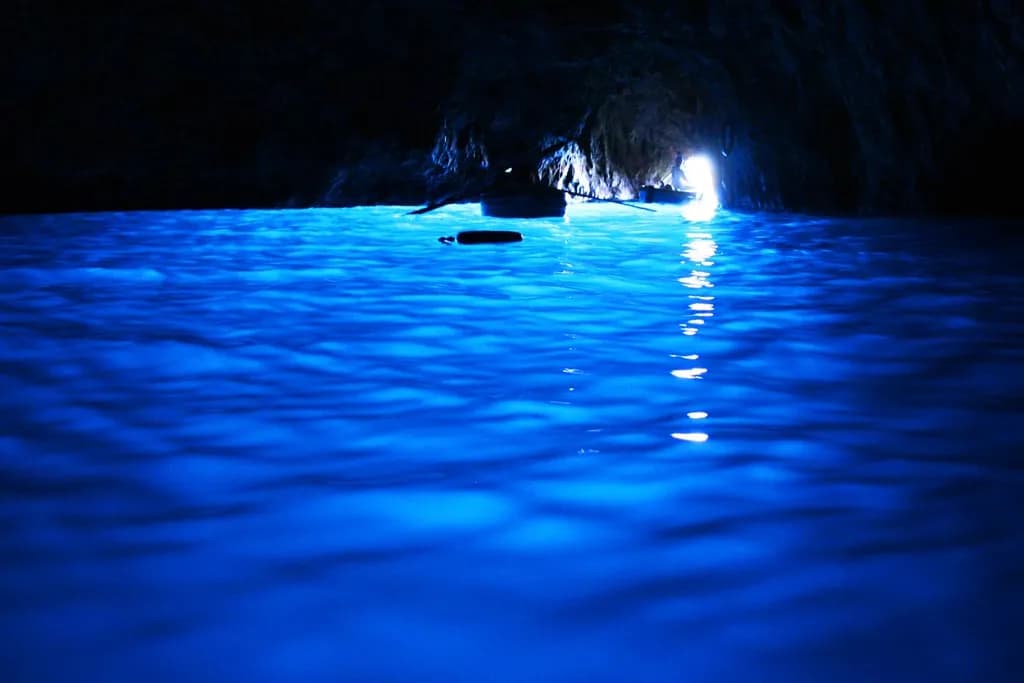
Five Italian divers descended into a submerged cave off Alimathaa Island on the morning of 14 May 2026 and did not come back up. By the time the alarm was raised that afternoon, a routine excursion in one of the world's most photographed dive destinations had become the deadliest diving accident the Maldives has ever recorded.
The dive site, known locally as Dhekunu Kandu and also reported under the names Devana Kandu and Thinwana Kandu, sits near Vaavu Atoll and drops through two chambers connected by a short tunnel, reaching roughly 55 to 58 metres at its deepest point. It is not a swim-through reef cavern of the kind tourists are shown on a fun dive. It is an overhead technical environment, the sort of place where a diver cannot simply swim up if something goes wrong.
Who died in the Maldives cave diving accident
The five Italian divers who died were named as Gianluca Benedetti, Monica Montefalcone, Giorgia Sommacal, Muriel Oddenino and Federico Gualtieri. According to the Wikipedia entry compiled from contemporaneous reporting, several of the group were not casual holidaymakers. Montefalcone was a marine researcher affiliated with the University of Genoa, and Oddenino was also a marine biologist. They were experienced water people engaged in what appears to have been a research and diving expedition, not a resort try-dive that went wrong.
Reporting from Il Sole 24 Ore and from Divernet indicates the group entered the water around 11:00 local time. When they failed to surface on schedule, dive operators and eventually Maldivian authorities launched a search that grew, over the following days, into an international operation.
A sixth death during the search
The tragedy did not stop at five. During the recovery effort, MNDF Staff Sergeant Major Mohamed Mahudhee, a Maldives National Defence Force diver taking part in the search, fell critically ill underwater and was evacuated to hospital in Malé, where he died. Maldivian officials attributed his death to decompression illness, sustained during the high-risk work of searching the cave for the missing Italians, according to DIVE Magazine and the Malaysian state news agency BERNAMA. He is honoured separately in our coverage of the recovery effort, but his death belongs in any accounting of what this incident cost. Six people did not come home from Vaavu Atoll.
What reporting says about contributing factors
Outlets covering the incident, citing officials and diving industry sources, have pointed to a cluster of contributing factors: the divers were reportedly using standard air rather than a mixed gas suited to a dive of that depth, no permanent guideline appears to have been laid inside the cave, and thermal protection may have been inadequate for a prolonged exposure at depth. Disorientation inside an unfamiliar cave system has also been raised as a possibility. These are reported factors under active investigation, not a settled verdict, and they are attributed here to the reporting rather than stated as established fact.
Maldivian authorities and Italian investigators have both opened inquiries into the incident. Those investigations remain open at the time of writing, and this article will not speculate on their outcome.
How the recovery unfolded
The search and recovery operation that followed involved the Maldives National Defence Force, the Maldives Police Service, Italian authorities and DAN Europe, the diving safety and medical organisation, which mobilised an international task force of technical cave divers to reach the bodies at depth. That mission, which ran from roughly 16 to 21 May, is detailed in our companion report on the DAN Europe operation. All six victims were eventually recovered.
A destination built on the water it now has to reckon with
The Maldives markets itself almost entirely on its reefs and lagoons, and recreational diving there is tightly bounded, typically capped at 30 metres for tourists. Technical and cave diving of the kind attempted at Dhekunu Kandu sits well outside that framework, and outside any clear regulatory structure in the country. In the weeks since the accident, Maldivian authorities have begun moving toward formal rules for technical diving, a shift covered in a separate article in this series.
Why the site drew experienced divers at all
Dhekunu Kandu was not an obscure spot found by chance. Reporting on the accident, including analysis from DiveVolk Diving, describes the site as known within technical diving circles for its scale and its research value, drawing marine scientists and advanced divers willing to travel specifically for a cave system of that depth and complexity. The group had reportedly travelled aboard a liveaboard vessel identified in some reporting as the MV Duke of York, a common way for technical diving expeditions to reach remote sites far from resort infrastructure, carrying their own gas, equipment and support crew rather than relying on a local dive centre built for shallow reef trips.
That combination, a demanding cave system, a visiting international team, and a host country whose diving regulations were built around a very different kind of tourism, is part of what investigators in both the Maldives and Italy are now examining. It is also, separately, part of why the Maldivian government has since moved to close the regulatory gap the accident exposed.
For now what is confirmed is grim and simple. Five Italian divers and a Maldivian military diver went into the water to do difficult, serious work in a place few people ever see, and none of the six came back. Investigators in two countries are still working out exactly why. Everything else, for now, is reporting, not verdict.
Published in The Outspoken Digest
Editorial desk
Outspoken Digest Diving DeskCovers freediving, recreational and technical diving, dive medicine and the incidents the sport learns from.
Newsletter
The Digest, in your inbox
One edition, sent when it is ready. No noise, and your address is never passed on.
Read Next
More Diving →
Playing Recordings of a Healthy Reef Drew More Coral and Fish Larvae to Artificial Structures Off Hawaii
Oct 9, 2026/3 min read
Blacktip Sharks Can Hear a Sound From Nearly 250 Feet Away and Swim Straight Toward or Away From It
Oct 1, 2026/2 min read
A Sea Turtle Species Never Recorded Nesting in the United States Laid Eggs on a Southern California Beach
Oct 1, 2026/2 min read
Marine Surveyors Confirmed Living Coral Off Benin, More Than Sixty Years After the Reef Was Presumed Dead
Sep 29, 2026/2 min read