The Mammalian Dive Reflex: A Human Body on One Breath
Submersion triggers an ancient reflex that slows the heart, redirects blood, and quietly reshapes what a trained freediver's body can survive underwater.
Wednesday, September 18, 2024/4 min read
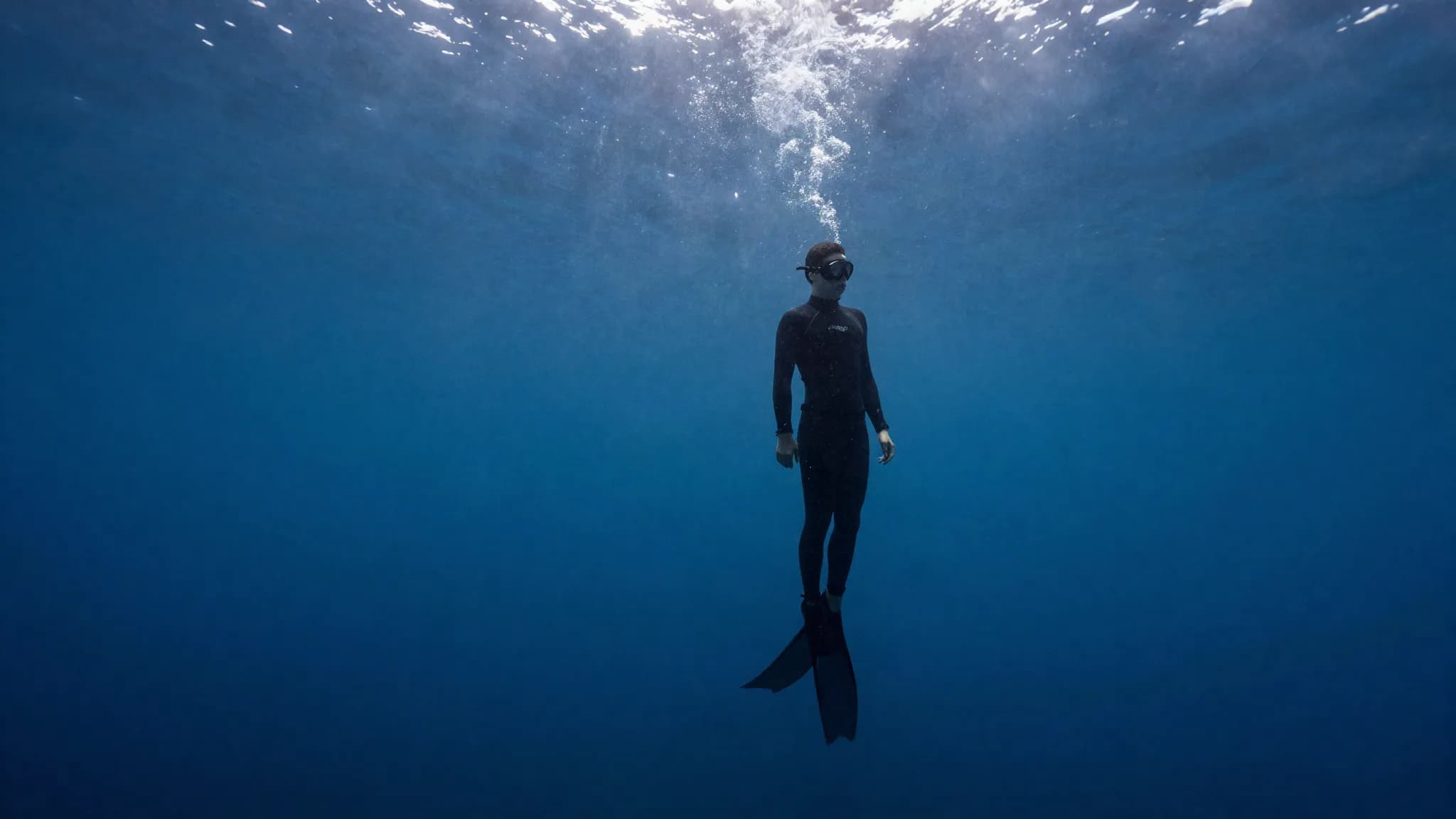
Submerge a human face in cold water and something happens before any conscious decision gets made. The heart slows. Blood pulls inward, away from the hands and feet, toward the chest. It is not something a freediver practises so much as something their body simply does, a leftover survival mechanism shared with seals, whales and every other diving mammal, humans included.
Physiologists call it the mammalian dive reflex, and it is the single biggest reason a trained freediver can hold their breath for minutes at a time and descend to depths that sound implausible to anyone who has only ever held their breath in a bathtub.
What actually happens the moment a freediver submerges?
The reflex is not one event but three, unfolding together. According to StatPearls' physiology overview of the diving reflex, published through the National Center for Biotechnology Information, submersion combined with breath holding triggers a coordinated protective response across the cardiovascular system, distinct from breath holding alone on dry land. The response is graded rather than all or nothing, meaning it intensifies the deeper and colder the dive gets, which is one reason elite depth competitors train specifically in the conditions they expect to compete in rather than relying on generic fitness alone.
Why does the heart rate drop so sharply?
Bradycardia, the slowing of the heart rate, is the most immediately noticeable piece. In trained freedivers, heart rate can fall from a resting 70 beats per minute at the surface down to as low as 20 to 30 beats per minute at depth, according to Go Freediving's explanation of the mammalian dive reflex. A slower heart needs less oxygen to keep running, which stretches the body's limited onboard supply further with every beat it skips.
What is blood shift, and why does it matter at depth?
The second component is more unusual and, for a long time, was not well understood even by physiologists. As a freediver descends and surrounding water pressure increases, blood from the peripheral vessels moves inward and fills the chest cavity, effectively cushioning the lungs and heart from being crushed by pressure that would otherwise collapse the air-filled spaces in the chest, as described by DeeperBlue's overview of the reflex. Without this blood shift, the pressures reached in competitive constant weight dives would risk serious lung injury well before the diver got anywhere near the depths now routinely recorded in the sport.
Where does peripheral vasoconstriction fit in?
The third piece, peripheral vasoconstriction, is the mechanism that makes blood shift and bradycardia possible in the first place. Blood vessels in the arms, legs, hands and feet narrow, restricting blood flow to the extremities and rerouting it toward the vital organs that need it most, the heart, lungs and brain, according to background compiled by DAN Southern Africa's blog on physiological adaptations in freediving. It is the body making a triage decision automatically, prioritising the organs it cannot survive without over the ones it merely needs for movement.
Can this reflex be trained, or is it fixed at birth?
Here the evidence gets more interesting. Some components of the mammalian dive reflex adapt relatively quickly with consistent exposure. Bradycardia and vasoconstriction responses can strengthen within weeks of regular freediving training. Blood shift is slower to develop meaningfully and tends to take months of consistent practice before a diver's body reliably produces the full protective effect at depth. This is one reason experienced coaches discourage beginners from chasing depth records early: the body genuinely needs time to adapt its own internal plumbing, not just its technique.
Cold water intensifies the reflex, which is part of why some of the coldest freediving disciplines, dives conducted under ice, produce such pronounced physiological responses even in well conditioned athletes.
Does everyone have the same reflex, or does it vary between people?
The reflex exists in every human body, but its strength varies considerably between individuals, and even within the same diver across a training season. Genetics play a role, as does simple exposure: divers who spend years in cold, deep water tend to show a more pronounced blood shift response than divers who train mainly in warm shallow pools, even at comparable fitness levels. This is part of why direct comparisons between athletes from different training environments can be misleading without accounting for where and how they actually built their conditioning.
Why this matters beyond curiosity
Understanding the dive reflex is not academic trivia for competitive freedivers. It explains why proper relaxation before a dive matters more than raw lung capacity, why cold water can feel different to the body than a warm pool even at identical breath hold durations, and why rushing the adaptation process by ignoring training progression carries real physiological risk, not just a risk of underperforming.
None of this changes the sport's most basic safety rule. However well adapted a diver's dive reflex becomes, it does nothing to protect against shallow water blackout, the loss of consciousness that remains the leading cause of freediving fatalities, and it offers no protection at all to someone diving without a buddy or safety diver present.
This article is journalism, not instruction. The dive reflex is a fact of human physiology worth knowing, not a basis for attempting breath hold diving without proper certified training.
As sports physiologists continue studying elite freedivers, some of the clearest data on how far the human cardiovascular system can be pushed safely is coming out of this small, demanding sport rather than out of a lab.
Published in The Outspoken Digest
Editorial desk
Outspoken Digest Diving DeskCovers freediving, recreational and technical diving, dive medicine and the incidents the sport learns from.
Newsletter
The Digest, in your inbox
One edition, sent when it is ready. No noise, and your address is never passed on.
Read Next
More Diving →
Playing Recordings of a Healthy Reef Drew More Coral and Fish Larvae to Artificial Structures Off Hawaii
Oct 9, 2026/3 min read
Blacktip Sharks Can Hear a Sound From Nearly 250 Feet Away and Swim Straight Toward or Away From It
Oct 1, 2026/2 min read
A Sea Turtle Species Never Recorded Nesting in the United States Laid Eggs on a Southern California Beach
Oct 1, 2026/2 min read
Marine Surveyors Confirmed Living Coral Off Benin, More Than Sixty Years After the Reef Was Presumed Dead
Sep 29, 2026/2 min read