Miso Tahini Aubergine: Nasu Dengaku Meets the Levant
Two sesame pastes from opposite ends of Asia turn out to want the same thing. A Japanese temple-festival glaze, loosened with tahini and finished with pomegranate.
Sunday, July 26, 2026/3 min read
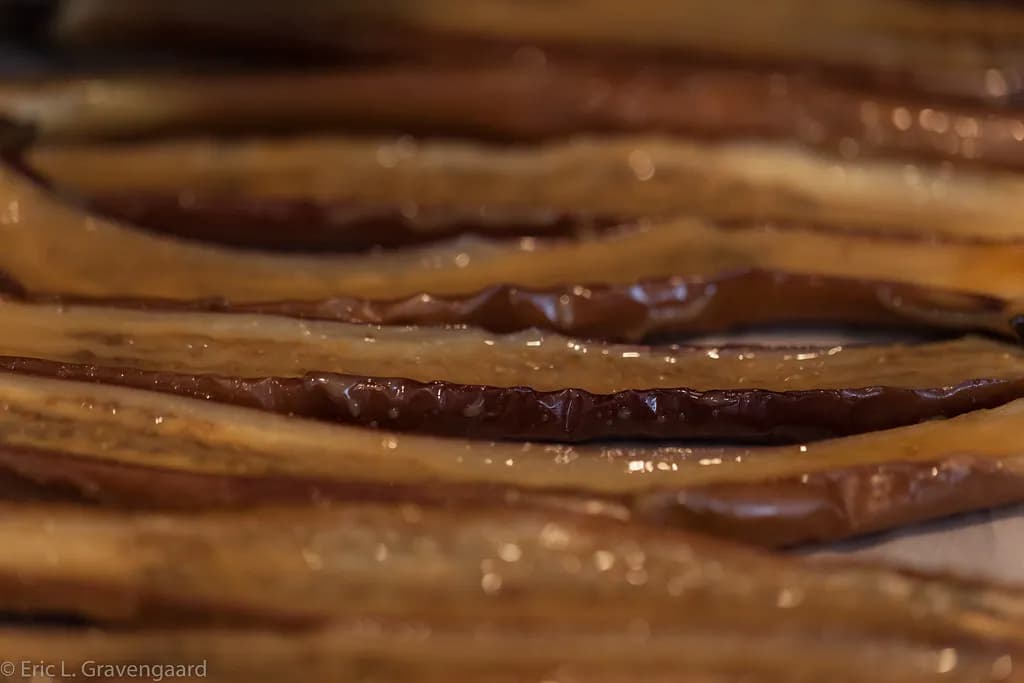
Nasu dengaku is one of the great arguments for doing less. Halve an aubergine, score it, cook it until the flesh gives completely, paint it with sweetened miso and put it under a fierce heat until the glaze blisters. That is the whole dish, and it has been that way for a long time.
The name splits neatly: nasu is aubergine, dengaku refers to skewered food coated in a sweet savoury miso glaze. According to RecipeTin Japan, the technique dates to the Edo period, when dengaku was sold as a snack at temple festivals. Caroline's Cooking sets out the same essential method: cook the flesh through first, glaze second, or the miso burns before the aubergine is ready.
The fusion here is small and, I think, defensible. Tahini and Japanese sesame paste are close cousins, both ground sesame, differing mainly in whether the seeds were roasted hard. Adding tahini to the miso gives the glaze body and a faint bitterness that stops the mirin and sugar from taking over. Pomegranate molasses at the end does what a squeeze of citrus would, with more depth. One good rule for fusion cooking, put well by Culinary Arts Switzerland, is that it should be editing rather than addition. This recipe changes two things and leaves the technique alone.
Ingredients
Serves 4 as a side or 2 as a main. Total time: 45 minutes, of which 15 is active.
- 4 small aubergines (about 800 g total), halved lengthways
- 3 tbsp neutral oil, plus a little for the tray
- 60 g white miso (shiro miso)
- 2 tbsp tahini, well stirred
- 2 tbsp mirin
- 1 tbsp caster sugar
- 1 tbsp rice vinegar
- 1 tsp toasted sesame oil
- 1 to 2 tbsp warm water, to loosen
- 1 tbsp pomegranate molasses
- 2 tsp toasted sesame seeds
- Seeds of half a pomegranate (about 60 g)
- A small handful of flat leaf parsley or shiso, torn
Method
- Heat the oven to 200C fan. Score the cut face of each aubergine half in a diamond pattern, cutting about 1 cm deep without piercing the skin. This lets heat and glaze reach the middle.
- Brush the cut faces generously with the neutral oil. Aubergine drinks oil, so be less cautious than feels reasonable. Place cut side up on an oiled baking tray.
- Roast for 25 to 30 minutes, until the flesh is completely soft and offers no resistance to a knife tip. Undercooking here is the single most common failure, and glaze will not rescue it.
- While they roast, whisk the miso, tahini, mirin, sugar, rice vinegar and sesame oil into a smooth paste. Add warm water a teaspoon at a time until it is thick but spreadable, roughly the consistency of soft peanut butter.
- Take the tray out and heat the grill to high. Spread the glaze thickly over each cut face, right to the edges.
- Grill 8 to 10 cm from the element for 2 to 4 minutes, watching constantly. You want dark blistered patches, not an even brown. Miso carries sugar and goes from caramelised to acrid in well under a minute.
- Rest for 5 minutes on the tray. The glaze sets slightly and the flesh finishes softening.
- Drizzle with pomegranate molasses, then scatter the sesame seeds, pomegranate seeds and herbs. Serve warm rather than hot.
Swaps, storage and getting ahead
Use white miso if you can. Red miso is saltier and more assertive and will bury the tahini, though it works if you cut it by a third with more mirin. Courgettes halved lengthways take the same treatment with 12 to 15 minutes of roasting instead of 30.
The glaze keeps in the fridge for two weeks in a sealed jar and is useful well beyond this dish, on roast carrots, on salmon, stirred through noodles. Roast the aubergines up to a day ahead and keep them refrigerated, then glaze and grill straight from cold, adding a minute or two under the heat.
Leftovers keep three days covered in the fridge and are better at room temperature than reheated, since a second blast of heat tightens the flesh. Chopped roughly and folded through warm rice with extra pomegranate, they make the kind of lunch that tastes like it took planning.
Published in The Outspoken Digest
Editorial desk
Outspoken Digest Food DeskCooking, ingredients, restaurants and the economics of what ends up on the table.
Newsletter
The Digest, in your inbox
One edition, sent when it is ready. No noise, and your address is never passed on.
Read Next
More Recipes →
Cheesy Ramen on the Stove: Instant Noodles in a Real Cheese Sauce in Ten Minutes
Oct 18, 2026/3 min read
Beer-Battered Jalapeno Cheese Curds: The Wisconsin Bar Snack, Fried Properly at Home
Oct 18, 2026/3 min read

A Thanksgiving Turkey Sub With Hot Stuffing, Cranberry and Gravy to Dip
Oct 17, 2026/3 min read

Pecan Pie Bars With a Shortbread Base and a Caramel Filling That Slices Cleanly
Oct 17, 2026/3 min read