Morocco Is Building a Giant Water Battery for Its Renewable Grid
A $265 million World Bank package for the 300-megawatt Ifahsa pumped-storage project could unlock more solar and wind while making Morocco's grid more dependable.
Outspoken Digest Energy & Infrastructure Desk
Monday, August 3, 2026/2 min read
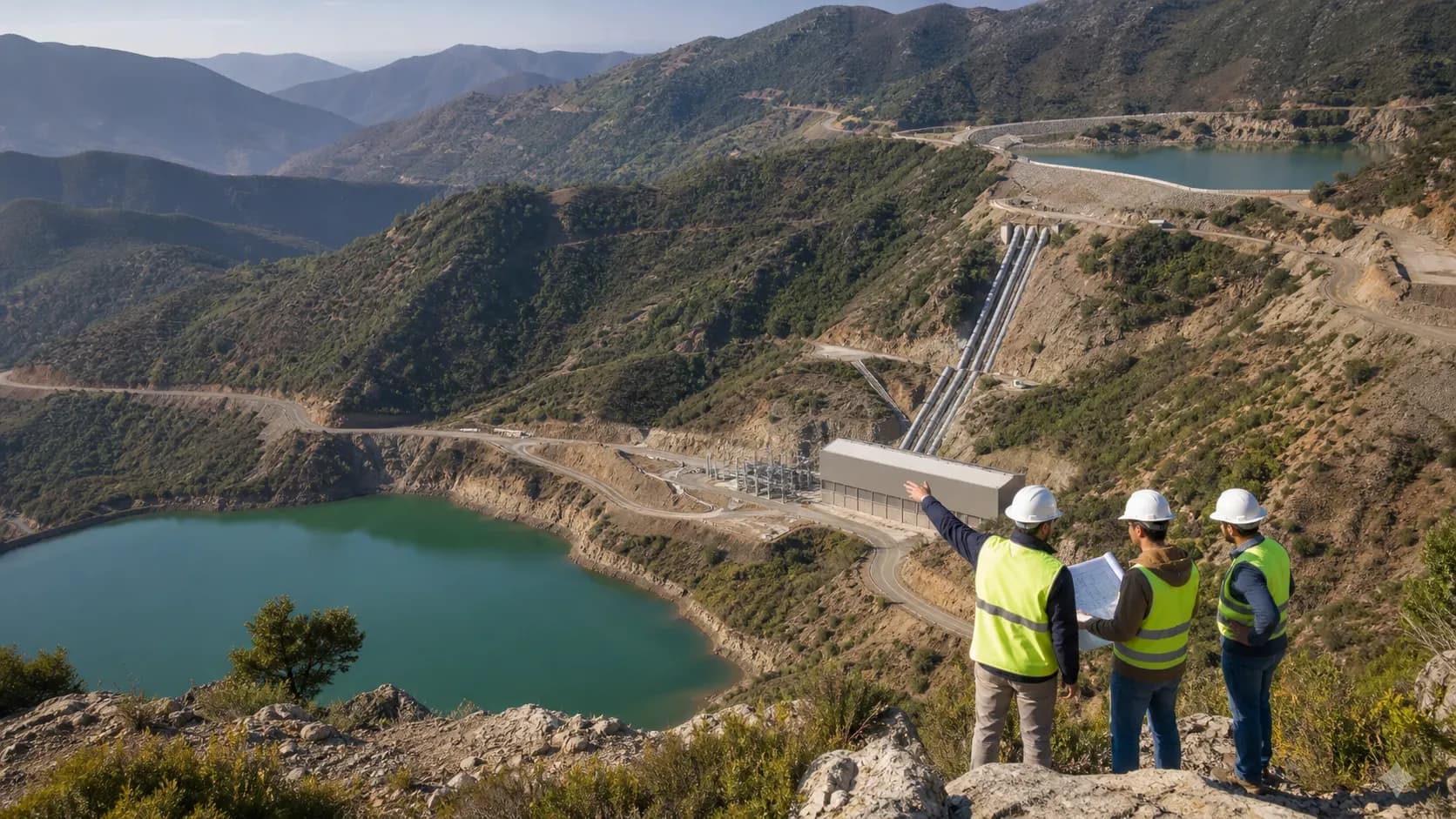
Morocco has secured World Bank approval for one of North Africa's most important grid projects: a 300-megawatt pumped hydropower storage facility near Chefchaouen. The Ifahsa project will behave like a very large rechargeable battery, storing electricity when renewable output is abundant and returning it when demand rises.
How a water battery works
When solar and wind farms produce more electricity than the grid immediately needs, pumps move water to an upper reservoir. When supply tightens, the water runs downhill through turbines and generates power. The system does not create new water or energy; it shifts energy through time, which is exactly what a renewable-heavy grid needs.
The World Bank approved $265 million for the project on July 1. It says Ifahsa can help integrate at least one gigawatt of additional solar and wind capacity and unlock roughly $1 billion in private investment.
Why storage is the real renewable race
Installing panels and turbines is only the first stage of an energy transition. Electricity systems must also balance supply every second. Without storage or flexible demand, clean generation may be curtailed during strong sun or wind and replaced by fossil-fuel plants after output falls.
Pumped storage is mature, long-lived and capable of operating at grid scale. Its constraints are geography, water management, construction time and environmental impact. The project's environmental and social assessment is therefore as important as the engineering headline, particularly for nearby communities and ecosystems.
The economic case
The World Bank estimates that construction could generate around 820 direct jobs annually. More importantly, cleaner and more reliable power can improve the competitiveness of Moroccan manufacturers selling into markets that increasingly measure the carbon content of imports. Storage also reduces the need to hold expensive fossil-fuel generation in reserve.
An official record of the board approval confirms that the project will be implemented by Morocco's national electricity and water utility, ONEE. The African Development Bank is also expected to co-finance the investment.
What could go wrong
Large infrastructure projects can suffer from cost escalation, procurement delays, geological surprises and local opposition. Pumped storage also needs a business model that values flexibility, not just the kilowatt-hours sold. Transparent contracting and regular reporting on construction, resettlement, water use and biodiversity will determine whether the project earns public trust.
Why the region should watch
North Africa has world-class solar and wind resources, growing domestic demand and potential links to European power markets. Its bottleneck is increasingly the ability to move and store electricity. If Ifahsa performs as promised, it will offer a practical regional lesson: the clean-energy transition is not only about generating more power, but making that power available at the hour people actually need it.
Published in The Outspoken Digest
Editorial desk
Outspoken Digest Energy & Infrastructure DeskReports for The Outspoken Digest across Technology, Business.
Newsletter
The Digest, in your inbox
One edition, sent when it is ready. No noise, and your address is never passed on.
Read Next
More Business →
Tesla Beats Profit Estimates on $28.05 Billion in Revenue, Then Slips After Hours
Oct 22, 2026/2 min read

Nasdaq Jumps 1.05% as SpaceX and Super Micro Revive the AI Trade While Netflix and AT&T Slide
Oct 22, 2026/2 min read

Jio Platforms Raises Rs 8,110 Crore From Anchors at the Top of Its Range as India's Biggest IPO Opens
Oct 21, 2026/2 min read

Netflix Beats on Profit, Then Slides After Hours as It Trims Its Ad Forecast and Guides Lower
Oct 21, 2026/2 min read