A Ten-Minute X-Ray Flash Points to Colliding Neutron Stars Giving Birth to a Magnetar
Astronomers tracking an Einstein Probe flash say the longest prompt X-ray burst ever tied to a neutron star merger lasted nearly ten minutes, and that a newborn magnetar is the likeliest engine.
Wednesday, September 30, 2026/2 min read
A burst of X-rays that lasted almost ten minutes has given astronomers their strongest evidence yet that colliding neutron stars can leave behind a magnetar. The study, published on Wednesday in Science Bulletin, was led by a team including Eleonora Troja's group at Tor Vergata University of Rome, and its details are set out in the EurekAlert release.
The event
The flash, catalogued as EP250704a and GRB 250704B, was detected on 4 July 2025. The gamma-ray burst itself lasted only about half a second, the signature that usually marks a neutron star merger, but the X-ray emission that accompanied it ran for nearly ten minutes. Niccolò Passaleva, the graduate student who coordinated follow-up observations, called it "the longest lasting prompt X-ray flash ever observed from a neutron star merger."
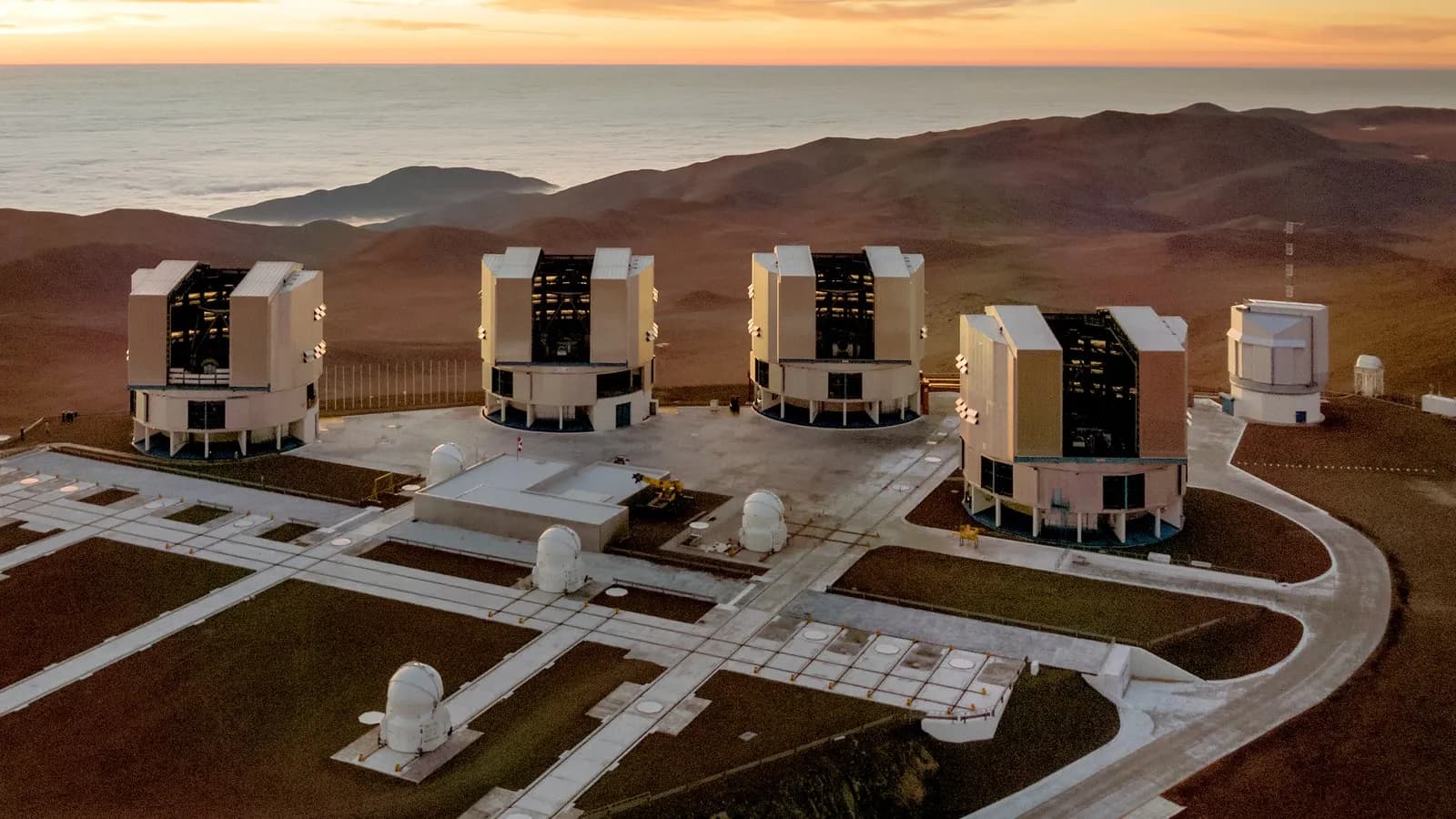
Follow-up work with the European Southern Observatory's Very Large Telescope and the Very Large Array measured a redshift of z=0.6610. That places the explosion so far away that its light travelled for more than six billion years before reaching Earth. ScienceDaily's summary adds that no supernova was seen, which supports a merger rather than a collapsing massive star.
Why a magnetar
For years, bursts shorter than about two seconds were the main marker of merging neutron stars. A long X-ray flash was harder to explain. Troja's explanation is that the remnant of the collision may not be a black hole at all. "If the remnant of the collision is a magnetar, it could keep bursting for longer," she said. Magnetars are rapidly spinning neutron stars with enormous magnetic fields, and as such an object sheds that energy into its surroundings, it can make the explosion brighter and longer lasting.
A network of instruments
The paper's authors come from institutions including Beijing Normal University, the Chinese Academy of Sciences, Nanjing University, the University of Hong Kong and Tor Vergata. They combined data from the Einstein Probe satellite, which launched in January 2024 and has since found hundreds of bright X-ray flashes, with the SVOM and Insight-HXMT satellites and the ground telescopes. Passaleva described discovering the event while travelling home by train, then "rushing against time" to secure time on one of the largest telescopes in the world.
What remains unknown
The authors are careful about what the single event can prove. It is the first firm connection between extended X-ray flashes and neutron star mergers, but how often mergers produce magnetars is still uncertain. The next step is to pair X-ray detections with gravitational-wave signals, which would give an independent confirmation of what collided. Until then, a ten-minute flash from six billion light years away is a strong clue, though not yet the last word.
Published in The Outspoken Digest
Editorial desk
Outspoken Digest Science DeskReports for The Outspoken Digest across Technology, Latest Trends, Health.
Newsletter
The Digest, in your inbox
One edition, sent when it is ready. No noise, and your address is never passed on.
Read Next
More Latest Trends →
Trump Rallies in Port Huron Against El-Sayed as Michigan's Senate Race Enters Its Final Eleven Days
Oct 26, 2026/2 min read

Trump Rules Out a Sunday Strike on Iran as Qatari Mediators Reach Tehran and Houthi Missiles Hit Saudi Arabia
Oct 26, 2026/3 min read

Zelenskyy Confirms Trilateral Peace Talks With Russia and the US Will Take Place in November
Oct 26, 2026/2 min read

Serbia's Student List Wins the Election as Vucic Concedes, Ending 14 Years of Progressive Party Rule
Oct 26, 2026/2 min read