Oil Is Flowing Again, but the Fuel Market Is Still Far From Normal
Crude shipments through the Gulf have recovered sharply, yet refineries and fuel supply remain constrained. That gap explains why cheaper oil may not quickly reach consumers.
Friday, July 31, 2026/2 min read
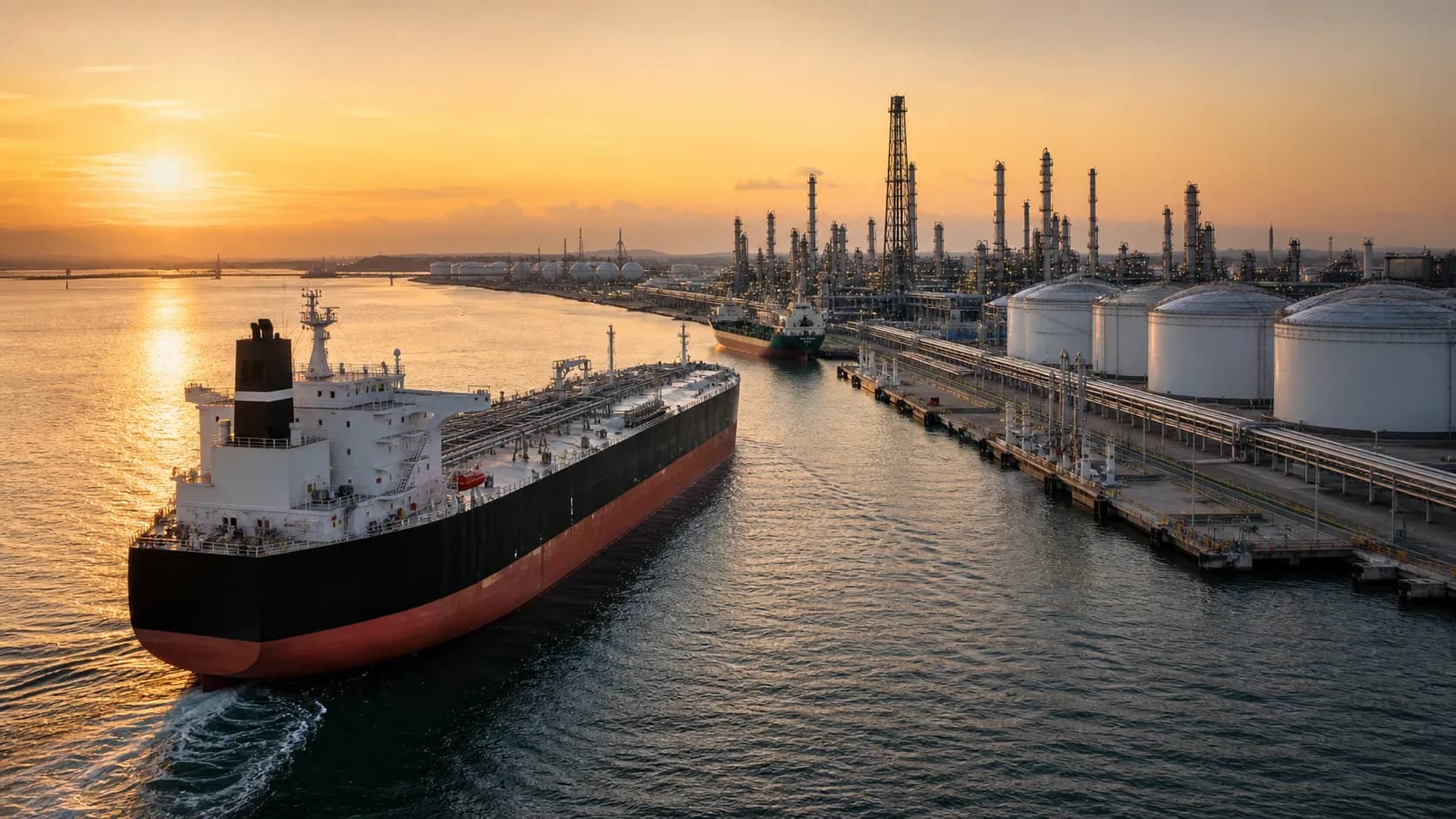
The return of crude shipments through the Gulf has eased one part of the energy crisis, but it has not restored the full system that turns oil into usable fuel. That distinction explains why a falling crude benchmark may coexist with stubbornly expensive gasoline, diesel or jet fuel.
The International Energy Agency's July Oil Market Report says global supply rebounded sharply in June as tanker traffic and Gulf production partially recovered. Yet world output remained below pre-war levels, Middle Eastern export refineries had not fully restarted and refined-product markets stayed tight.
Crude oil is only the first stage
A barrel leaving an export terminal must travel to a suitable refinery, be processed into products, stored and distributed. Different refineries are configured for different crude qualities and product mixes. A surge of crude on the water does not instantly create diesel in the market where it is needed.
The IEA reported a much slower recovery in refined products than in crude shipments. At the same time, disruptions affecting Russian refineries added pressure elsewhere. The result was a split market: crude prices retreated from wartime highs while refinery margins and some fuel cracks strengthened.
Why inventories can mislead
Global observed oil inventories rose in June, but much of the increase was oil on water. Barrels aboard tankers are real supply, yet they may still be weeks away from a refinery and further from a filling station. Onshore stocks, including government reserves, can be more immediately available.
Inventory quality and location therefore matter as much as the headline total. A market can look well supplied in aggregate while a particular region or fuel grade remains scarce.
The outlook depends on a narrow route
The Strait of Hormuz remains central to the forecast. The IEA's analysis assumes flows gradually improve and facilities restart. Renewed hostilities, damaged infrastructure or insurance and shipping constraints could reverse that progress. Conversely, sustained de-escalation could release more supply and eventually push the market toward surplus.
The IEA's report launch material stresses the role of official supply, demand and inventory data. Markets will react to headlines in minutes, but durable price changes depend on physical flows, refinery operations and consumption.
Demand is recovering from a weak point
Seasonal travel and the release of pent-up activity can lift consumption in the second half. Even so, the agency projects global oil demand to decline for 2026 overall before rebounding in 2027. That means the market is balancing a short-term recovery against a weaker annual picture.
Consumers should not expect every crude move to appear immediately at the pump. Taxes, currency, transport, storage, refining margins and local competition all influence retail prices. Businesses exposed to fuel costs should plan for volatility rather than assume a single downward trend.
The energy-security lesson
This episode shows that energy security is a chain. Production capacity matters, but so do shipping routes, refineries, inventories, ports, pipelines and transparent emergency coordination. Weakness in any link can create scarcity even when the world has enough crude in theory.
Oil is flowing more freely than it did at the height of disruption, which is meaningful progress. But normality requires the rest of the chain to recover. Until refinery output and product distribution catch up, the market's apparent abundance will remain incomplete.
Published in The Outspoken Digest
Newsletter
The Digest, in your inbox
One edition, sent when it is ready. No noise, and your address is never passed on.
Read Next
More Business →
CoreWeave Shares Fall 25 Percent in a Week as Its Bonds Flash Warning Signs for AI's Borrowers
Oct 18, 2026/2 min read

Nasdaq Ends Its Worst Week Since June as Chip Stocks Slide and Oil Climbs Toward $110
Oct 18, 2026/2 min read

ECB Clears UniCredit to Go Past 30 Percent of Commerzbank, Opening the Way to Control by Year-End
Oct 17, 2026/2 min read

Indonesian Stocks Plunge Nearly 12 Percent, the Worst Day Since 1998, After MSCI Floats a Downgrade to Standalone Status
Oct 16, 2026/2 min read