The Open Water Certification: What It Does and Does Not Qualify You For
An Open Water card opens the door to diving worldwide, but it is a narrower licence than most new divers assume. Here is exactly what it covers.
Tuesday, September 9, 2025/4 min read
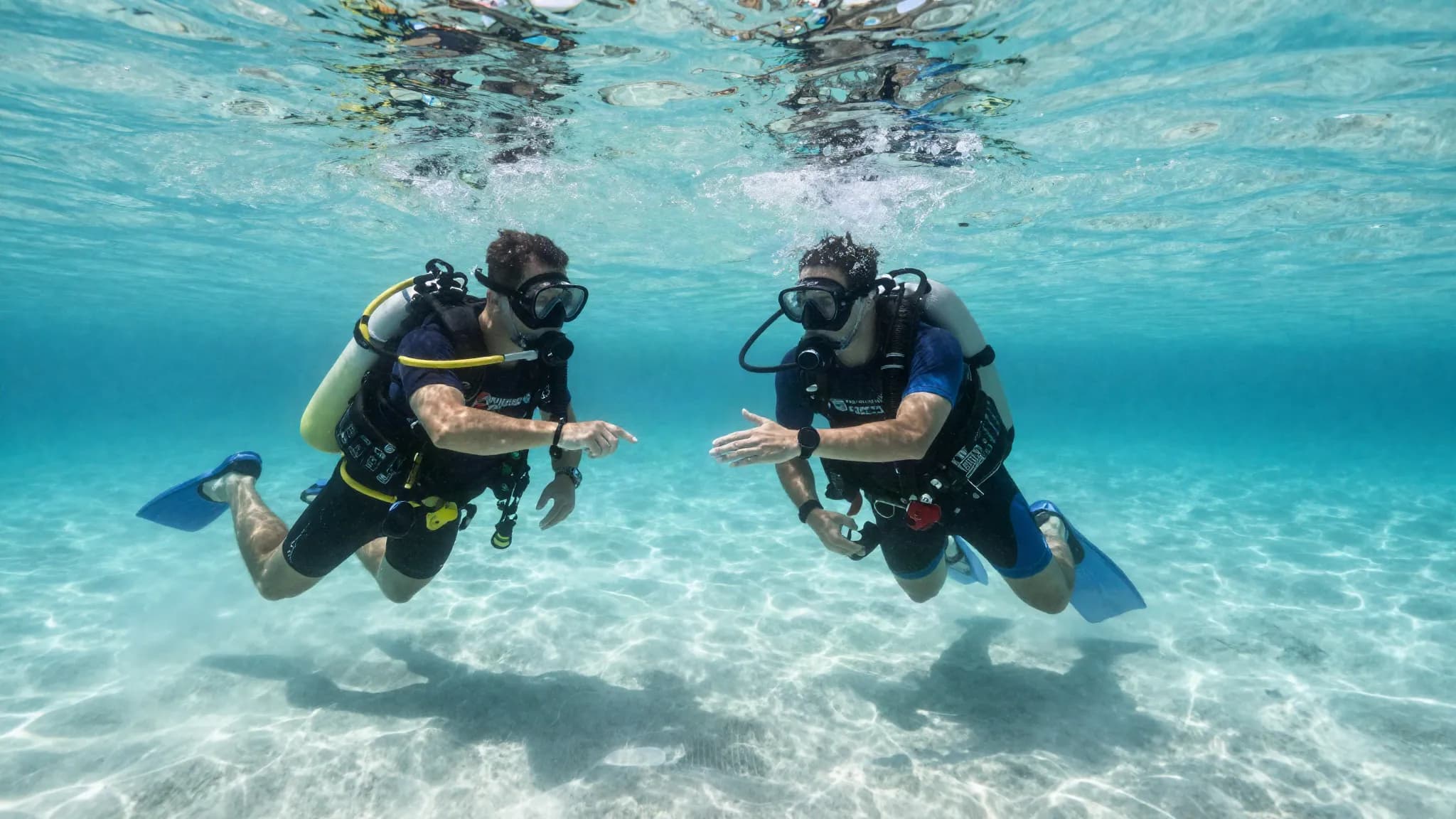
For most people who go on to call themselves divers, everything starts with the same laminated card. Open Water Diver is the entry qualification behind nearly every recreational diving story, the first thing a person earns before a single reef trip or wreck dive counts as something they are actually certified to do.
It is also, by design, a narrower licence than the excitement of earning it usually suggests. Understanding exactly what an Open Water card covers, and what it deliberately leaves out, says a lot about how recreational diving is structured to keep new divers within a margin of safety while they build real experience.
What the certification actually authorises
According to PADI's own explanation of Open Water versus Advanced Open Water depth limits, an Open Water Diver is trained and authorised to dive to a maximum depth of 18 metres, or 60 feet, or to whatever shallower depth was actually reached during training if that was less. That is not a suggestion, it is the operating limit the certification is built around, reflected in what the course actually teaches and tests.
The certification also covers only diving within no-decompression limits, meaning dives structured so a diver can, in principle, ascend directly to the surface at any point without needing planned decompression stops along the way. It authorises use of basic open circuit scuba equipment, and it is explicitly scoped to conditions and environments similar to those the diver actually trained in, with appropriate buddy support, equipment, and surface supervision, according to the same PADI material.
Why the limits exist where they do
Eighteen metres is not an arbitrary round number picked for convenience. It reflects a combination of factors recreational training is built to manage conservatively for new divers: the point past which risks like nitrogen narcosis and oxygen toxicity become more of a live consideration, the depth at which gas consumption and decompression math get materially less forgiving, and simply how much unsupervised judgment a diver with only a handful of training dives can be expected to exercise safely.
Age changes the ceiling further. Per the same PADI depth guidance, junior divers aged 10 to 12 are limited to 12 metres or 40 feet, and junior divers aged 12 to 14 to 18 metres, reflecting additional caution built in for younger certification holders regardless of how the course itself goes.
What it deliberately does not qualify you for
The Open Water certification does not authorise dives beyond 18 metres, entry into overhead environments like caves or wreck penetration, dives that require planned decompression stops, or use of specialised equipment like drysuits, sidemount rigs, or enriched air nitrox, without additional specialty training layered on top. As Cozumel Divers' guide to Open Water depth limits puts it, divers who want to go deeper are expected to progress to the Advanced Open Water Diver course, and often the Deep Diver specialty specifically, rather than treating the initial certification as a licence to push past its own limits informally.
This structure is intentional rather than a marketing funnel dressed up as safety. PADI's own FAQ on certification rules frames the broader system of prerequisites and specialties as a progression, each additional certification builds specific skills and experience before a diver takes on the next layer of risk, rather than a single course being expected to prepare someone for the full range of what recreational diving eventually offers.
Why this matters beyond the paperwork
A diver who understands their Open Water card as a starting qualification, not a finished one, is less likely to find themselves in water, or at a depth, they were never actually trained for. Dive operators worldwide check certification level before a dive specifically because that card is meant to describe a real, bounded scope of trained competence, not simply proof someone once took a course.
This article explains what the certification covers as journalism, not as a substitute for training. Deciding what additional certification a diver needs for a specific destination or dive style is a conversation for a certified instructor at a recognised dive centre, not something to work out from an article.
What the course actually trains, beyond the depth number
The depth limit gets most of the attention, but the certification is really built around a broader set of core competencies: buoyancy control, safe ascent rates, air management and monitoring gauges, buddy communication and contact procedures, basic emergency skills like sharing air, and recognising and avoiding the most common causes of diving incidents at recreational depths. The 18 metre ceiling is the boundary within which a new diver is expected to practise those skills until they become close to automatic, rather than the goal of the course in itself.
How the certification is meant to be used in practice
In practical terms, that means a newly certified Open Water diver booking a trip should expect dive operators to check their certification card and log book, and to plan dives within the depth and experience level that card actually represents, rather than assuming a friendly dive guide will simply take a novice wherever the more experienced divers in the group are headed. Reputable operators treat that certification boundary as a genuine operating limit for a reason, since a diver operating outside the scope of their actual training is a risk to themselves and, in an emergency, to their buddy and the dive team around them.
The appeal of the Open Water card is that it really does open the door to diving almost anywhere in the world. The honest way to use it well is to treat its limits as the edge of what has actually been taught, and the next certification as the way past that edge, rather than confidence alone.
Published in The Outspoken Digest
Editorial desk
Outspoken Digest Diving DeskCovers freediving, recreational and technical diving, dive medicine and the incidents the sport learns from.
Newsletter
The Digest, in your inbox
One edition, sent when it is ready. No noise, and your address is never passed on.
Read Next
More Diving →
Playing Recordings of a Healthy Reef Drew More Coral and Fish Larvae to Artificial Structures Off Hawaii
Oct 9, 2026/3 min read
Blacktip Sharks Can Hear a Sound From Nearly 250 Feet Away and Swim Straight Toward or Away From It
Oct 1, 2026/2 min read
A Sea Turtle Species Never Recorded Nesting in the United States Laid Eggs on a Southern California Beach
Oct 1, 2026/2 min read
Marine Surveyors Confirmed Living Coral Off Benin, More Than Sixty Years After the Reef Was Presumed Dead
Sep 29, 2026/2 min read