Oxygen Toxicity: The CNS Risk Behind Technical Gas Choices
Oxygen keeps divers alive, until pressure turns it toxic. Here is why central nervous system oxygen toxicity shapes every gas decision in technical diving.
Tuesday, September 10, 2024/5 min read
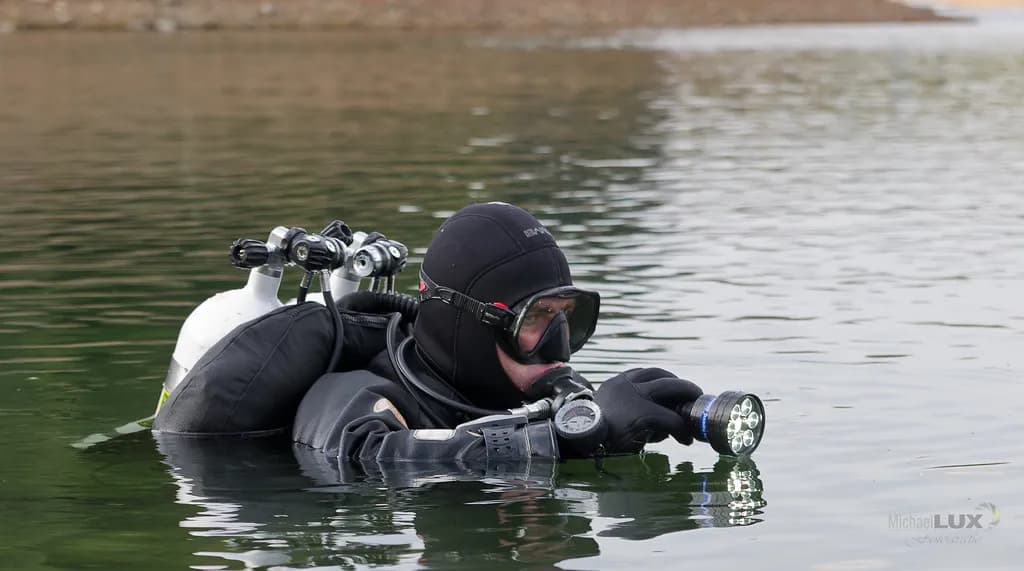
Oxygen is the one gas a diver cannot do without and, at the wrong pressure, the one that can end a dive without warning. That is the paradox technical divers live with every time they choose a gas mix: the very element that keeps a body alive becomes dangerous the deeper it is breathed under pressure.
It is a strange kind of risk because it has almost nothing to do with running out of gas. A tank can be full and functioning perfectly, and still deliver a toxic dose if the mix and the depth are wrong for each other.
What oxygen toxicity actually is
At the surface, air is about 21 percent oxygen and the body handles it without issue. Underwater, as depth increases ambient pressure, the partial pressure of oxygen in a breathing gas rises too, even without changing the percentage in the tank. Beyond a certain partial pressure, oxygen becomes toxic to the central nervous system. According to the technical training material published by TDI SDI's explanation of oxygen toxicity, the accepted limit for central nervous system toxicity is generally put at 1.6 atmospheres, though many technical divers and training agencies work to more conservative figures for planned dive segments.
Practical community limits, as described in InDEPTH's guide to oxygen exposure management, generally keep partial pressure of oxygen to around 1.2 to 1.4 atmospheres for the working phase of a dive, reserving higher figures, up to around 1.6, for shorter decompression stops where the diver is stationary and the exposure is brief.
What happens when it goes wrong
The most serious effect of central nervous system oxygen toxicity is a convulsive seizure, similar in appearance to an epileptic seizure, and according to Kospet's overview of managing oxygen toxicity in diving, such seizures typically last around two minutes and are followed by a period of unconsciousness. Underwater, with a regulator in the mouth, a seizure carries an obvious secondary risk, the diver can lose their air supply or drown even after the neurological event itself passes. There is not always a reliable warning before a seizure, though some divers report visual disturbance, unusual anxiety, ringing in the ears, twitching around the lips, or nausea beforehand, none of which is a guaranteed precursor.
There is a second, slower form of the risk, pulmonary oxygen toxicity, which develops from long or repeated exposure at lower partial pressures rather than a single high spike. As the SDI training material notes, pulmonary toxicity becomes the relevant constraint on dives that are long in duration or repeated across multiple days, which is a different planning problem than the acute seizure risk from a single high partial pressure exposure.
Why gas choice is the whole conversation
This is why the phrase gas planning is central to every technical diving course. A diver descending on a nitrox mix that is safe at 20 metres could be breathing a dangerously high partial pressure of oxygen at 40 metres on the exact same tank, because the oxygen percentage has not changed but the ambient pressure has. Choosing the right mix for a given depth, and switching to a different mix at a planned point in the ascent, is standard technical diving practice specifically to keep partial pressure within accepted limits throughout a dive rather than just at the surface.
Recent research summarised in a study on PubMed reviewing central nervous system oxygen toxicity exposure limits has looked again at exposure limits around an inspired partial pressure of 1.3 atmospheres, suggesting that dives combining several hours of working exposure with several more hours of decompression at that partial pressure carry what the researchers describe as an acceptably low risk of cerebral oxygen toxicity, a refinement of the guidance rather than an overturning of it.
The accepted mitigation
Technical divers manage the risk with planning tools rather than instinct: known partial pressure limits for working and decompression phases, gas analysis of every tank before a dive rather than trusting a label, clearly marked cylinders to avoid breathing the wrong mix at the wrong depth, and oxygen exposure tracking across a dive day or a multi-day trip. None of it removes the risk entirely, it manages it within limits that decades of technical diving experience and physiological research have judged acceptable.
This article explains the physiology and the reasoning behind gas planning as journalism, not as a gas plan itself. Working out an actual partial pressure schedule for a dive is training that belongs with a certified technical instructor and a recognised agency such as TDI, PADI or GUE, not something to be assembled from an article.
Why sensors and analysis, not feel, drive the decision
One reason gas planning has become so procedural in technical diving is that a diver cannot feel oxygen partial pressure rising the way they can feel, say, a regulator getting harder to breathe from. There is no internal sensation reliably tied to approaching a toxic threshold until the seizure itself begins, which is why rebreather divers in particular rely on electronic oxygen sensors built into the unit's control system, cross checked against each other, rather than trusting subjective comfort. Open circuit technical divers achieve the same certainty a different way, calculating a maximum operating depth for every gas mix before the dive and treating that number as a hard ceiling rather than a guideline to be judged by feel once underwater.
Gas analysis before every dive, not just when a tank is first filled, is treated as non negotiable in technical training precisely because a mislabelled or incorrectly blended cylinder is one of the few ways a diver can end up breathing a dangerously high partial pressure without any planning error on their own part. Colour coded stickers, dive slates recording planned partial pressures at each depth, and buddy cross checks before descent are the ordinary, unglamorous tools that make the theory usable in practice.
Gas choice in technical diving will keep getting more precise as research refines exposure limits, but the underlying lesson has not moved in decades, oxygen is not free just because it is essential, and depth is what sets the price.
Published in The Outspoken Digest
Editorial desk
Outspoken Digest Diving DeskCovers freediving, recreational and technical diving, dive medicine and the incidents the sport learns from.
Newsletter
The Digest, in your inbox
One edition, sent when it is ready. No noise, and your address is never passed on.
Read Next
More Diving →
Playing Recordings of a Healthy Reef Drew More Coral and Fish Larvae to Artificial Structures Off Hawaii
Oct 9, 2026/3 min read

Blacktip Sharks Can Hear a Sound From Nearly 250 Feet Away and Swim Straight Toward or Away From It
Oct 1, 2026/2 min read

A Sea Turtle Species Never Recorded Nesting in the United States Laid Eggs on a Southern California Beach
Oct 1, 2026/2 min read
Marine Surveyors Confirmed Living Coral Off Benin, More Than Sixty Years After the Reef Was Presumed Dead
Sep 29, 2026/2 min read