The Path Into Technical Diving: What Changes at Depth
Technical diving begins the moment a diver can no longer go straight to the surface. Here is how training builds toward that shift, one course at a time.
Friday, December 5, 2025/4 min read
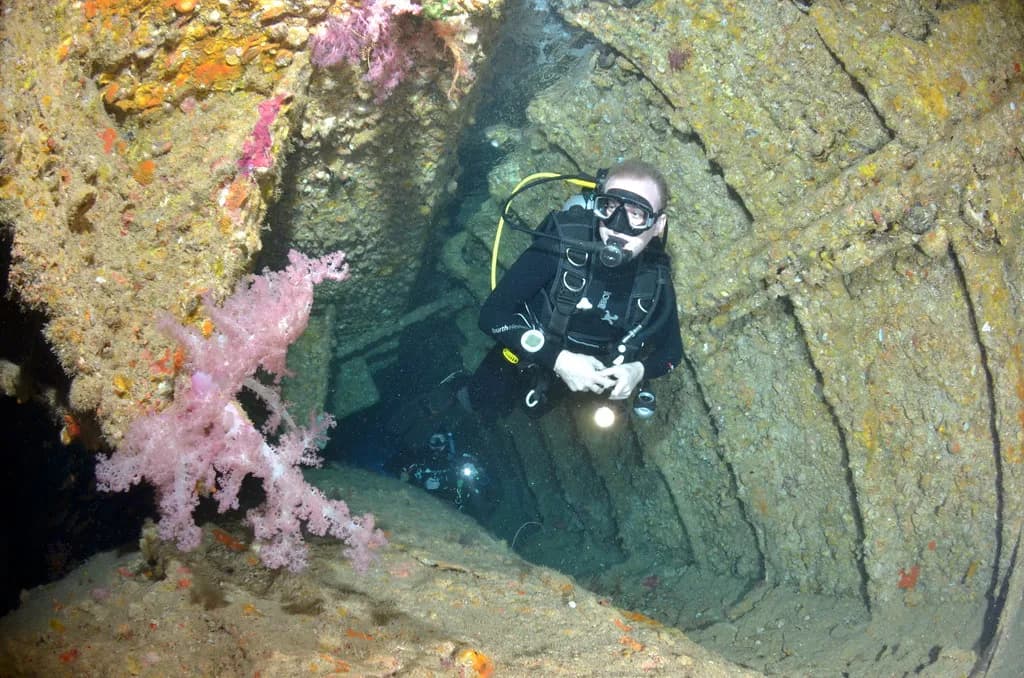
There is a single sentence instructors use to describe the moment recreational diving ends and technical diving begins, and it has nothing to do with depth gauges or fancy equipment. It is this: the point at which a diver can no longer go straight to the surface if something goes wrong.
Everything else, the gas blends, the redundant equipment, the additional certifications, exists because of that one change. Recreational diving is built around the idea that the surface is always the answer. Technical diving is what happens once that is no longer true.
Why the direct ascent rule is the whole dividing line
Recreational certifications, including Open Water and its follow-on courses, are built around no-decompression diving, meaning a diver can, at any point, ascend directly to the surface without needing a planned stop along the way to off-gas safely. Technical diving removes that option deliberately, whether because a planned decompression schedule requires staged stops on the way up, or because an overhead environment like a cave or a wreck interior physically blocks the direct route to the surface.
According to TDI's own description of its Decompression Procedures Diver course, that course specifically prepares divers for planned staged decompression diving, with a maximum operating depth of 45 metres, or 150 feet, and it is described as forming, together with TDI's Advanced Nitrox course, the foundation that other technical courses build on. Removing the direct-to-surface option is treated as significant enough that TDI's training standards describe it as a separate, dedicated skill set rather than an incremental add-on to recreational training.
Why agencies deliberately keep skills separate
One detail experienced technical instructors emphasise is how deliberately the training is compartmentalised. TDI's own material on equivalent ratings across agencies notes that TDI's overall philosophy is to extend a diver's range in one dimension at a time, depth, distance, or decompression obligation, for a specific piece of equipment or environment, but never combining several of those extensions into a single course.
That separation shows up concretely in how rebreather training is sequenced: a diver who has not completed decompression training is not automatically qualified to conduct decompression dives just because they have completed a rebreather course on that same unit, according to TDI's published diver standards. The skills of managing a decompression obligation and the skills of operating a specific piece of life support equipment are treated as genuinely distinct competencies, layered on top of each other only in sequence, never assumed to transfer automatically.
How the ladder is generally structured
Across agencies including TDI, PADI's TecRec programme, IANTD, and GUE, the general shape of the technical pathway follows a similar logic even where specific course names differ, according to a comparison published by Mantara Dive's look at technical diving certification paths: foundational skills and gas management first, then staged decompression diving within recreational depth ranges, then normoxic trimix for moderate depth using helium based gas blends to manage narcosis and oxygen toxicity, and only then full trimix for the deepest technical diving. TDI's own path, per that comparison, skips the intermediate normoxic trimix step some other agencies use, moving from Decompression Procedures more directly toward full Trimix training.
What actually changes for the diver, day to day
Beyond the certification structure, what changes practically is the amount of planning that happens before a diver ever gets wet: gas blends calculated and verified for each planned depth range, redundant equipment carried in case of a primary failure with no quick surface bailout available, and a team based approach to problem solving that assumes any single piece of gear or gas supply could fail and still needs a workable answer. It is training built around removing surprises, precisely because the option of just going up and sorting it out on the surface has been taken off the table.
This article explains how the pathway is structured as journalism, not as a technical training plan. Building the specific skills technical diving requires is training that belongs with a certified technical instructor and a recognised agency such as TDI, IANTD, PADI TecRec, or GUE, not something to be assembled from an article.
Why team diving becomes central rather than optional
Recreational diving treats a buddy as a strong recommendation, an important safety practice but one many certified divers occasionally skip for a solo shore dive or a guided group dive with loose pairing. Technical diving treats a team as structural, since redundant gas supplies, shared decision making before a dive, and a partner capable of assisting with a specific failure mode are built into how a decompression or overhead dive is actually planned, not an informal add-on. Every diver on a technical team is typically expected to be able to support a teammate through a defined set of failures, an out of gas situation, a lost guideline, a failed rebreather, because the option of independently bailing to the surface has been removed for everyone on that dive, not just the diver experiencing the problem.
What the certification ladder is actually protecting against
The layered structure of technical certifications exists to prevent a diver from accumulating equipment and depth capability faster than judgment and muscle memory can keep pace with. A diver who buys trimix capable equipment before completing the foundational decompression and gas management training has the hardware to attempt a dive their actual skill level cannot yet support safely, which is precisely the gap agencies like TDI, GUE and IANTD design their course sequencing to close.
What draws divers into that pathway rarely changes: wrecks and caves that recreational limits simply cannot reach. What has to change first, according to every agency that teaches the route there, is the diver's relationship to the surface itself, from a constant option to a planned, managed absence.
Published in The Outspoken Digest
Editorial desk
Outspoken Digest Diving DeskCovers freediving, recreational and technical diving, dive medicine and the incidents the sport learns from.
Newsletter
The Digest, in your inbox
One edition, sent when it is ready. No noise, and your address is never passed on.
Read Next
More Diving →
Playing Recordings of a Healthy Reef Drew More Coral and Fish Larvae to Artificial Structures Off Hawaii
Oct 9, 2026/3 min read
Blacktip Sharks Can Hear a Sound From Nearly 250 Feet Away and Swim Straight Toward or Away From It
Oct 1, 2026/2 min read
A Sea Turtle Species Never Recorded Nesting in the United States Laid Eggs on a Southern California Beach
Oct 1, 2026/2 min read
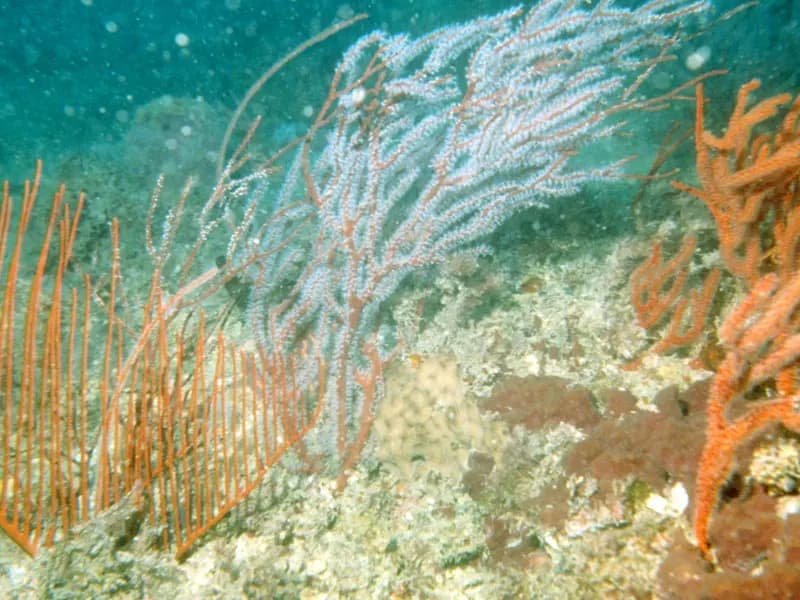
Marine Surveyors Confirmed Living Coral Off Benin, More Than Sixty Years After the Reef Was Presumed Dead
Sep 29, 2026/2 min read