Nine Crypto Firms Form a Quantum Alliance Because About 6 Million Bitcoin Sit Exposed to a Future Attack
The group wants open standards for testing quantum-resistance claims, while critics note that most founders run altcoin projects and that no machine can yet break bitcoin's cryptography.
Sunday, October 18, 2026/2 min read
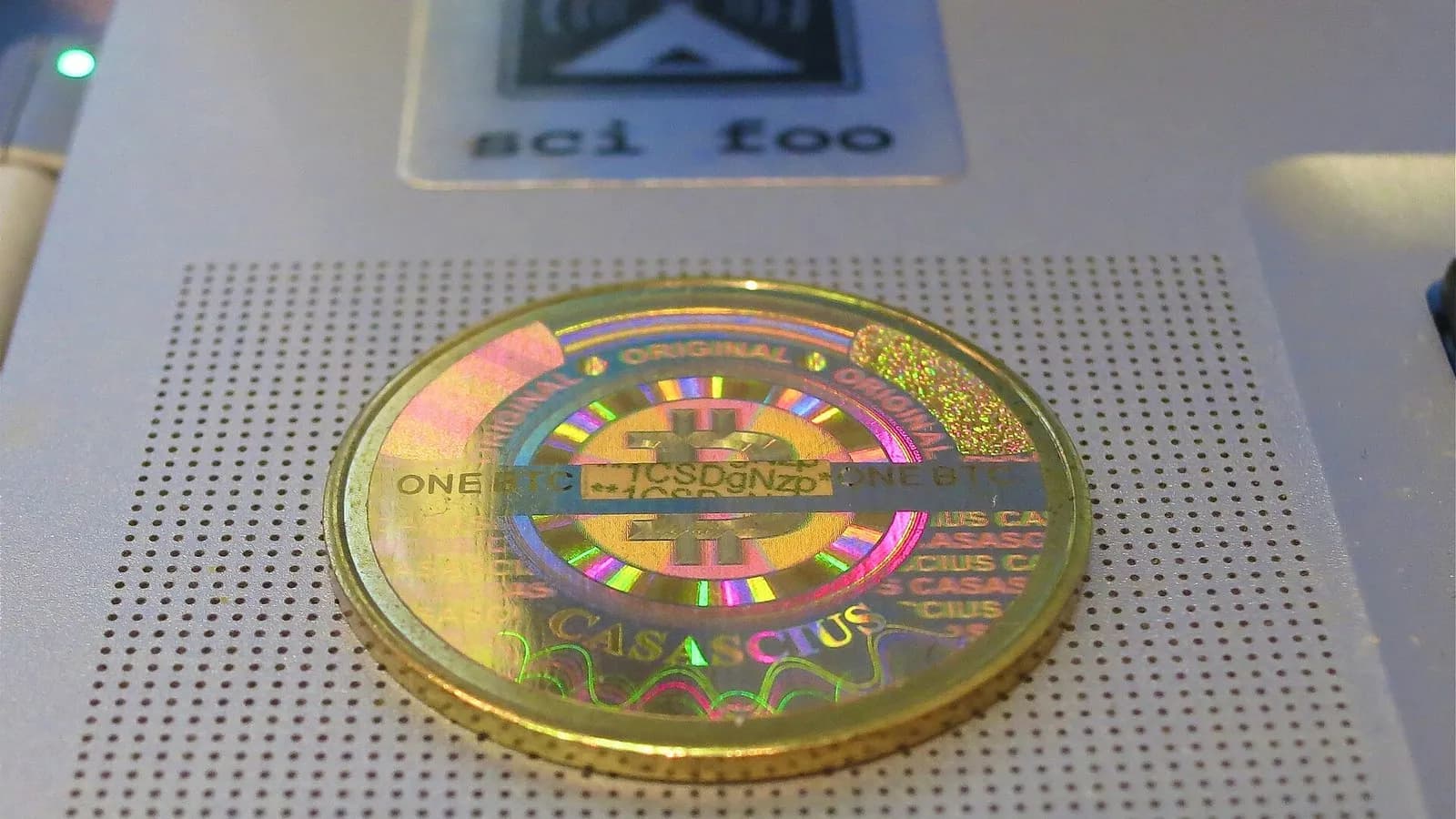
Roughly a third of all bitcoin sits in addresses that a sufficiently powerful quantum computer could one day crack. This week nine crypto companies decided to organise around that fact, launching the Quantum Alliance on Thursday.
The group's founding contributors include Quantus, Postquant Labs, Midnight Foundation, Keystone, Abelian and Hacken, Decrypt reported, spanning base-layer protocols, privacy networks, hardware wallets and security auditing. Other named members include American Fortress, Intmax and The Vault.
What is the Quantum Alliance trying to do?
It wants to publish open post-quantum standards, testing criteria, benchmarks and migration guidance. The model is the Internet Engineering Task Force: proposals advance on public evidence and working implementations, not company size or token holdings, per Decrypt. Work is split into four groups covering blockchain migration, post-quantum zero-knowledge systems, wallet security and cross-chain compatibility.
Quantus founder Christopher Smith told Decrypt that post-quantum cryptography will one day simply be called cryptography.
How much bitcoin is at risk?
The alliance estimates about 6.04 million BTC, roughly 30 percent of supply, is quantum-exposed at rest because of the elliptic-curve signatures used today. Commentary from TFTC, citing Glassnode data, says those coins sit in addresses where the public key is already on-chain, including about 1.1 million BTC attributed to Satoshi Nakamoto from 2009-era mining.
The threat is theoretical. No existing machine can carry out such an attack. A March 2026 paper from Google Quantum AI estimated that fewer than 500,000 physical qubits could break bitcoin's curve, about one-twentieth of earlier estimates, according to TFTC. A model built by two alliance contributors flags March 2028 as an early possible window, though TFTC says independent estimates generally put the more likely window in the early to mid 2030s.
What do critics say?
TFTC, an opinion outlet, points out that most founding members are altcoin or non-Bitcoin projects rather than Bitcoin Core contributors. It presents the alliance as a press-release layer over work already under way, and names BIP-360, a proposed address type needing a soft fork, as Bitcoin's own answer. It also opposes any plan to freeze or escrow vulnerable coins, arguing that would override property rights.
Those freeze proposals are the live argument. Moving exposed coins is technically possible, but whose coins move, and who decides, is not.
How is bitcoin trading meanwhile?
The price has paid little attention. Bitcoin traded near $81,545 on Saturday afternoon after a weekly high above $84,000 and a brief dip below $80,000, according to Investing.com on Yahoo Finance. US spot bitcoin ETFs saw about $82.39 million of net outflows on Friday, and ether products about $69.68 million. The immediate drivers are rate-hike expectations, not qubits.
That may be the point. A risk with no date is easy to ignore, and the alliance's real job over the next year is to turn a theoretical threat into a migration plan before the date becomes real.
Published in The Outspoken Digest
Newsletter
The Digest, in your inbox
One edition, sent when it is ready. No noise, and your address is never passed on.
Read Next
More Crypto →
Bitcoin Slips Toward $80,000 After Hot US Inflation and an Asian Tech Rout, With Long Positions Hit Hardest
Oct 15, 2026/2 min read

Bitcoin ETFs Lose $681 Million in a Week, the Worst Since June, as Traders Watch Wednesday's CPI Report
Oct 13, 2026/2 min read
ESMA Tells Licensed Crypto Firms to Stop Serving Non-MiCA Stablecoins and Gives Them Three Months to Unwind
Oct 9, 2026/2 min read
The UK's FCA Opened Its Crypto Authorisation Gateway, Starting the Clock on a New 2027 Regime
Oct 1, 2026/2 min read