Rebreathers: Why Divers Love Them, and What They Demand
A rebreather trades noisy bubbles for silent, efficient diving, but it also trades forgiveness for discipline. Here is what changes underwater.
Tuesday, April 15, 2025/4 min read
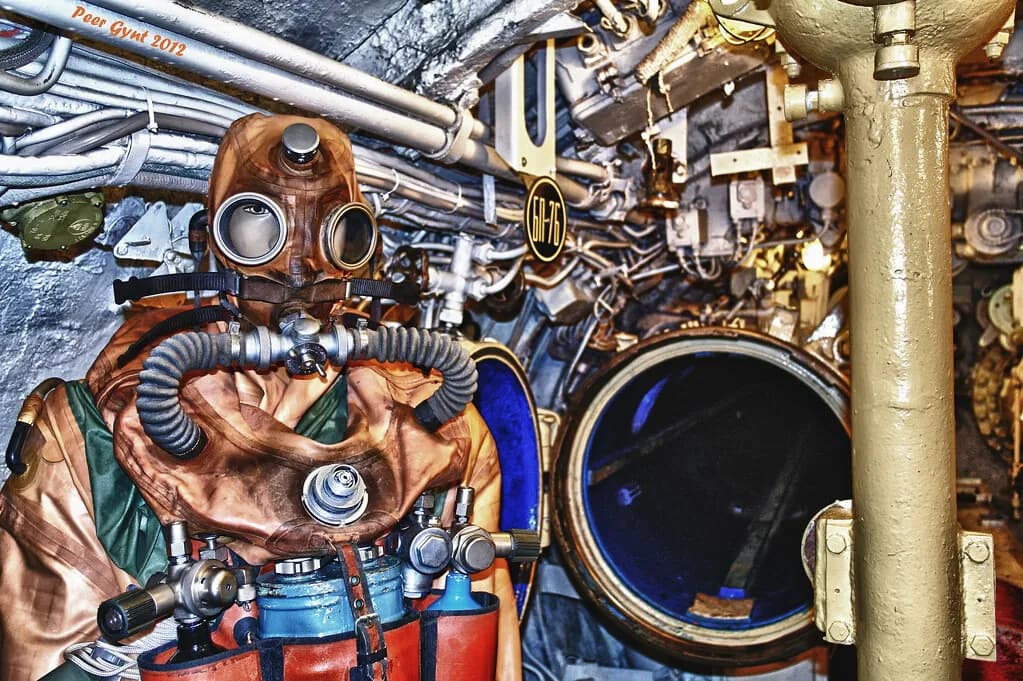
The first thing divers notice on a rebreather is what is missing: the noise. No hiss of a regulator, no wall of bubbles rolling toward the surface, no fish scattering at the sound of an approaching diver. What is left is quiet enough that some divers describe their first closed circuit dive as the moment they finally understood why marine life behaves differently around them.
That silence is a side effect. The actual engineering underneath it is why rebreathers occupy such a particular, respected, slightly wary place in diving culture, prized by the divers who use them well, and treated with real caution by the instructors who teach them.
How a rebreather actually changes the dive
An open circuit scuba set breathes gas in from a tank and vents every exhale straight into the water as bubbles, which wastes most of the oxygen a diver breathes in, since only a fraction is metabolised each breath. A closed circuit rebreather instead recycles exhaled gas through a loop, scrubbing out carbon dioxide with an absorbent material and adding back just enough oxygen to maintain a set partial pressure, so almost nothing is vented and very little gas is wasted.
According to PADI's overview of closed circuit rebreather diving, that efficiency is what unlocks the practical benefits divers talk about most: longer bottom times from a given gas supply, reduced decompression obligation because the unit can maintain an optimal oxygen partial pressure throughout the dive rather than a fixed mix, and a warmer, more humid breathing gas that reduces the dry mouth and fatigue open circuit divers are used to.
A comparison from SSI's look at the pros and cons of closed circuit rebreathers adds that divers often describe reduced physical discomfort overall on long or cold dives, less core temperature loss, less fatigue, and the ability to approach marine life without the bubble noise that so often changes its behaviour.
What it demands in return
None of that comes free. A rebreather is, in the words used across several training resources, a life support system in a way open circuit scuba is not in the same sense, because it actively manages the gas a diver breathes rather than simply delivering it. Divesoft's guide to what to expect from CCR training makes the point plainly: the added mental workload demands a higher level of training, discipline, and situational awareness than open circuit diving, and a lapse in attention or a skipped pre-dive check can escalate quickly into a genuine emergency, because the unit will not necessarily announce a problem the way an empty tank or a free flowing regulator does on open circuit.
That is why training agencies treat rebreather certification as close to starting over, even for divers with years of open circuit experience. Divesoft's material describes CCR training as a new beginning where much of a diver's existing experience only partially transfers, and where an entirely new set of skills, procedures, and failure mode drills has to be learned from scratch, covering everything from pre-breathe checks to bailout procedures if the unit itself fails underwater.
The specific risks the training exists to manage
The two failure modes instructors return to constantly are hypoxia, too little oxygen in the loop, and hyperoxia, too much, both of which can be difficult to detect without paying close attention to the unit's displays, since a diver's own sense of breathing comfort is not a reliable indicator of either. A scrubber that has reached the end of its rated duration can also allow carbon dioxide to build up in the loop, another failure that is not always obvious by feel alone.
The accepted mitigation is procedural rather than instinctive: rigorous pre-dive checks of the unit's oxygen sensors and scrubber, close monitoring of displays throughout the dive rather than periodic glances, mandatory bailout gas carried in case the unit has to be abandoned mid dive, and unit specific training repeated for every rebreather model a diver uses, since procedures are not interchangeable between manufacturers.
This article explains why rebreathers work the way they do as journalism, not as a substitute for training. Learning to operate one safely is training that belongs with a certified rebreather instructor on the specific unit involved, through a recognised technical agency, not something to be pieced together from an article.
Why maintenance is treated as part of the dive, not separate from it
Unlike open circuit gear, which mostly needs periodic servicing and a basic pre-dive check, a rebreather requires meticulous maintenance between every single dive, not just occasionally. According to Dressel Divers' maintenance guide for closed circuit rebreathers, that includes replacing or repacking the carbon dioxide scrubber material, checking and calibrating oxygen sensors, inspecting seals and o-rings, and thoroughly cleaning the breathing loop, all before the unit can be trusted for another dive. Skipping or rushing that routine is one of the more common root causes behind rebreather incidents, precisely because the consequences of a degraded scrubber or a miscalibrated sensor may not become apparent until well into the next dive.
Why instructors describe it as a mindset change, not just a skill set
Experienced rebreather instructors often say the hardest part of the transition is not learning new hand signals or new checklists, it is unlearning the reflexive trust in an open circuit regulator that will simply deliver breathable gas as long as the tank has pressure in it. A rebreather's loop can fail in quiet, non-obvious ways that a regulator generally cannot, which is why constant instrument monitoring, rather than the more relaxed situational awareness open circuit divers develop over time, becomes close to a permanent habit for anyone who dives one seriously.
Rebreathers remain a minority choice in diving precisely because of that demand for discipline, but for the divers who commit to the training, the silence, the efficiency, and the access to marine life that would flee from bubbles keep them coming back to a machine that asks more of them than a tank and a regulator ever did.
Published in The Outspoken Digest
Editorial desk
Outspoken Digest Diving DeskCovers freediving, recreational and technical diving, dive medicine and the incidents the sport learns from.
Newsletter
The Digest, in your inbox
One edition, sent when it is ready. No noise, and your address is never passed on.
Read Next
More Diving →
Playing Recordings of a Healthy Reef Drew More Coral and Fish Larvae to Artificial Structures Off Hawaii
Oct 9, 2026/3 min read

Blacktip Sharks Can Hear a Sound From Nearly 250 Feet Away and Swim Straight Toward or Away From It
Oct 1, 2026/2 min read
A Sea Turtle Species Never Recorded Nesting in the United States Laid Eggs on a Southern California Beach
Oct 1, 2026/2 min read

Marine Surveyors Confirmed Living Coral Off Benin, More Than Sixty Years After the Reef Was Presumed Dead
Sep 29, 2026/2 min read