Recursive Releases Flint, a Free Coding Model That Runs on a Laptop and Was Largely Built by AI
Richard Socher's lab says its automated research system did most of the work on a 40-billion-parameter model that activates 2.5 billion at a time and ships under Apache 2.0.
Outspoken Digest Technology Desk
Thursday, October 22, 2026/2 min read
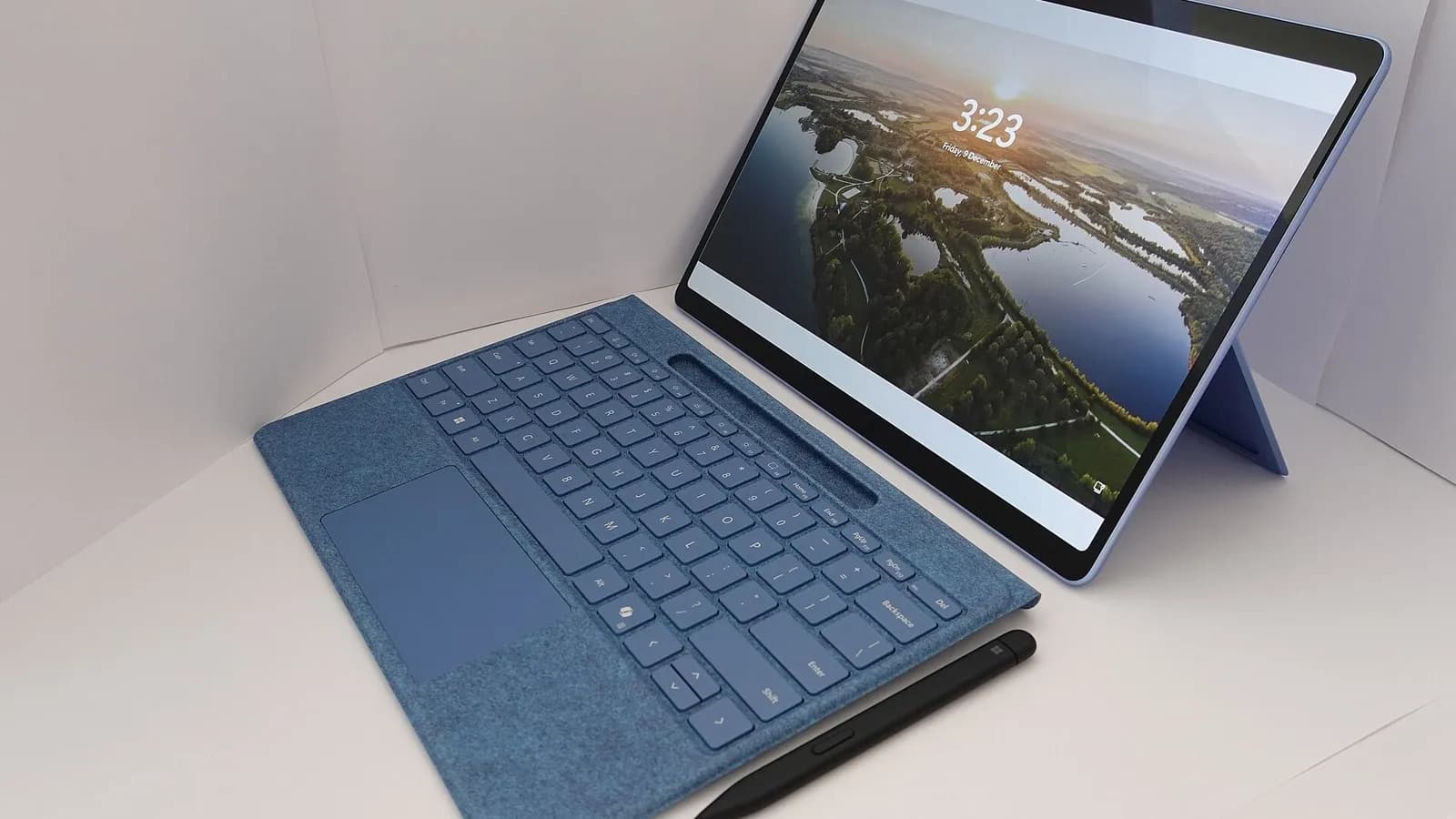
A coding model that fits on a laptop and was built, in large part, by another AI is now free to download. Recursive, the lab led by former Salesforce chief scientist Richard Socher, released Flint on Wednesday under the Apache 2.0 open-source licence, according to TechCrunch.
Every benchmark number below comes from the company itself and has not been independently verified.
What is Flint?
Recursive was founded in 2025 and emerged from stealth in May with $650 million in funding at a $4.65 billion valuation, TechCrunch says. It also has a $410 million compute deal with Amazon Web Services. Flint is its first model.
Flint is a mixture-of-experts model with about 40 billion parameters in total, of which roughly 2.5 billion are active for each token, TechCrunch reports. i-scoop gives the exact figure as 39.8 billion, with 256 experts per layer and six chosen for each token. It is text-only, with a 262,144-token context window.
Running locally means developers can work offline, keep their code private and avoid cloud fees. The four-bit weights are about 23 GB, and Recursive recommends 48 GB of memory for headroom, i-scoop says.
How fast is it?
Recursive reports about 131 tokens per second on a MacBook Pro with an Apple M4 Pro chip. Comparable models, including Google's Gemma 4 and Nvidia's Nemotron 3.5 Lightning, managed 58 to 69 on the same machine, according to TechCrunch. On Nvidia's RTX Spark it passes 150 tokens per second at short contexts.
On quality the picture is more modest. By Recursive's own tables, Flint scores 74.2 on SWE-bench Verified, behind Alibaba's dense Qwen 3.8 at 75.6 and Meta's dense Muse Glimmer at 76.0. It leads the small mixture-of-experts models, but i-scoop notes its Terminal-Bench result is its weakest and that Recursive's SWE-bench Pro v2 score is its own measurement, not comparable with the public leaderboard.
What did the AI actually build?
Recursive says its automated research system, the Eureka Machine, helped with nearly every step, from pretraining to inference, and that a small team shipped Flint in under four months. Credited findings include a sparser model shape, low-bit training that shrank the model by 71% with almost no quality loss, and custom kernels, TechCrunch reports. i-scoop adds that its four-bit version scores within 0.7 points of the full-precision one.
Humans supervise the system and can stop it. Recursive has not said how much researcher time or money it saved, so the claim that AI built most of Flint is a statement of method, not a measured saving.
Should developers switch?
Wired's Will Knight found Flint reliable on coding requests, while smaller models often produced errors or ran slowly, TechCrunch reports. Recursive itself advises splitting large tasks into small steps, since Flint needs more guidance than big paid assistants. For private code on a well-specified job, that trade may be worth it.
The next signal will come from independent tests. If outside benchmarks match the company's tables, a laptop-class model built with so little human effort will raise the pressure on cloud-only coding tools.
Published in The Outspoken Digest
Editorial desk
Outspoken Digest Technology DeskSoftware, hardware, artificial intelligence and what they change for everyone else.
Newsletter
The Digest, in your inbox
One edition, sent when it is ready. No noise, and your address is never passed on.
Read Next
More Technology →
What PHP2Shell Reveals About Maintaining the Code Behind Most of the Web
Oct 22, 2026/3 min read
PHP2Shell for Hosts, Developers and Security Teams: Backports, WAF Rules and Incident Response
Oct 22, 2026/3 min read
PHP2Shell: What Website Owners and Small Businesses Should Do Right Now
Oct 22, 2026/3 min read

PHP2Shell Timeline: From a Quiet August Report to a Leak, Early Attacks and a Day-Early Patch
Oct 22, 2026/3 min read