Riyadh Air's First Big Asia Push Follows the Workforce
Islamabad, Lahore and Manila go on sale for a carrier still under 15 destinations. The choice says the airline is chasing volume that already exists rather than demand it has to invent.
Friday, August 7, 2026/3 min read
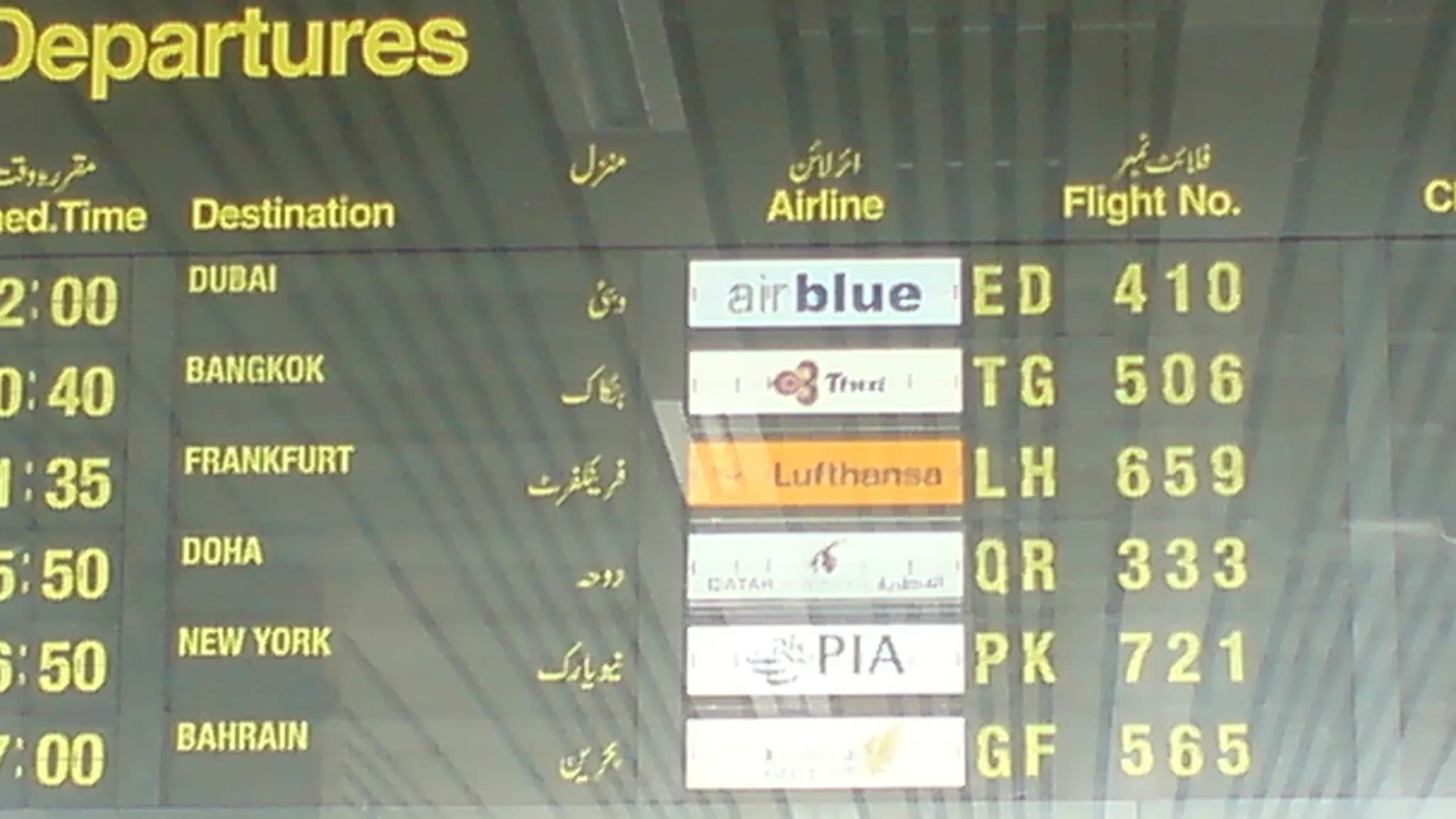
New airlines usually announce the glamorous routes first. London, New York, a European capital with a photogenic skyline, something that looks good in a launch video.
Riyadh Air has just opened sales on Islamabad, Lahore and Manila.
It is a less cinematic list and a considerably more revealing one. The Saudi flag carrier, still building toward its first fifteen destinations, has pointed three Boeing 787-9 Dreamliners at the two countries that supply the largest share of the workforce living in the kingdom.
The schedule as announced
Inaugural flights run to Islamabad on 14 August, Lahore on 18 August and Manila on 9 September, with tickets already on sale, according to Gulf Business.
Islamabad gets a double daily-ish pattern split across the week. Flight RX0659 leaves Riyadh at 13:45 four times a week, on Sundays, Mondays, Wednesdays and Fridays, arriving at 20:00. A second service, RX0661, departs at 20:10 on Tuesdays, Thursdays and Saturdays and lands at 02:25 the following morning.
Manila is daily. RX0873 leaves Riyadh at 01:05 and reaches Ninoy Aquino International at 15:55.
All three routes are flown with the 787-9, as Aviation Business Middle East reported, which is a widebody decision on routes that a more conservative startup might have handed to narrowbodies.
Why these three cities
The commercial logic is not subtle, and it is stronger for not being subtle.
Saudi Arabia hosts very large Pakistani and Filipino communities. That produces a category of demand airlines like best: repeat, price-sensitive, year-round, and largely immune to the seasonality that makes leisure routes lumpy. People visiting family fly in January as readily as in July.
It also produces belly cargo. Widebody aircraft on routes with established trade and remittance economies carry freight that helps the route work even when a seat map does not fill.
Manila adds a second layer. Ninoy Aquino is a major connecting point for the Philippines' own outbound labour flows, and a daily widebody from Riyadh plugs into that rather than competing with it.
The strategic reading
Riyadh Air exists as an instrument of Vision 2030 as much as a commercial airline. The stated national ambition is to turn Riyadh into a connecting hub and to grow inbound tourism substantially, and a hub needs traffic before it needs prestige.
This is where the route choice becomes interesting. A hub is built on connections, and connections are built on volume. Routes with dependable, repeating traffic give a young network something to connect to. Launching with only premium long-haul would produce a prettier map and a thinner one.
There is also a competitive reality. Emirates and Qatar Airways have spent decades building exactly this kind of density on South Asian and Southeast Asian routes, feeding Dubai and Doha. Riyadh Air cannot out-glamour those networks in year one. It can compete for passengers who care primarily about a direct flight, a reasonable fare and a schedule that works.
What it means for passengers
For travellers on these three city pairs, the immediate effect is choice, and choice on routes that have historically been served with a connection or with limited direct capacity.
The overnight arrival into Islamabad at 02:25 is worth noting for anyone booking. It is a schedule built for onward connections and for a certain kind of traveller rather than for comfort, and it will suit some passengers and irritate others.
The Manila timing, landing mid-afternoon, is friendlier, and a daily widebody on that pair is a meaningful capacity addition.
As always with a new carrier, fares on launch routes tend to be sharpest in the opening months while an airline buys market share, and schedules on new networks change more often than on mature ones. Check timings close to departure rather than assuming a launch schedule survives the first season.
What to watch next
Three tests will show whether this works.
The first is load factor through the low season, because a route serving visiting-friends-and-relatives traffic should hold up in months when leisure routes sag.
The second is whether the frequency grows. Four times weekly to Islamabad becoming daily would be the clearest possible statement that the demand is real.
The third is what gets announced next. If the following tranche of destinations follows the same logic, into South Asia and Southeast Asia, the airline is building a connecting bank deliberately. If it pivots to Europe and North America, the Asia push was the foundation and the hub strategy is moving to its second phase.
Either way, an airline that opens its Asian network in Islamabad rather than in a European capital has told you what it thinks its first million passengers look like.
Published in The Outspoken Digest
Editorial desk
Outspoken Digest Travel DeskDestinations, airlines, borders and the practicalities of getting there.
Newsletter
The Digest, in your inbox
One edition, sent when it is ready. No noise, and your address is never passed on.
Read Next
More Travel →
British Airways Is Back in Sri Lanka: The First Gatwick to Colombo Flight Lands After 10 Years
Oct 24, 2026/2 min read
Etihad Starts Abu Dhabi to Calgary Nonstops on Sunday, Western Canada's First Gulf Link
Oct 23, 2026/2 min read
Western Sydney Airport Opens to Passengers on Sunday: First Flights, Airlines and How to Get There
Oct 22, 2026/2 min read

Alaska and Hawaiian Airlines Will Fly Nonstop From Seattle to Osaka and Tahiti From Spring 2027
Oct 20, 2026/2 min read