Carabinieri Divers Rediscover Roman Wine Amphorae Off Camogli, 67 Years After They Were First Reported
A training dive off Punta Chiappa found nine amphorae below 40 metres, a site reported by a diving pioneer in 1959 and then lost. Archaeologists call the link a hypothesis that still needs proving.
Wednesday, October 28, 2026/2 min read
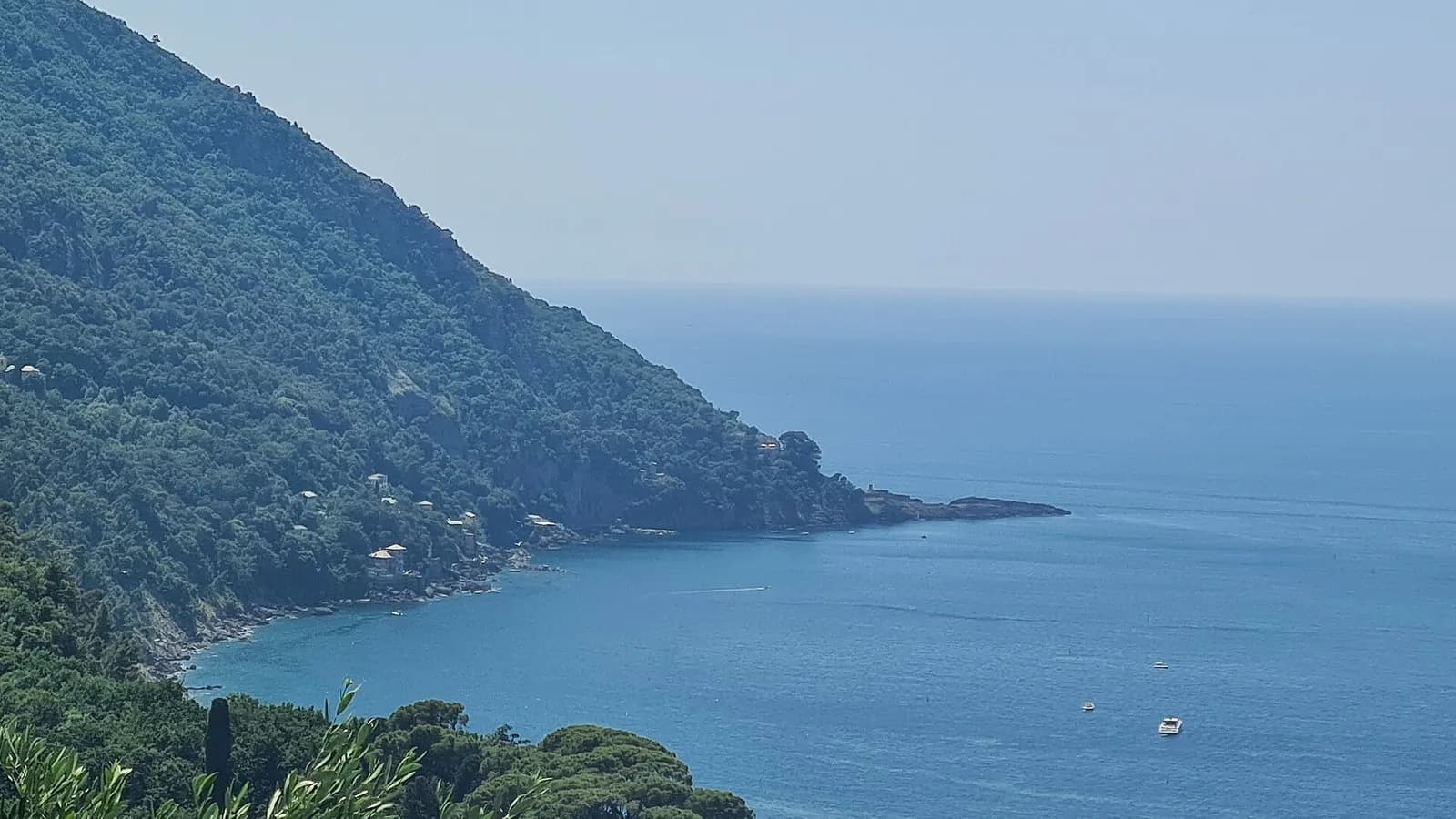
It began as a training exercise. Divers from the Genoa underwater unit of Italy's Carabinieri were working off Punta Chiappa, on the Ligurian coast near Portofino, when they spotted an intact Roman amphora lying below 40 metres. Archaeologists now think it belongs to a site that was reported once, in 1959, and then slipped out of the records.
The Liguria regional archaeology service, STAS, announced the rediscovery on 22 October, according to Divernet. The find lies inside the Portofino Marine Protected Area.
What did the divers find at Punta Chiappa?
The first amphora was of the Dressel 1 type, a form associated with wine transport in the Roman Republican period. A later survey, carried out with STAS and the Superintendency for Archaeology, Fine Arts and Landscape for Liguria, counted nine in a confined space along cracks in a steep underwater cliff, the Italian magazine Finestre sull'Arte reports.
Several are embedded in the rock and covered by coral-like concretions, which made them hard to identify. Two exposed amphorae were removed to protect them, because the area is open to theft. Divernet notes that a date between the late second and early first centuries BC has been cited for this type of amphora, which would make the site more than 2,000 years old. No hull has been found, and archaeologists say further work is needed to establish the extent of the site and whether timbers survive under sediment or rock.
What happened to the 1959 discovery?
In November 1959 Duilio Marcante, a pioneer of Italian scuba diving, reported amphorae wedged between rocks at Punta Chiappa to the regional antiquities authorities. Finestre sull'Arte says he and the Carabinieri diving unit located two and that a possible pile at the base of the cliff was hidden by mud. In May 1960 a team led by Gianni Roghi, working with Nino Lamboglia's underwater archaeology centre at Albenga, returned and could not find the main concentration. They did find an amphora tied with thin rope, which looked prepared for theft.
Lamboglia presented the case at a conference in Barcelona in 1961, giving the depth as about 45 metres. After that the site disappears from survey records. Divernet says STAS describes the link between this week's find and Marcante's as an archaeological hypothesis, not a confirmed identification.
Why is protecting the site hard?
The Superintendency considers constant monitoring and regulated diving necessary to guard the amphorae against visitors and illegal removal, Finestre sull'Arte reports. That is the long-running tension of wrecks in busy dive waters: the same accessibility that lets archaeologists work lets looters in, which is exactly what Lamboglia suspected in 1960.
This is journalism, not instruction. Dives at this depth are the work of specialist teams, and anyone who wants to train for them should do so with a certified instructor and a recognised agency. What happens next is for the archaeologists: confirming the identification, mapping the cargo and deciding what a site like this should look like when divers are allowed back.
Published in The Outspoken Digest
Editorial desk
Outspoken Digest Diving DeskCovers freediving, recreational and technical diving, dive medicine and the incidents the sport learns from.
Newsletter
The Digest, in your inbox
One edition, sent when it is ready. No noise, and your address is never passed on.
Read Next
More Diving →
Divers Cement Storm-Torn Corals Back Onto Hawaii's Reefs While a 45-Day Clock Runs
Oct 25, 2026/2 min read
Polish Diver Reaches 338 Metres in North Macedonia's Vrelo Cave, a Claimed Depth Record
Oct 23, 2026/3 min read
Breathless and Coughing Pink Froth After a Dive: Immersion Pulmonary Edema Explained
Oct 17, 2026/3 min read
Your Gas Consumption Is Not One Number: Why Depth, Cold and Nerves Change It
Oct 16, 2026/3 min read