Saudi Arabia's Red Sea Opens Up: What Dive Tourism Actually Offers
New resorts, new dive licences and a scaled-back masterplan. Here is the real state of Saudi Arabia's Red Sea diving push, not the pitch deck version.
Tuesday, February 10, 2026/4 min read
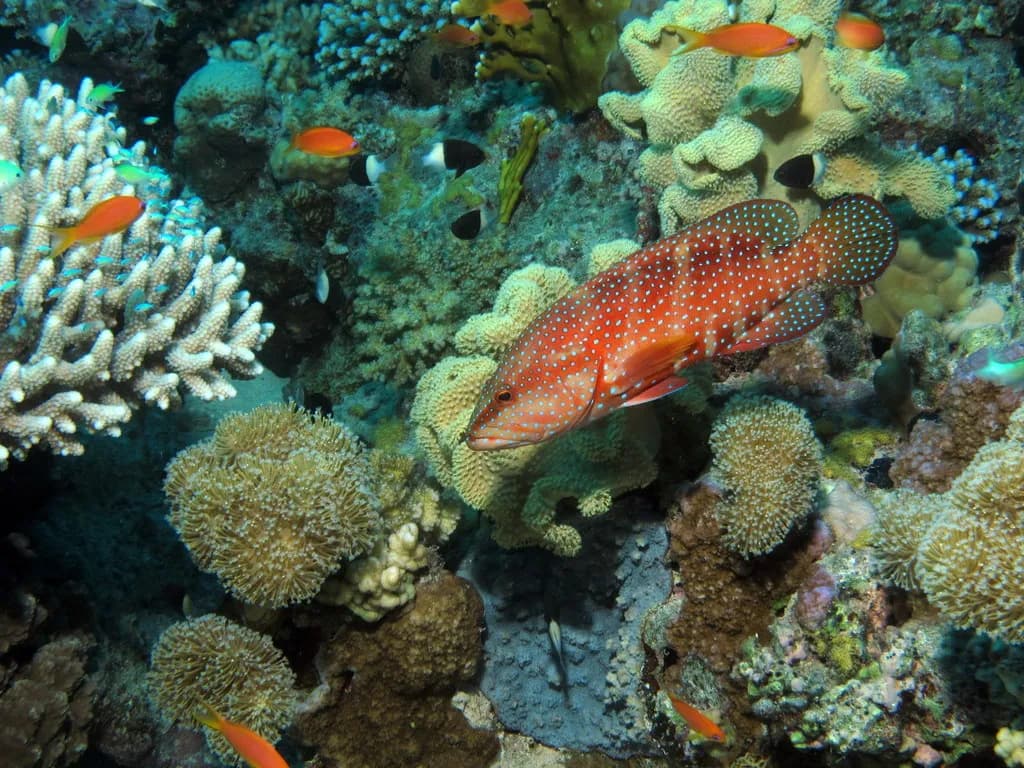
For decades, Saudi Arabia's stretch of the Red Sea sat almost entirely unvisited by recreational divers, closed off by a tourism visa regime that simply did not exist. The reefs were there the whole time, largely undived and, by several accounts, in better ecological shape than more heavily trafficked coastline further north. That is now changing, in stages, and the shape of the change is more interesting than the headline numbers suggest.
The country's Red Sea coast stretches for hundreds of kilometres, from the Gulf of Aqaba in the north down past Yanbu and Jeddah, and the government's tourism arm has spent the past several years building the infrastructure to open large sections of it to paying visitors, divers included.
Why this coastline stayed closed for so long
For most of the last half century, Saudi Arabia issued tourist visas rarely and reluctantly, and the Red Sea coast, unlike Egypt's side of the same sea, never developed a recreational dive industry to speak of, since there was effectively no visiting public to serve. The kingdom's own citizens dived parts of this coast informally for decades, but organised, licensed dive tourism aimed at international visitors is a genuinely recent development, tied directly to the tourist visa reforms and the broader Vision 2030 economic diversification programme that opened the country to leisure travel in the first place.
Where the resorts have actually landed
Red Sea Global, the state-backed developer behind much of this push, now operates nine resorts across its Red Sea destination as of early 2026, according to industry reporting. Three of those opened on Shura Island by the end of 2025 alone: SLS The Red Sea, InterContinental The Red Sea, and The Red Sea EDITION, which opened in November 2025 with 240 rooms. That is a meaningfully faster buildout than the region saw in its early planning years, even as the broader masterplan has been recalibrated.
The scaled-back reality behind the ambition
It is worth being honest about the gap between the original pitch and where things actually stand. Daily Sabah and Travel and Tour World both report that Saudi Arabia has scaled back its original target of 81 luxury resorts by 2030, moving instead toward phased development and more disciplined investment pacing. For divers, this mostly matters as a signal that the destination is being built out deliberately rather than rushed, which for reef health is arguably the better outcome.
NEOM's role in the dive picture
NEOM, the futuristic mega-region project on the country's northwest coast, includes Sindalah Marina among the facilities now folded into Saudi Arabia's marine tourism licensing framework, according to Travel and Tour World's coverage of new marine tourism licences. NEOM's coastline is still among the least dived stretches of Saudi water, which several outlets frame as an asset rather than a shortcoming: unspoiled coral gardens and marine life that has not yet adapted to constant diver traffic.
What the diving itself is like
The core appeal, according to guides published by House of Saud and Scuba Diving magazine, is coral in noticeably better condition than more heavily dived parts of the wider Red Sea, owing simply to decades of minimal traffic. Divers report large reef structures, healthy hard coral cover, and pelagic encounters that feel less mediated by crowds of other dive boats, a genuine rarity in Red Sea diving generally.
Infrastructure to support it is still catching up in places. The Al-Arbaeen Lagoon in Jeddah, for instance, is undergoing a redevelopment that includes a new yacht marina and a 4.4 kilometre waterfront park, work that was actively under construction through 2025, which will eventually widen access to marine activities in that specific area but was not fully complete at time of writing.
How this compares with Egypt's more established Red Sea diving
It is tempting to compare Saudi Arabia's Red Sea diving directly with Egypt's, given they share the same body of water, but the comparison only holds so far. Egypt's dive industry has spent half a century building infrastructure, dive centre density and a well-worn circuit of famous sites, which brings both convenience and crowding. Saudi Arabia's coast, by contrast, offers considerably less built-out infrastructure in most areas but correspondingly less diver traffic on the reefs themselves, a trade-off that appeals specifically to divers who have already done the Egyptian circuit and want water that feels comparatively undiscovered.
What this means for a diver deciding whether to book now
The honest read is that Saudi Arabia's Red Sea is a genuine, serious diving destination already, not a future promise, but one where the traveller experience varies significantly by exactly which stretch of coast and which resort cluster is booked. NEOM and Shura Island resorts sit at the polished, high-end end of the spectrum, while Jeddah and Yanbu access is more mixed, developing alongside ordinary city infrastructure.
Before booking Saudi Red Sea diving
- Confirm current tourist visa and marine park permit requirements directly with the resort or dive operator, since Saudi Arabia's tourism framework is still evolving.
- Ask specifically which dive sites the operator uses and whether they sit inside a protected marine area with its own rules.
- Treat published resort opening dates as provisional until confirmed close to travel, given the pace of construction across the coast.
Rules, permits and available infrastructure along Saudi Arabia's Red Sea coast are changing quickly as the destination matures, so divers should confirm current guidance directly with a licensed operator before booking, rather than relying on projections made even a year earlier.
What is not in question is the resource itself. Saudi Arabia's Red Sea reefs, protected for decades by simple inaccessibility, now represent one of the more ecologically intact stretches of this sea, and how carefully that gets managed as tourism scales up will likely define the destination's reputation for the next decade, and divers booking early trips now are, in effect, part of writing that reputation before it fully settles.
Published in The Outspoken Digest
Editorial desk
Outspoken Digest Diving DeskCovers freediving, recreational and technical diving, dive medicine and the incidents the sport learns from.
Newsletter
The Digest, in your inbox
One edition, sent when it is ready. No noise, and your address is never passed on.
Read Next
More Diving →
Playing Recordings of a Healthy Reef Drew More Coral and Fish Larvae to Artificial Structures Off Hawaii
Oct 9, 2026/3 min read
Blacktip Sharks Can Hear a Sound From Nearly 250 Feet Away and Swim Straight Toward or Away From It
Oct 1, 2026/2 min read
A Sea Turtle Species Never Recorded Nesting in the United States Laid Eggs on a Southern California Beach
Oct 1, 2026/2 min read
Marine Surveyors Confirmed Living Coral Off Benin, More Than Sixty Years After the Reef Was Presumed Dead
Sep 29, 2026/2 min read